
Introduction
Digital advertising has evolved rapidly, offering brands multiple ways to reach their audience. Among the most common formats, native ads and display ads dominate the landscape. While both aim to capture user attention and drive engagement, their approach, placement, and effectiveness differ significantly. This blog provides a complete, structured comparison of Native Ads vs Display Ads, including definitions, key differences, advantages, real-world examples, and FAQs—helping you choose the right format for your marketing strategy.
Table of Contents:
- Introduction
- What are Native Ads?
- What are Display Ads?
- Key Differences
- How do Native Ads Work?
- How do Display Ads Work?
- Advantages
- Disadvantages
- Real-World Examples
What are Native Ads?
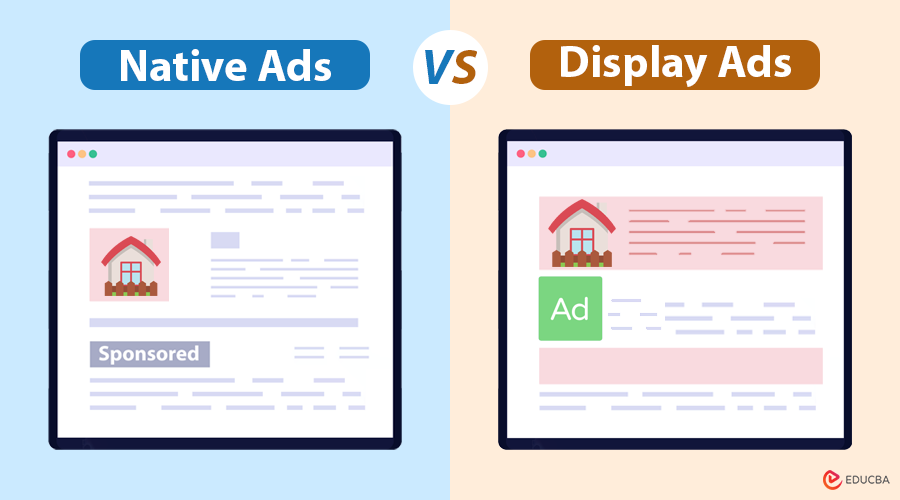
Native ads are paid advertisements designed to match the look, feel, and function of platform on which they appear. They blend seamlessly with surrounding content, making them feel less intrusive.
Examples:
- Sponsored articles on news websites
- In-feed ads on social media (Facebook, Instagram, TikTok)
- Recommended content widgets (Taboola, Outbrain)
- Promoted listings on e-commerce platforms
Key Characteristics:
- Highly contextual
- Designed to appear organic
- Focused on user engagement rather than forcing attention
- Often used for storytelling or educational content
What are Display Ads?
Display ads are traditional, visually distinct advertisements that appear in designated areas of a webpage or app. They rely on images, animations, or videos to attract attention.
Examples:
- Banner ads
- Sidebar ads
- Interstitial ads
- Pop-ups and rich-media ads
Key Characteristics:
- Visually prominent
- Clearly identifiable as advertisements
- Ideal for brand awareness and remarketing
- Can be static or dynamic (e.g., GIFs, HTML5 animations)
Native Ads vs Display Ads: Key Differences
Here are the key differences between native and display ads to help you compare the two formats.
| Factors | Native Ads | Display Ads |
| Appearance | Blends with platform content | Looks separate and clearly labeled |
| Intrusiveness | Low | Moderate to high |
| Click-through Rate | Generally higher | Generally lower |
| User Engagement | More engaging due to relevance | Lower engagement depends on creativity |
| Placement | In-feed content recommendations, search listings | Banners, sidebars, pop-ups, interstitials |
| Creative Format | Articles, videos, posts, widgets | Images, GIFs, HTML5 ads, videos |
| Purpose | Education, storytelling, subtle promotion | Brand visibility, retargeting, promotions |
| Cost Model | Usually CPC or CPM | CPC, CPM, CPA, retargeting-based |
| Ad Blocking Impact | Less likely to be blocked | Often blocked by ad blockers |
| Best For | Engagement-focused campaigns | Awareness, reach, retargeting |
How do Native Ads Work?
Native ads rely on contextual alignment with existing content.
They often use:
- Machine learning to match user interests
- Behavioral data for personalization
- Editorial-like formats to deliver value
Users perceive them as part of the content consumption journey, resulting in:
- Higher dwell time
- Better engagement
- Lower banner blindness
How do Display Ads Work?
Display ads follow the principle of visual attraction. They appear in predefined ad slots of a website or application.
They use:
- Demographic targeting
- Behavioral retargeting
- Contextual targeting
- Programmatic real-time bidding (RTB)
Display ads are effective for:
- Massive reach
- Quick brand exposure
- Re-engaging past visitors
Advantages of Native Ads and Display Ads
Here are the key advantages of both native ads and display ads.
Native Ads:
- Higher User Engagement: Native ads feel “built into” the content environment, increasing user engagement.
- Less Disruptive: They do not interrupt the browsing journey, improving user experience.
- Effective for Storytelling: Great for branded content, product education, and soft selling.
- Lower Ad Fatigue: Since native ads integrate smoothly with the platform, users are less likely to develop ad blindness.
Display Ads:
- Strong Visual Impact: Display ads use images, videos, and animations to instantly grab user attention.
- Excellent for Retargeting: They are highly effective for bringing back users who showed interest earlier.
- Broad Audience Reach: Through large ad networks, brands can quickly reach millions of users.
- Easy to Design: Display ads require simpler creative formats compared to native content.
Disadvantages of Native Ads and Display Ads
Here are the major disadvantages of both native ads and display ads that marketers should consider before choosing a format.
Native Ads:
- Higher Content Production Cost: Requires high-quality editorial-style content.
- User Trust Issues if Not Disclosed: Lack of transparency can reduce credibility.
- Performance Depends on Platform Fit: Poor alignment between the platform and context leads to low engagement.
- Harder to Scale: Creating unique native assets for multiple placements can be time-consuming.
Display Ads:
- Banner Blindness: Users routinely ignore traditional banner formats.
- Ad Blocker Sensitivity: Display formats are widely blocked by ad-blocking tools.
- Lower Engagement: Display banner CTR is often below 0.5%.
- Intrusiveness: Pop-ups and interstitials can disrupt user experience.
Real-World Examples
Here are practical examples showing how native ads and display ads work in real marketing scenarios.
1. Native Ad
A tech brand publishes a sponsored article titled “5 Ways AI Is Transforming Small Businesses” on a business news website. It blends with editorial content but carries a “Sponsored” label.
Outcome:
Higher reading time and more qualified leads due to educational value.
2. Display Ad
A clothing retailer shows banner ads featuring products a user viewed earlier. These ads appear across multiple websites via Google Display Network.
Outcome:
Higher conversions due to retargeting.
Which One Should You Choose?
Here is a quick guide to help you decide between native ads and display ads based on your goals.
Choose Native Ads If You Want:
- Higher engagement
- Content-driven marketing
- Storytelling and brand trust
- Less intrusive user experience
Choose Display Ads If You Want:
- Wide reach
- Fast visibility
- Strong visual impact
- Retargeting and performance marketing
Many brands combine both to create a balanced marketing funnel:
- Native ads for awareness and education
- Display ads for remarketing and conversions
Final Thoughts
Native ads and display ads each offer unique strengths. The ideal option is determined by your campaign’s objectives, target audience, financial constraints, and available material. Native ads excel in engagement and seamless integration, while display ads provide massive reach and strong visual branding. A balanced strategy leveraging both formats can deliver optimal marketing performance across awareness, engagement, and conversion stages.
Frequently Asked Questions (FAQs)
Q1. Which is more cost-effective—native ads or display ads?
Answer: Native ads typically deliver higher engagement but may have higher production costs. Display ads are cheaper to produce but may have lower CTR.
Q2. Are native ads better for mobile?
Answer: Yes. Native ads integrate cleanly with mobile feeds and offer a smoother user experience.
Q3. Is it necessary to disclose native ads?
Answer: Absolutely. Platforms require labels such as “Sponsored” or “Promoted.”
Q4. Do display ads still work?
Answer: Yes, especially for retargeting and large-scale brand awareness campaigns.
Recommended Articles
We hope that this EDUCBA information on “Native Ads vs Display Ads” was beneficial to you. You can view EDUCBA’s recommended articles for more information.


