


PRINCE2 Certification for Project Managers: Overview
Project management is a challenging field, with organizations expecting projects to be completed on time and within budget. The PRINCE2 methodology provides a well-structured framework that is widely recognized worldwide for its effectiveness in managing and executing projects successfully. Earning a PRINCE2 certification for project managers not only strengthens essential skills and knowledge but also opens up valuable career opportunities.
As project management continues to evolve, ongoing professional development becomes essential to stay current and effective. Enrolling in a structured PRINCE2 course on Knowledge Train provides project managers with the foundation necessary to master the methodology and confidently advance their careers.
The PRINCE2 Methodology
The process-based project management methodology known as PRINCE2 (Projects IN Controlled Environments) was first used by the UK government. Organizations in various sectors and countries now use it. The methodology provides a framework that breaks down projects into manageable stages with clear decision points and review mechanisms.
PRINCE2 emphasizes business justification throughout the project lifecycle, ensuring that every project delivers value and aligns with organizational goals. Seven core principles form the foundation of the methodology:
- Continued Business Justification
- Learn from Experience
- Defined Roles and Responsibilities
- Manage by Stages
- Manage by Exception
- Focus on Products
- Tailor to Suit the Project Environment
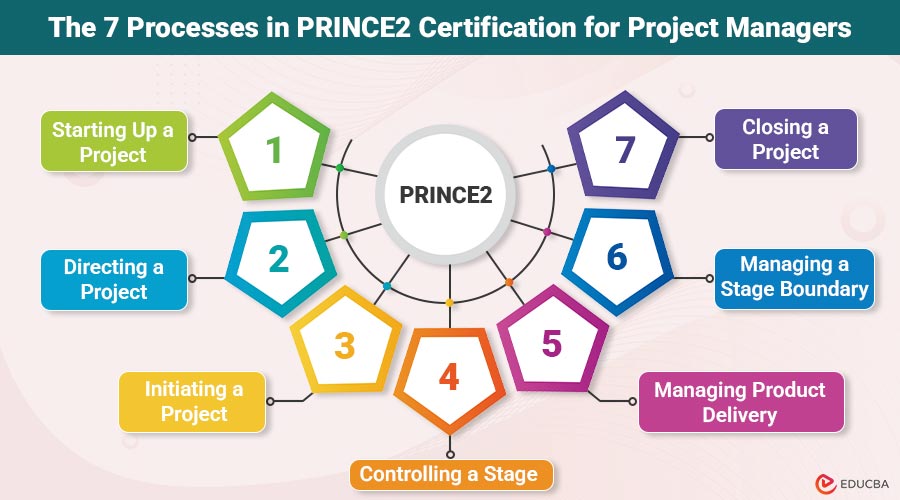
The 7 Processes in PRINCE2 Certification for Project Managers
The PRINCE2 certification for project managers teaches seven core processes that guide a project from start to finish:
- Starting Up a Project: This process is responsible for establishing the project’s foundation and determining its viability. It creates the project brief and assembles the project team structure. The process authorizes the project before committing any significant resources.
- Directing a Project: The process provides the framework for project board governance throughout the project lifecycle. The project board makes key decisions at stage boundaries and provides overall direction for the project. This process ensures that appropriate oversight and control mechanisms are in place to maintain accountability.
- Initiating a Project: This process is responsible for developing detailed project plans and establishing project controls. The process creates the Project Initiation Document (PID) that serves as the baseline for project execution. All stakeholders must agree on the project’s scope, approach, and success criteria.
- Controlling a Stage: This process manages day-to-day project activities within each management stage. Project managers use this process to track progress, address issues, and meet stage objectives. Regular reporting and exception management maintain project control.
- Managing Product Delivery: This process ensures that teams complete work packages according to the specified requirements. It coordinates the project management and specialist teams. Clear acceptance criteria and quality requirements guide the creation of products.
- Managing a Stage Boundary: This process prepares the project for stage transitions and updates project plans. The process reviews stage performance and plans for the next stage. Project boards receive updated information to make informed decisions about continuing the project.
- Closing a Project: This process formally concludes the project and transfers the products to operational use. The process evaluates project performance and captures lessons learned. Proper closure ensures the realization of benefits and knowledge retention.
Benefits of PRINCE2 Certification for Project Managers
Getting a PRINCE2 certification for project managers has several advantages:
- Career Growth: Employers value certified project managers. The certification demonstrates that you possess standardized knowledge and skills.
- Global Recognition: PRINCE2 is utilized in numerous industries across multiple countries, facilitating seamless international collaboration.
- Improved Risk Management: PRINCE2 helps identify and manage risks early, reducing delays and cost overruns.
- Better Quality Control: Projects are structured to meet defined product quality standards.
- Clear Stakeholder Roles: Everyone knows their role, reducing confusion and delays.
PRINCE2 vs. PMBOK: Understanding the Differences
The Project Management Body of Knowledge (PMBOK) and PRINCE2 are two of the most widely recognized project management frameworks globally. Despite their popularity, they differ in several important ways.
Framework Type
- PMBOK is a knowledge-based framework. It outlines the key areas and processes of project management but does not prescribe specific procedures. It serves as a guide on what project managers should know.
- PRINCE2 is a methodology that provides a detailed, step-by-step approach to managing projects. It encompasses specific roles, responsibilities, and processes for executing projects from initiation to completion.
Focus and Flexibility
- The PMBOK focuses on knowledge areas such as scope, time, cost, and quality management. Organizations should adapt these concepts to fit their unique project environments.
- PRINCE2 provides a prescriptive framework with clear guidance on project phases and decision-making, while also allowing for tailoring to suit different projects and organizations.
Geographic Adoption
- PMBOK is most popular in North America and maintains a strong presence in many other regions.
- PRINCE2 originated in the UK and has seen greater adoption in Europe, Australia, and other countries with historical ties to the UK.
Certification Differences
- PMBOK certification primarily assesses theoretical knowledge through exams.
- PRINCE2 certification tests both theoretical understanding and practical application, ensuring candidates can effectively apply the methodology in real projects.
Career Advancement with PRINCE2
PRINCE2 certification opens multiple career pathways for project management professionals. Foundation level certification provides an entry-level qualification for project team members, while practitioner level certification qualifies professionals for project manager roles. Senior management positions often require knowledge of PRINCE2 for strategic project oversight. Program and portfolio management roles benefit from PRINCE2’s understanding as the methodology provides scalable approaches for managing multiple related projects.
Consulting opportunities also expand significantly with PRINCE2 certification. Organizations seek certified professionals to implement PRINCE2 methodologies and train internal teams. Independent consultants can charge premium rates for specialized PRINCE2 expertise. International career opportunities also increase through a globally recognized certification. PRINCE2 certification is transferable across countries and industries, supporting career mobility and international assignments.
How to Implement PRINCE2 in Your Organization?
Successful PRINCE2 implementation requires careful planning and strong organizational commitment. Here are the key steps for effective adoption:
#1. Assess Current Project Management Maturity
Organizations should evaluate their existing project management practices to identify strengths and areas for improvement. A gradual implementation is often more effective than attempting a complete overhaul of the current methodology.
#2. Provide Targeted Training Programs
Organizations should tailor training to meet the specific needs of different roles:
- Project Managers need in-depth, comprehensive training on the PRINCE2 methodology.
- Senior Management should receive awareness training that focuses on governance and decision-making responsibilities.
#3. Tailor PRINCE2 to Fit the Organizational Context
PRINCE2 offers flexibility and can be adapted to suit different project types and organizational structures. Tailoring allows organizations to maintain the core principles of the methodology while adjusting processes to meet specific needs and contexts.
#4. Focus on Change Management
Adopting PRINCE2 may necessitate adjustments to existing project management practices. A strong change management strategy is essential. This includes:
- Clear communication about the benefits and expectations of PRINCE2
- Active stakeholder engagement to ensure buy-in and smooth transitions
Final Thoughts
Investing in PRINCE2 certification for project managers is a valuable investment in professional development that yields measurable returns. The structured methodology provides proven approaches for project success across diverse industries and contexts. Organizations that implement PRINCE2 benefit from improved project delivery and reduced failure rates. When paired with proper training and certification, professionals acquire the knowledge and skills essential for achieving excellence in project management. This foundation supports career advancement and organizational success in an increasingly project-driven business environment.
Recommended Articles
We hope this guide on PRINCE2 certification for project managers helps you understand how this credential can boost your project management skills and career prospects. Explore these recommended articles for additional related topics.

