


What Is a Market Penetration Strategy?
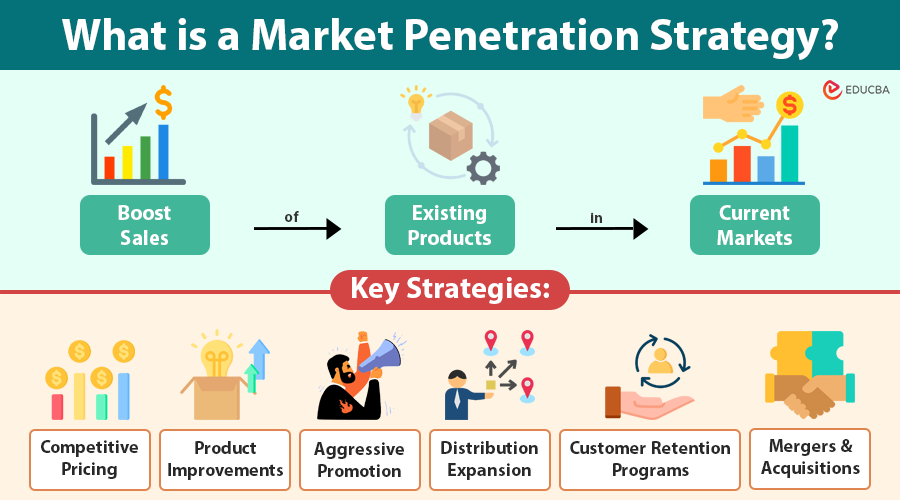
A market penetration strategy aims to increase sales of existing products within the company’s current markets. Instead of developing new products or exploring new markets, companies seek to strengthen their market share by attracting customers from competitors, encouraging repeat purchases, and converting non-users into buyers.
For instance, McDonald’s frequently uses a market penetration strategy by introducing limited-time offers and combo deals to increase sales among existing customers while attracting new ones from competitors. This approach helps the brand boost revenue without launching entirely new products.
Table of Content
- Meaning
- Objectives
- Key Strategies
- Steps to Develop
- Successful Examples
- Advantages
- Disadvantages
- Challenges
- Tips
Key Takeaways
- Businesses should focus on increasing sales of existing products within their current markets rather than expanding into new ones.
- Delivering consistent value, maintaining high service quality, and engaging customers effectively help strengthen loyalty and retention.
- Using data-driven insights and smart segmentation enables companies to create more targeted and impactful marketing campaigns.
- Competitive pricing should always be balanced with strong product quality and brand value to achieve sustainable growth.
- Staying adaptive by monitoring performance, tracking competitors, and refining strategies ensures long-term relevance and profitability.
Objectives of a Market Penetration Strategy
A market penetration strategy helps businesses strengthen their foothold in the existing market by focusing on growth through their current products and customers. The following objectives highlight how companies leverage this strategy to achieve sustainable success:
1. Increase Market Share
Companies strive to expand their market share by winning new customers and keeping their existing ones satisfied. This approach helps them strengthen their position and outperform competitors within the same market segment.
2. Boost Sales Volume
A market penetration strategy encourages customers to buy more frequently or in larger quantities. By offering attractive deals and improving accessibility, businesses drive higher sales and accelerate revenue growth.
3. Enhance Brand Awareness
Firms focus on strengthening brand recall through targeted marketing campaigns, consistent messaging, and promotional efforts. A strong brand presence enhances customer trust and recognition, leading to increased customer engagement.
4. Achieve Economies of Scale
When companies sell in higher volumes, they lower production, distribution, and marketing costs per unit. This efficiency boosts profitability, allowing them to reinvest savings into innovation and further market expansion.
5. Build Competitive Advantage
By delivering better value and maintaining strong customer relationships, businesses establish loyalty and reduce the risk of customer churn. A loyal customer base provides stability, making it harder for competitors to penetrate the market.
Key Market Penetration Strategies
The following strategies outline the most effective ways to implement market penetration successfully:
1. Competitive Pricing
Companies often lower their prices or offer promotional discounts to attract price-sensitive customers and gain an edge over rivals. For instance, telecom providers frequently introduce affordable plans to attract subscribers from competitors and expand their customer base.
2. Product Improvements
Businesses enhance existing products by improving their quality, design, or functionality to meet changing customer expectations. These upgrades strengthen satisfaction, encourage repeat business, and foster brand loyalty in competitive markets.
3. Aggressive Promotion and Advertising
Effective promotional strategies help companies engage more customers and increase overall brand recognition in the market. Through social media, influencer partnerships, and targeted ads, businesses can create awareness and stimulate higher sales conversions.
4. Distribution Expansion
Expanding distribution channels enables companies to make their products more available and convenient for consumers. Expanding through retail collaborations, online platforms, and new markets helps companies improve product availability and increase sales potential.
5. Customer Retention Programs
Retaining existing customers often costs less than acquiring new ones. Companies utilize loyalty programs, exclusive discounts, and exceptional after-sales services to foster relationships and promote long-term engagement.
6. Mergers and Acquisitions
Some companies choose to expand their market share by acquiring smaller competitors or merging with established players. This approach allows them to consolidate market presence, diversify their customer base, and achieve faster growth.
Steps to Develop a Market Penetration Strategy
To implement this strategy effectively, businesses must follow a structured process:
Step 1: Analyze the Market
Begin by researching market trends, customer preferences, and competitor strategies. Identify potential opportunities, market gaps, and risks that could influence your business decisions.
Step 2: Set Clear Goals
Define specific, measurable, and time-bound objectives such as increasing sales by a set percentage or achieving a targeted market share. Clear goals give direction and help track progress effectively.
Step 3: Identify Target Audience
Group your customers based on who they are, what they like, and how they buy. Focus your efforts on the customer groups most likely to engage with your product or service.
Step 4: Choose the Right Tactics
Select suitable strategies—like competitive pricing, promotional campaigns, distribution expansion, or partnerships—that align with your goals and available resources.
Step 5: Implement and Monitor
Implement your plan through targeted marketing and sales initiatives to achieve your objectives. Continuously monitor performance using key metrics, such as revenue growth, conversion rates, and customer retention rates.
Step 6: Optimize Continuously
Analyze performance results and customer feedback to refine your strategy and improve overall effectiveness. Stay adaptable and make improvements to sustain growth and maintain a competitive edge.
Examples of Successful Market Penetration
Below are some notable examples of how companies successfully executed this approach:
1. Coca-Cola
Coca-Cola continuously expands its global presence through powerful marketing campaigns and extensive product availability. By maintaining strong distribution networks and localized branding, it stays at the top of the beverage market worldwide.
2. Netflix
Netflix attracts diverse audiences by offering affordable subscription plans and region-specific content. Its focus on accessibility and personalization has helped it rapidly grow its subscriber base across multiple international markets.
3. Apple
Apple leverages brand loyalty and exceptional customer experience to boost iPhone sales in existing markets. Despite intense competition, the company sustains demand through premium branding, product innovation, and ecosystem integration.
Advantages of a Market Penetration Strategy
A well-executed market penetration strategy offers several business benefits that enhance profitability, customer loyalty, and overall growth. Below are some of the key advantages:
1. Increases Brand Loyalty and Recognition
Consistent marketing and improved customer experience strengthen brand visibility and trust. When customers recognize and value a brand, they are more likely to stay loyal over time.
2. Improves Customer Retention and Lifetime Value
By engaging existing customers through personalized offers and loyalty programs, businesses increase repeat purchases and long-term customer value.
3. Boosts Revenue Without Major Investment
Firms can drive profit growth by leveraging their existing products and customer base, rather than incurring significant expenses on new product launches or market exploration.
4. Strengthens Competitive Position
A strong presence in the existing market helps companies defend against competitors. Continuous engagement and superior service make it harder for rivals to attract their customers.
5. Generates Economies of Scale
As sales volumes grow, production and distribution become more efficient. Increased output lowers the cost per unit, resulting in higher profit margins.
Disadvantages of a Market Penetration Strategy
While effective, a market penetration strategy also comes with challenges that businesses must manage carefully to sustain long-term success. The following are some key disadvantages:
1. Limited Growth Potential
Once a market becomes saturated, opportunities for further expansion within the same segment reduce, limiting overall growth.
2. Risk of Price Wars
Lowering prices to attract customers can trigger price competition among rivals, which may reduce profit margins for all players.
3. Increased Marketing and Promotional Costs
Aggressive campaigns and frequent discounts may require significant spending, which can strain marketing budgets and reduce short-term profitability.
4. Dependence on Existing Markets
When a business relies too heavily on its present markets, it risks being affected by changing consumer behavior or economic declines.
5. Possible Neglect of Innovation
Focusing only on selling existing products may cause businesses to delay or overlook product innovation, leaving them at a disadvantage when market trends evolve.
Challenges in Market Penetration
Although market penetration can boost growth and visibility, it also brings several challenges that businesses must manage strategically to sustain long-term success.
- Price Wars Reduce Profits: Frequent price cuts aimed at attracting customers can lead to price wars, ultimately lowering overall profit margins.
- Market Saturation Limits Growth: Once most of the target market is captured, expansion opportunities become scarce.
- Competitor Retaliation: Rivals may respond with similar pricing or marketing tactics, increasing competition.
- High Promotional Costs: Continuous advertising and discounts can strain marketing budgets and reduce profitability.
Tips for a Successful Market Penetration Strategy
To make a market penetration strategy truly effective, businesses must combine smart planning with customer-focused execution. The following tips can help maximize results and maintain a competitive edge:
- Focus on Customer Value: Deliver superior value through quality, service, and experience rather than relying solely on price cuts.
- Utilize Data-Driven Marketing: Leverage analytics and customer insights to craft precise, targeted campaigns that enhance engagement and drive conversions.
- Build Brand Trust: Maintain consistent, authentic messaging across all channels to strengthen brand credibility and customer loyalty.
- Innovate Within Existing Products: Update existing products to align with evolving customer demands and maintain a competitive edge.
- Monitor Competitor Activity: Stay vigilant for rival strategies, including pricing and promotional tactics, to adapt quickly and maintain market dominance.
Final Thoughts
A market penetration strategy remains one of the most reliable and cost-effective methods for driving business growth within existing markets. By focusing on customer retention, competitive pricing, and brand strengthening, companies can expand their market share without the risks associated with new product development or market diversification. However, success demands continuous optimization, close monitoring of competitors, and a deep understanding of customer needs. When executed strategically, market penetration not only boosts revenue but also builds a sustainable foundation for long-term success.
Frequently Asked Questions (FAQ’s)
Q1. How does a market penetration strategy differ from a market development strategy?
Answer: A market penetration strategy focuses on selling more of existing products within current markets. In contrast, a market development strategy involves entering new markets or targeting new customer segments with existing products.
Q2. What metrics help measure the success of market penetration?
Answer: Key metrics include market share growth, sales volume, customer retention rate, and customer acquisition cost. Tracking these helps determine if the strategy is effectively increasing market presence.
Q3. What industries benefit most from market penetration strategies?
Answer: Industries with high competition and standardized products, such as consumer goods, telecom, streaming services, and retail, often benefit the most, as small market share gains can significantly boost profits.
Q4. What risks should companies watch out for in market penetration?
Answer: Key risks include price wars, overdependence on existing customers, and a reduced focus on innovation. Companies must strike a balance between short-term sales goals and long-term strategic growth.
Recommended Articles
We hope this guide on Market Penetration Strategy was helpful. Explore related articles on Market Development, Product Diversification, and Growth Hacking to learn more about effective business growth strategies.

