


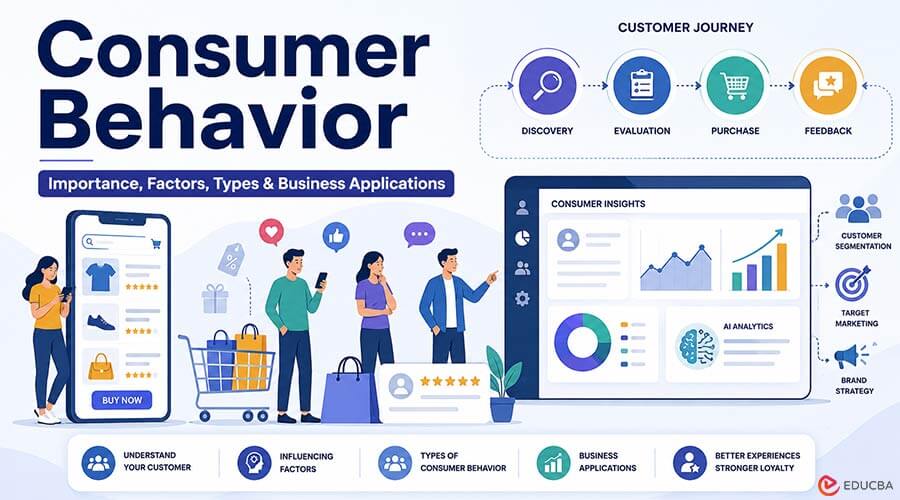
What is Consumer Behavior?
Consumer behavior examines how individuals, groups, and organizations recognize their needs, compare available options, make purchasing decisions, use products or services, and evaluate their overall experience. It examines the factors that influence buying decisions, including personal preferences, emotions, cultural values, social influences, income, technology, and marketing efforts.
In today’s digital-first marketplace, understanding consumer behavior has become more important than ever. Before making a purchase, consumers often engage with brands through websites, mobile apps, social media platforms, online marketplaces, and physical stores. Businesses that understand these behaviors can create better customer experiences, develop products that meet market needs, and build stronger customer relationships.
Whether introducing a new product, expanding into a new market, or strengthening customer loyalty, understanding consumer behavior enables businesses to make informed decisions based on customer insights instead of assumptions.
Key Takeaways
- Consumer behavior explains how people discover, evaluate, purchase, use, and recommend products or services.
- Understanding customer behavior helps businesses improve marketing, product development, pricing, and customer experience.
- Personal, psychological, social, cultural, economic, and technological factors influence buying decisions.
- AI, personalization, social commerce, and sustainability are shaping modern consumer behavior.
- Businesses that continuously analyze consumer behavior are better positioned to increase customer satisfaction and long-term profitability.
Table of Contents
- What is Consumer Behavior?
- Why Consumer Behavior is Important for Businesses
- Factors Affecting Consumer Behavior
- Consumer Decision-Making Process
- Types of Consumer Buying Behavior
- Modern Consumer Behavior Trends (2026)
- Business Applications of Consumer Behavior
- Real-World Examples
- Consumer Behavior in the Digital Age
- How Is AI Transforming Consumer Behavior Analysis?
- Best Practices
- Challenges in Understanding Consumer Behavior
- Tips for Analyzing Consumer Behavior Effectively
Why Consumer Behavior is Important for Businesses
Consumer behavior helps businesses understand why customers choose specific products, what factors shape their purchasing decisions, and how they engage with brands throughout their buying journey. These insights enable businesses to design effective marketing campaigns, improve products, and deliver personalized customer experiences.
Understanding consumer behavior benefits businesses in several ways:
1. Improves Product Development
Customer feedback and purchasing patterns help businesses identify unmet needs and develop products that solve real problems.
2. Creates Better Marketing Strategies
Knowing what motivates customers allows marketers to create targeted campaigns that resonate with specific audience segments rather than generic promotions.
3. Enhances Customer Experience
Businesses can improve every stage of the customer journey from product discovery to post-purchase support by understanding customer expectations and preferences.
4. Supports Better Pricing Decisions
Consumer research helps organizations determine whether customers prioritize affordability, premium quality, convenience, or unique features when making purchasing decisions.
5. Builds Customer Loyalty
Companies that consistently understand and respond to customer needs are more likely to earn trust, repeat purchases, and positive word-of-mouth recommendations.
6. Reduces Business Risk
Studying consumer behavior before launching a product helps businesses minimize costly mistakes and improve the chances of market success.
Factors Affecting Consumer Behavior
Several internal and external factors influence how consumers make purchasing decisions.
| Factor | Description | Example |
| Personal | Age, occupation, lifestyle, income, education | A college student chooses affordable products. |
| Psychological | Motivation, perception, attitudes, beliefs | Brand trust influences purchasing decisions. |
| Social | Family, friends, colleagues, influencers | Consumers purchase products recommended by creators they follow. |
| Cultural | Traditions, values, religion, customs | Festive shopping patterns vary across regions. |
| Economic | Inflation, disposable income, employment | Customers become more price-conscious during economic uncertainty. |
| Technological | AI recommendations, online reviews, mobile shopping | Personalized product suggestions increase conversions. |
Consumer Decision-Making Process
Most consumers follow a structured decision-making journey before purchasing a product or service.
Step 1: Need Recognition
The process begins when consumers realize they have a need or a problem that requires a solution.
Example: A smartphone becomes slow, prompting the user to consider buying a new one.
Step 2: Information Search
Consumers gather information through search engines, review websites, social media, YouTube videos, and recommendations from friends and family.
Step 3: Evaluation of Alternatives
Customers compare products based on factors such as price, quality, features, customer reviews, warranty, and brand reputation.
Step 4: Purchase Decision
After evaluating available options, the consumer selects the product that best meets their expectations and budget.
Step 5: Post-Purchase Evaluation
Customers evaluate whether the product or service fulfills their expectations. Their experience influences future purchases, reviews, referrals, and brand loyalty.
Types of Consumer Buying Behavior
Consumer buying behavior varies depending on product involvement, perceived risk, and brand differences.
1. Complex Buying Behavior
Consumers spend significant time researching expensive or high-risk purchases before making a decision.
Examples:
- Buying a house
- Purchasing a luxury car
- Selecting enterprise software
2. Dissonance-Reducing Buying Behavior
Consumers carefully compare limited alternatives when products appear similar but entail a substantial investment.
Example:
Choosing between two laptops with similar specifications.
3. Habitual Buying Behavior
Consumers repeatedly purchase familiar products without extensive research because they trust the brand or have formed a habit.
Examples:
- Toothpaste
- Packaged milk
- Household cleaning products
4. Variety-Seeking Buying Behavior
Consumers switch brands even when satisfied because they enjoy trying something new rather than because they are dissatisfied.
Examples:
- Snacks
- Soft drinks
- Ice cream
- Skincare products
Modern Consumer Behavior Trends
Consumer behavior continues to evolve as technology, economic conditions, and societal values change. Today’s consumers are more informed, connected, and selective than ever before. Businesses that embrace evolving consumer trends can better address customer needs, enhance satisfaction, and gain a lasting competitive advantage.
1. AI-Powered Personalization
Artificial intelligence (AI) has transformed how businesses understand and engage with customers. Artificial intelligence uses customer data, including browsing behavior and purchase history, to generate personalized product suggestions and promotional offers.
For example, e-commerce platforms recommend products based on previous purchases, while streaming services suggest movies and shows aligned with users’ viewing habits. Personalized experiences enhance customer satisfaction while encouraging higher conversion rates and repeat purchases.
2. Social Commerce
Social media has become much more than a marketing platform; it is now a direct sales channel. Consumers increasingly discover, research, and purchase products without leaving their favorite social media apps.
Brands collaborate with influencers, host live shopping sessions, and leverage user-generated content to build customer trust and drive purchasing decisions. Authentic reviews and real customer experiences often influence buying decisions more than traditional advertisements.
3. Mobile-First Shopping
Smartphones have become the preferred shopping device for millions of consumers. Customers expect websites and applications to provide seamless browsing, secure payment options, and fast checkout experiences.
Businesses that deliver a seamless mobile shopping experience with responsive design, digital payment options, and one-click checkout can improve customer retention and minimize cart abandonment.
4. Sustainability and Ethical Purchasing
Modern consumers increasingly support brands that demonstrate environmental and social responsibility. They consider factors such as sustainable sourcing, recyclable packaging, ethical labor practices, and carbon reduction initiatives before making purchasing decisions.
Companies that communicate their sustainability efforts transparently often strengthen customer trust and brand loyalty.
5. Data Privacy and Consumer Trust
As businesses collect more customer data, privacy has become a significant concern. Modern consumers expect organizations to securely manage their personal data and provide clear information about how it is collected, processed, and used.
Businesses that maintain transparency, offer secure payment solutions, and follow ethical data practices are more likely to establish long-term relationships with customers.
6. Omnichannel Shopping Experiences
In the modern marketplace, customers engage with brands across multiple channels, including websites, mobile apps, social media, e-commerce platforms, and physical retail stores.
Consumers expect a consistent experience regardless of where they shop. Businesses that integrate online and offline channels create smoother customer journeys and improve overall satisfaction.
Business Applications of Consumer Behavior
Understanding consumer behavior enables businesses to make informed decisions across various departments, not just marketing. Customer insights support strategic planning, innovation, and long-term growth.
1. Product Development
Businesses analyze customer feedback, purchasing patterns, and market trends to identify unmet needs and develop products that solve real problems.
For example, skincare brands continuously introduce products tailored to specific skin types after studying evolving consumer preferences.
2. Market Segmentation
Consumer behavior helps businesses divide their audience into meaningful groups based on demographics, lifestyle, interests, purchasing habits, and buying motivations.
This allows businesses to create segment-specific marketing campaigns that align with customer preferences, improving engagement compared to a traditional one-size-fits-all strategy.
3. Pricing Strategy
Businesses analyze consumer insights to understand customers’ price expectations and determine suitable pricing for their products or services.
Some customers prioritize affordability, while others value premium quality, convenience, or exclusive features. Understanding these preferences helps companies develop effective pricing strategies.
4. Branding and Positioning
Consumer behavior research helps businesses understand how customers perceive their brand compared to competitors.
These insights enable organizations to strengthen their brand identity, communicate a unique value proposition, and build stronger emotional connections with customers.
5. Customer Experience Management
Every interaction influences customer satisfaction, from website navigation and customer support to product delivery and after-sales service.
By studying customer expectations and feedback, businesses can continuously improve the overall customer experience.
6. Customer Retention
Maintaining relationships with existing customers is usually more affordable than investing resources to attract new customers.
Businesses analyze customer behavior to identify loyal customers, predict churn, and create personalized loyalty programs, exclusive offers, and targeted communication that encourage repeat purchases.
7. Demand Forecasting
Analyzing consumer purchasing patterns helps businesses forecast seasonal demand, manage inventory effectively, and improve supply chain efficiency.
Accurate demand forecasting reduces stock shortages, minimizes excess inventory, and improves operational efficiency.
Real-World Examples of Consumer Behavior
The following examples illustrate how organizations apply consumer behavior insights to improve business performance.
| Company | Consumer Behavior Strategy | Business Impact |
| Amazon | Uses AI-powered product recommendations based on browsing and purchase history. | Increases sales through personalized shopping experiences. |
| Netflix | Recommends movies and TV shows based on viewing history and user preferences. | Improves customer engagement and retention. |
| Starbucks | Uses its loyalty app to offer personalized rewards and promotions. | Encourages repeat purchases and strengthens customer loyalty. |
| Nike | Delivers personalized product recommendations and exclusive member experiences through its digital ecosystem. | Builds stronger customer relationships and brand loyalty. |
| Apple | Creates a seamless ecosystem across devices that encourages long-term customer retention. | Increases customer lifetime value and repeat purchases. |
Consumer Behavior in the Digital Age
Digital technology has fundamentally changed how consumers interact with businesses.
Instead of relying solely on advertisements, consumers now compare prices, read online reviews, watch product demonstrations, seek recommendations on social media, and evaluate brands before making purchasing decisions.
Businesses can analyze customer behavior using digital tools such as website analytics, customer relationship management (CRM) systems, online surveys, and social listening platforms. These insights help organizations understand customer preferences, identify emerging trends, and continuously improve their products and services.
As digital platforms continue to advance, businesses need to stay focused on customer needs and adjust their strategies according to changing consumer expectations.
How Is AI Transforming Consumer Behavior Analysis?
Artificial intelligence enables businesses to analyze large volumes of customer data more accurately and efficiently than traditional methods.
AI-powered tools can:
- Predict future purchasing behavior.
- Recommend products based on customer preferences.
- Personalize marketing campaigns.
- Identify customers who may stop purchasing.
- Automate customer support using intelligent chatbots.
- Analyze customer reviews and social media sentiment.
By combining AI with human insights, businesses can make faster, data-driven decisions while delivering more relevant customer experiences.
Best Practices for Understanding Consumer Behavior
Organizations can better understand their customers by following these best practices:
- Conduct regular customer surveys and interviews.
- Analyze website traffic and purchasing behavior.
- Monitor online reviews and customer feedback.
- Track emerging industry and market trends.
- Use customer segmentation to personalize marketing efforts.
- Continuously test and optimize campaigns using customer data.
- Invest in AI-powered analytics tools for deeper consumer insights.
- Respect customer privacy and maintain transparency in data collection.
Businesses that regularly analyze consumer behavior can better adapt to market changes, enhance customer satisfaction, and support long-term growth.
Challenges in Understanding Consumer Behavior
Although consumer behavior provides valuable insights, accurately predicting customer decisions remains challenging. Consumer preferences can change quickly due to technological advancements, economic conditions, cultural shifts, and market competition. Businesses must continuously monitor these changes to stay relevant.
Some common challenges include:
1. Rapidly Changing Consumer Preferences
Consumer interests evolve as new products, trends, and technologies emerge. Businesses must regularly update their research to keep pace with changing expectations.
2. Information Overload
Today’s consumers have access to countless product reviews, comparison websites, social media recommendations, and expert opinions. This abundance of information often makes purchasing decisions more complex and less predictable.
3. Multiple Buying Influences
Customer decisions are usually influenced by multiple factors rather than a single element. Personal preferences, social influences, reviews, pricing, offers, and brand reputation collectively shape the final purchase choice.
4. Privacy Regulations
Increasing concerns around data privacy and evolving regulations require businesses to handle customer information carefully and use it responsibly. Organizations must balance personalization with transparency and customer trust.
5. Economic Uncertainty
Factors such as inflation, changing disposable income, and global economic conditions can significantly alter consumer spending patterns. During uncertain times, customers often prioritize value and essential purchases.
6. Omnichannel Customer Journeys
Consumers engage with brands through various channels and interactions throughout their buying journey before completing a purchase. Understanding these complex journeys requires businesses to integrate data from websites, mobile apps, physical stores, social media, and customer support channels.
Tips for Analyzing Consumer Behavior Effectively
Businesses can gain more meaningful customer insights by adopting a structured approach to analyzing consumer behavior.
- Gather customer insights through surveys, interviews, and feedback reviews.
- Monitor website performance and understand user interactions by using analytics tools.
- Monitor customer engagement across social media platforms.
- Segment customers based on demographics, interests, and buying habits.
- Track key performance indicators (KPIs) such as customer retention, repeat purchases, and conversion rates.
- Use AI and predictive analytics to identify emerging buying trends.
- Continuously test marketing campaigns and optimize them based on customer responses.
- Stay updated on industry developments and changing consumer expectations.
Frequently Asked Questions (FAQs)
Q1. What is consumer behavior?
Answer: Consumer behavior is the study of how individuals and groups identify their needs, compare products or services, make purchase decisions, and assess their satisfaction after purchase.
Q2. Why is consumer behavior important for businesses?
Answer: Understanding consumer behavior helps businesses create customer-focused products, improve marketing strategies, enhance customer experiences, and build long-term customer loyalty.
Q3. What factors influence consumer behavior?
Answer: Various factors, such as personal characteristics, psychological influences, social surroundings, cultural values, economic conditions, and technological developments, shape consumer purchasing decisions.
Q4. What are the four types of consumer buying behavior?
Answer: The four main types of consumer buying behavior are:
-
-
- Complex Buying Behavior
- Dissonance-Reducing Buying Behavior
- Habitual Buying Behavior
- Variety-Seeking Buying Behavior
-
Q5. How does consumer behavior benefit marketing strategies?
Answer: Consumer behavior helps marketers understand customer needs, segment target audiences, personalize marketing campaigns, optimize pricing strategies, and improve customer engagement, leading to higher conversions and stronger brand loyalty.
Final Thoughts
Consumer behavior has become one of the most valuable sources of business intelligence in today’s competitive marketplace. As consumer expectations change over time, businesses need to look beyond purchase patterns to understand the motivations behind buying decisions, the decision-making processes, and the factors that drive customer loyalty.
Modern businesses use consumer behavior insights to create customer-centric products, deliver personalized experiences, optimize marketing campaigns, and strengthen long-term relationships. Technologies like artificial intelligence, predictive analytics, and customer data platforms enable businesses to detect emerging trends and adapt quickly to changing consumer preferences.
However, consumer behavior is not static. Economic conditions, technological innovations, cultural values, and digital transformation continue to reshape purchasing decisions. Businesses that invest in continuous consumer research and adapt to these changes are better positioned to improve customer satisfaction, increase brand loyalty, and achieve sustainable growth.
Ultimately, understanding consumer behavior is no longer just a marketing function; it is a strategic advantage that supports informed decision-making across product development, sales, customer experience, and overall business strategy.
Recommended Articles
We hope this guide on consumer behavior helps you understand customer preferences, buying patterns, and strategies for creating better customer experiences. Explore these recommended articles to gain deeper insights into marketing strategies, customer psychology, and business growth approaches.

