

What is Keyword Cannibalization?
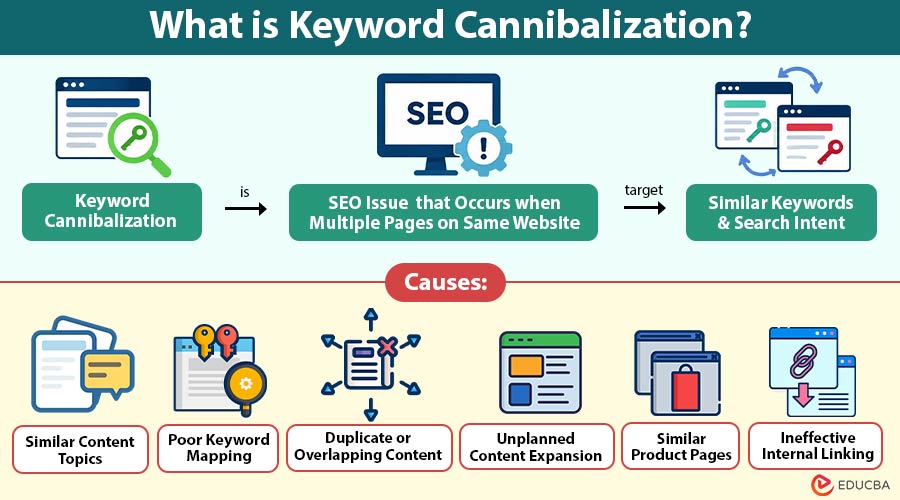
Keyword cannibalization is SEO issue that occurs when multiple pages on same website target similar keywords and search Intent.
It happens when two or more webpages cover substantially overlapping topics without clearly distinguishing their purpose or value. Because of this, search engines could have trouble figuring out which page best answers a specific query.
For example, suppose an e-commerce website publishes two articles titled “Best Running Shoes for Beginners” and “Top Running Shoes for New Runners.” If both articles target the same audience, keywords, and search intent, they may compete for similar search queries.
However, multiple pages ranking for the same keyword do not automatically indicate keyword cannibalization. The issue becomes significant when overlapping content creates unnecessary competition, weakens page performance, or prevents the most relevant page from ranking effectively.
Understanding keyword cannibalization helps website owners build organized content strategies, improve internal linking, and strengthen overall SEO.
Table of Contents:
- Meaning
- Causes
- Working
- Types
- Examples
- How Does Keyword Cannibalization Affect SEO?
- How to Identify Keyword Cannibalization?
- How to Fix Keyword Cannibalization?
- How to Prevent Keyword Cannibalization?
- Difference
Key Takeaways:
- Keyword cannibalization becomes problematic when overlapping pages compete for visibility and negatively affect SEO performance.
- Multiple pages ranking for identical keywords do not necessarily indicate harmful competition or require consolidation.
- Identifying cannibalization requires examining search intent, ranking patterns, organic traffic, and individual webpage performance.
- Resolving cannibalization means choosing strategies based on content relevance, page purpose, and performance data.
What Causes Keyword Cannibalization?
Keyword cannibalization usually develops when websites publish content without a structured SEO strategy.
1. Similar Content Topics
Publishing multiple articles addressing nearly identical questions or subjects can create unnecessary competition between webpages targeting similar search queries.
2. Poor Keyword Mapping
Without assigning primary keywords and search intent to specific pages, website owners may unintentionally optimize several URLs for the same purpose.
3. Duplicate or Overlapping Content
Pages containing substantially similar information, explanations, or product descriptions may struggle to establish distinct relevance for particular search queries.
4. Unplanned Content Expansion
Websites frequently publish new articles without reviewing existing content, creating overlapping topics and competing pages over time.
5. Similar Product Pages
E-commerce websites may create multiple product or category pages that target nearly identical searches without offering meaningful differences.
6. Ineffective Internal Linking
Inconsistent internal links and anchor text can make it harder to establish which webpage should serve as the primary resource.
How Does Keyword Cannibalization Work?
Keyword cannibalization develops when multiple webpages attempt to satisfy substantially similar search intent.
The process generally involves four stages:
1. Creation of Similar Pages
A website publishes multiple pages covering closely related topics, targeting overlapping keywords, audiences, and search queries without clear differentiation.
2. Search Engine Evaluation
Search engines crawl and evaluate the competing pages to determine which content best answers specific user queries.
3. Overlapping Search Visibility
Multiple pages may appear for similar queries, with rankings fluctuating depending on relevance, content quality, and other ranking signals.
4. Potential Performance Issues
When competing pages lack distinct purposes, organic visibility, user engagement, and internal linking effectiveness may suffer, requiring targeted SEO improvements.
Types of Keyword Cannibalization
Keyword cannibalization can take different types depending on your website structure and content organization.
1. Blog Content Cannibalization
Multiple blog posts targeting the same topic and search intent may compete instead of providing complementary information.
2. Product Page Cannibalization
Similar product pages may target identical commercial keywords without clearly distinguishing product specifications, features, or intended customers.
3. Category Page Cannibalization
Multiple category pages targeting overlapping product groups can create confusion about which page should rank for broader commercial searches.
4. Blog and Landing Page Cannibalization
An informational article and commercial landing page may compete when their content and optimization target substantially identical search intent.
5. Location-Based Cannibalization
Businesses may create nearly identical location pages without sufficient geographical differentiation, resulting in overlapping search visibility.
Examples of Keyword Cannibalization
Consider an online marketing website publishing the following articles:
| Web Page | Target Keyword |
| Page A: SEO Tips for Beginners | SEO tips |
| Page B: Best SEO Tips for Beginners | SEO tips |
| Page C: Essential SEO Tips for Beginners | SEO tips |
All three pages address similar topics and potentially satisfy the same informational search intent.
Instead of maintaining three substantially overlapping articles, the website could consolidate useful information into one comprehensive resource.
However, a separate article discussing “Technical SEO Tips” may deserve its own page because it addresses a more specific subject and potentially different search intent.
The objective is not to eliminate related keywords but to ensure each webpage serves a distinct purpose.
How Does Keyword Cannibalization Affect SEO?
Keyword cannibalization can influence website performance in several ways.
1. Ranking Instability
Search engines may alternate between similar pages for specific queries, potentially causing fluctuations in rankings and organic traffic.
2. Reduced Organic Visibility
Overlapping pages may perform worse than a consolidated, comprehensive resource that better meets the same audience needs.
3. Diluted Internal Linking Signals
Internal links distributed across competing pages may weaken the website’s ability to emphasize its preferred destination for a topic.
4. Inefficient Crawl Activity
Large websites with excessive duplicate or overlapping URLs may waste crawling resources, especially when many low-value pages exist.
5. Lower Conversion Potential
An informational page may rank instead of a more suitable commercial page, potentially reducing conversions from visitors with purchasing intent.
6. Poor User Experience
Visitors who encounter multiple similar pages may struggle to find the most complete, accurate, or relevant information.
How to Identify Keyword Cannibalization?
Identifying keyword cannibalization requires analyzing keyword rankings, webpage relevance, and search intent.
1. Use Google Search Console
Open Google Search Console, navigate to Performance, select a search query, and examine the Pages tab to identify URLs receiving impressions and clicks.
2. Perform a Google Site Search
Search using the site:example.com “target keyword” operator to discover potentially overlapping pages within a website.
3. Analyze Keyword Rankings
SEO platforms such as Semrush and Ahrefs can help identify multiple URLs ranking for similar keywords and track ranking changes.
4. Conduct a Content Audit
Review existing webpages, compare their topics and search intent, and identify articles containing substantially overlapping information.
5. Evaluate Search Intent
Determine whether competing pages serve informational, navigational, commercial, or transactional purposes before deciding whether consolidation is necessary.
Importantly, multiple URLs appearing for one query are not sufficient evidence of harmful cannibalization. Evaluate performance and page purpose before making changes.
How to Fix Keyword Cannibalization?
Several SEO strategies can effectively address keyword cannibalization.
1. Consolidate Similar Content
Combine overlapping articles into one comprehensive webpage that addresses the subject thoroughly while preserving valuable information from existing pages.
2. Implement 301 Redirects
Redirect redundant URLs to the most relevant consolidated page when their content has been permanently replaced and their separate existence is unnecessary.
3. Differentiate Search Intent
Revise competing pages to address distinct audience needs, questions, topics, or stages of the customer journey.
4. Improve Internal Linking
Link relevant supporting pages to the primary resource using descriptive anchor text that accurately reflects the destination page’s subject.
5. Optimize Keyword Mapping
Assign a clear primary topic and intended search intent to important URLs, reducing unnecessary overlap between existing and future content.
6. Use Canonical Tags Appropriately
Apply canonical tags when multiple URLs contain duplicate or substantially similar content and one URL should be treated as preferred. Canonical tags are not a universal solution for articles that merely discuss similar topics.
7. Update Existing Content
Improve established articles with current information, relevant examples, and additional insights rather than creating unnecessary competing webpages.
How to Prevent Keyword Cannibalization?
Preventing keyword cannibalization requires consistent content planning and website management.
1. Create a Keyword Map
Assign specific keywords and search intent to individual webpages, ensuring each page targets a distinct topic and avoids competing with existing content.
2. Maintain a Content Inventory
Keep a detailed record of published webpages, their target keywords, and primary topics to identify content overlaps and maintain organized website content.
3. Review Existing Content
Evaluate previously published articles before developing new content to ensure the proposed topic offers unique information rather than repeating existing webpage content.
4. Build Topic Clusters
Structure website content into topic clusters with dedicated pillar pages and supporting articles that address specific questions without creating unnecessary keyword overlap.
5. Monitor SEO Performance
Regularly track keyword rankings, organic traffic, impressions, and page performance to spot competing URLs and catch potential keyword cannibalization early.
6. Establish Content Guidelines
Create standardized content guidelines defining keyword targeting, search intent, and topic coverage to help writers produce distinct, relevant, and well-organized website content.
Difference Between Keyword Cannibalization and Keyword Clustering
The table below highlights the key differences between the two:
| Basis | Keyword Cannibalization | Keyword Clustering |
| Meaning | Unnecessary competition between overlapping pages | Grouping related keywords by topic and intent |
| Purpose | Usually an unintended SEO issue | An intentional SEO strategy |
| Search Intent | Often substantially overlapping | Similar or closely related |
| SEO Impact | May reduce search performance | Supports organized content optimization |
| Solution | Consolidation or differentiation | Strategic keyword grouping |
Final Thoughts
Keyword cannibalization occurs when overlapping webpages compete for similar search intent, potentially affecting rankings, organic visibility, and user experience. By conducting regular content audits, mapping keywords, consolidating redundant pages, and improving internal linking, businesses can clarify webpage relevance and build a more effective SEO strategy.
Frequently Asked Questions (FAQs)
Q1. Is keyword cannibalization bad for SEO?
Answer: Keyword cannibalization can negatively affect SEO when overlapping pages create ranking instability, weaken relevance signals, or prevent preferred webpages from performing effectively.
Q2. How do I check keyword cannibalization?
Answer: Use Google Search Console, SEO ranking tools, and content audits to identify overlapping URLs and evaluate their search performance.
Q3. Does keyword cannibalization affect website traffic?
Answer: It can reduce organic traffic when competing pages perform worse than a clearly optimized, consolidated page.
Q4. Is duplicate content the same as keyword cannibalization?
Answer: No. Duplicate content involves identical or substantially similar information, while keyword cannibalization concerns overlapping pages competing for the same search intent.
Recommended Articles
We hope that this EDUCBA information on “Keyword Cannibalization” was beneficial to you. You can view EDUCBA’s recommended articles for more information