


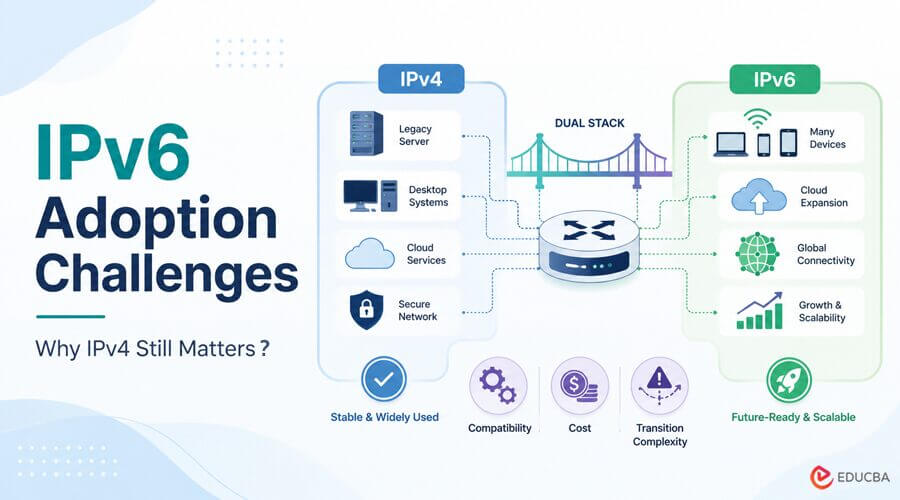
The internet uses two main protocols: IPv4 and IPv6. IPv6 was introduced to solve the shortage of IPv4 addresses and support the increasing number of internet-connected devices. Although IPv6 adoption continues to increase worldwide, many businesses and service providers still depend on IPv4 for daily operations. This guide explains the main challenges of IPv6 Adoption and why IPv4 remains an essential part of modern networking.
Buy IPv4 Address vs. Rent IPv6 Address: Key Differences
Ownership and Long-Term Value
An excellent advantage of buying an IPv4 address is that your business will gain permanent ownership rights. This makes them among the most valuable digital commodities that can be used and resold over the long term. If companies rent IPv6 address, they connect themselves to the internet for a short time without long-term commitment.
Initial Cost and Budget Planning
IPv4 space has limitations, and demand for the addresses is growing. As a result, acquiring IPv4 addresses is more costly. Renting an IPv6 address will involve a more affordable monthly charge. For startups and growing businesses, they are cost-effective without sacrificing the benefits of the latest internet technology.
Availability and Future Scalability
IPv4 addresses are still in short supply, as the worldwide pool is virtually depleted, making acquisition difficult. With a vast address space, businesses can effortlessly allocate addresses for use, ensuring future expansion, device connectivity, cloud services, and growing network demands.
Deployment and Compatibility
IPv4 remains prevalent in current networks, applications, and legacy systems, ensuring smooth interoperability with older infrastructure. While IPv6 offers enhanced networking functionalities, it may need configuration tweaks, hardware validation, and a phased rollout to ensure seamless integration with current business environments.
Business Flexibility and Network Growth
Different organizations require permanent network resources to operate or invest in a network for the long term. In such cases, the idea of buying an IPv4 address is highly valuable. If you need flexibility for temporary projects, growing cloud deployments, testing out new services, or businesses that anticipate changes or rapidly growing infrastructure needs, renting an IPv6 block is the best option.
What are the Common IPv6 Adoption Challenges?
There are still many businesses running legacy routers, switches, firewalls, and software. These systems require a replacement, which takes time and money. None of them works perfectly with IPv6, which is why many organizations are reluctant to abandon IPv4. This is to prevent service disruptions and potential compatibility issues during operation. Transitioning to IPv6 may involve purchasing new network hardware, updating software, training employees, and testing.
SMBs can defer these costs because they already have an IPv4 infrastructure. Organizations delay adoption of IPv6 for business growth due to budget constraints. The support for IPv6 in some applications, devices, or services might not be complete. Unsupported systems are risky to run as critical ones. When organizations are waiting for vendors to support IPv6 fully, they often buy IPv4 address to guarantee the stability and uninterrupted operation of users’ daily business activities.
Reasons Why Many Networks Still Rely on IPv4 Addresses
Many networks have opted to continue buying static IPv4 addresses. It comes with modern technology and is 100% compatible with older devices and applications. The transition to IPv4 has been a huge investment in infrastructure, and the costs of replacing all their infrastructure immediately are high for companies. Many internet service providers, software vendors, and business partners continue to use IPv4 connectivity. Network administrators already have extensive knowledge of IPv4, so adopting any new IP address is not a basic need.
In the meantime, technologies like Network Address Translation (NAT) help businesses use their existing IPv4 addresses more efficiently without making major changes to their network infrastructure. Many businesses prefer to take it slow and buy IPv6 addresses rather than moving directly to IPv6 today. This would help reduce risk, cost, and disruption and ensure network operations remain stable for everyone while IPv4 remains in place to support daily operations.
What Makes Renting IPv6 Different from Buying IPv4?
Unlike IPv4, IPv6 provides ample room for devices to connect directly to the internet. It makes the network more efficient by streamlining packet processing and routing. IPv6 also features automatic address configuration, facilitating device setup in various environments. It supports all the latest security features and network improvements for long-term benefits.
IPv4 is typically implemented using Network Address Translation. However, when IPv6 addresses are rented, compatible devices can communicate directly. Such improvements enable businesses to prepare for future growth in the number of internet-connected devices and cloud services, as well as in a large, flexible, and scalable digital infrastructure.
Get Reliable IPv4 Resources from IPV4 TradeHub
As IPv6 adoption continues to grow gradually, IPv4 remains essential for countless businesses, cloud providers, and enterprise networks. Whether you want to buy, sell, lease, or manage IPv4 addresses, IPV4 TradeHub offers reliable solutions with transparent processes and expert support. Our experienced team helps organizations secure the IPv4 resources they need for uninterrupted operations while planning for future network expansion.
Frequently Asked Questions (FAQs)
Q1. Is it better to buy an IPv4 address or rent an IPv6 address?
Answer: The decision to purchase or rent an IPv4 or IPv6 address depends on current networking needs. It also includes the flexibility and scalability benefits, along with the initial upfront cost in modern networking.
Q2. Why do businesses still buy IPv4 addresses?
Answer: Although many companies are migrating to IPv6, they continue to buy IPv4 addresses. This is due to numerous legacy systems, applications, and customer networks that must be supported over IPv4.
Q3. Can IPv6 replace IPv4 completely?
Answer: IPv6 will replace IPv4, but it remains a long way off before the world fully embraces IPv6. Nowadays, dual stack environments (both protocols are used) exist.
Q4. Is renting an IPv6 address more cost-effective than buying IPv4?
Answer: Renting IPv6 may be more affordable for businesses with smaller projects or budgets, as it does not require the upfront cost of an IPv4 address.
Recommended Articles
We hope this guide helps you understand the key IPv6 adoption challenges and why IPv4 continues to play an important role in modern networking. Explore these recommended articles for more insights into IPv4 and IPv6, network infrastructure, cloud connectivity, and enterprise networking solutions.


