


Overview
If you have been asking yourself how to pass IELTS exam in Nigeria, you are not alone. Every year, thousands of Nigerian students sit for the test with big dreams in their hearts and fear in their stomachs. Some want to study in the UK or Canada. Some want to migrate to Australia. Others need it for work. Yet many walk into the exam hall unsure of what really works. The truth is simple. Passing IELTS is not about speaking big grammar. It is about strategy, timing, and smart preparation. If you truly want to understand how to pass IELTS exam successfully, this guide will show you what most people overlook.
Understand What it Really Means to Pass IELTS
Before you dive into books, you need to understand what passing means. IELTS is scored from band 0 to 9. Most universities abroad ask for 6.0 or 6.5. Some competitive courses require 7.0 or higher. So when you think about how to pass the IELTS exam in Nigeria, you must first know your target band score. Many Nigerian students prepare blindly. They study everything without knowing the exact score they need. That approach wastes time. Check the school or embassy’s requirements first. Once you know your target, you can prepare with focus.
Also, understand that IELTS is not like JAMB or NABTEB. In JAMB, you cram facts. In NABTEB, you may explain technical processes. IELTS tests your ability to communicate in English in real life. It checks listening, reading, writing, and speaking. Nothing more.
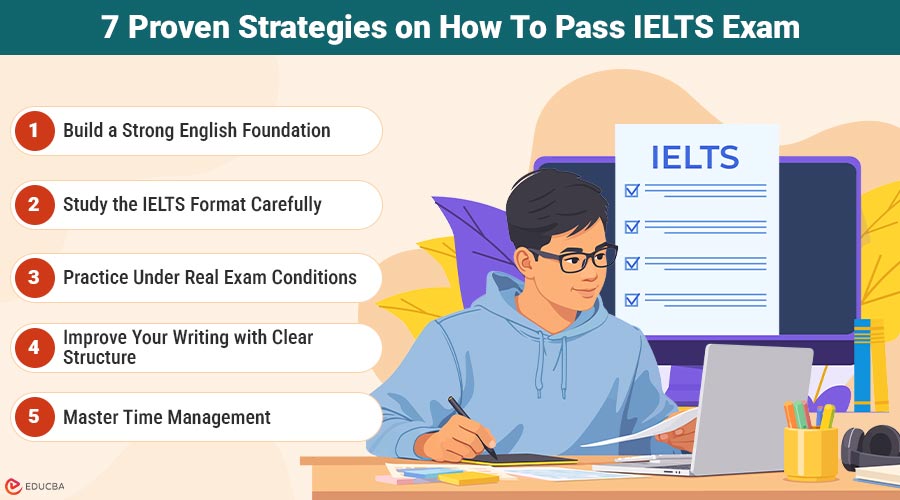
7 Proven Strategies on How to Pass IELTS Exam
Here are seven practical, results-driven strategies to guide you step by step.
1. Build a Strong English Foundation
If your English foundation is weak, fix it first. I say this with care. Many Nigerian students speak English every day but still struggle with structure. That is because we mix local expressions with formal English. Start by reading simple newspapers like The Guardian Nigeria or Punch. Read slowly. Notice sentence structure. Notice punctuation. Try to rewrite one paragraph in your own words. Listen to international news channels. The BBC works well. Focus on pronunciation. Repeat what you hear. Record yourself on your phone. Play it back. This small habit can transform your speaking score. When people ask me about how to pass IELTS exam in Nigeria, I always tell them that strong basics make everything easier.
2. Study the IELTS Format Carefully
You cannot win a game if you do not know the rules. IELTS has four sections. Listening lasts 30 minutes. Reading lasts 60 minutes. Writing lasts 60 minutes. Speaking lasts about 11 to 14 minutes. Each section has its own tricks.
- Listening: You hear the recording only once. If you miss an answer, move on immediately. Do not panic.
- Reading: Time is your biggest challenge. You do not need to read every word. Practice skimming and scanning to identify important information quickly.
- Writing: If the question says “discuss both views,” discuss both views. Task achievement is critical when learning how to pass IELTS exam.
- Speaking: Confidence matters more than accent. Speak clearly and naturally.
When you understand the structure deeply, mastering how to pass IELTS exam becomes much easier.
3. Practice Under Real Exam Conditions
This is where many students fail. They practice in comfort. Then they freeze in the exam hall. If you are serious about passing the IELTS exam in Nigeria, create exam conditions at home. Set a timer for 60 minutes and complete a full reading test. Do not check your phone. Do not stand up. Sit through it. Practice writing within time. Most Nigerian students complain that time is short. Time is short because they do not train under pressure. You can download free practice materials from the official IELTS website. Stick to official sources. Many random websites contain wrong answers.
4. Improve Your Writing with Clear Structure
Writing scares many candidates. Yet it is the easiest section to improve with structure. In Task 1 for Academic IELTS, you describe a graph or chart. Do not give opinions. Just report trends. Use simple phrases as the number increased, the figure dropped, and there was a steady rise. In Task 2, structure is key. Write an introduction, two body paragraphs, a clear conclusion. Keep your ideas simple and clear. Avoid memorized essays. Examiners can detect them. Instead, practice developing your own ideas. If you want to master passing the IELTS exam in Nigeria, write at least 3 essays each week and have someone review them. If you cannot afford a tutor, exchange essays with a friend.
5. Master Time Management
Time management is the hidden key to passing the IELTS exam in Nigeria. In Reading, spend about 20 minutes per passage. Do not spend 40 minutes on one passage. In Writing Task 2, spend 40 minutes. Spend 20 minutes on Task 1. Wear a wristwatch. Practice checking time without panic. During Listening, write answers as you listen. Do not wait. Spelling counts. In Nigeria, we often mix American and British spelling. IELTS accepts both, but be consistent.
6. Develop Confidence for the Speaking Test
Many brilliant students lose marks because of fear. The examiner is not there to intimidate you. They want to hear natural English. Speak clearly. Do not rush. If you do not understand a question, politely ask the examiner to repeat it. Practice speaking about common topics like family, education, work, and hobbies. Record mock interviews. One secret to passing the IELTS exam in Nigeria is this. Examiners prefer clear communication over complex vocabulary. Do not force big words. If you misuse them, your score drops.
7. Create A Personal Study Plan
Every student has different weaknesses.
- Struggle with Listening? Practice daily for 30 minutes.
- Weak in Writing? Focus on essay structure.
- Nervous about Speaking? Do weekly mock interviews.
Set a test date. Deadlines increase discipline. Understanding how to pass IELTS exam also means understanding your strengths and weaknesses.
Learn From Nigerian Test Takers Who Have Mastered the IELTS Exam
Understanding how to pass IELTS exam also means understanding yourself and your environment. One thing many people overlook is the importance of local experience. In Nigeria, test conditions can vary slightly by center, and these small differences can affect your performance. For example, some test centers in Lagos and Abuja offer computer-based IELTS. If you are not used to typing essays quickly, practice typing before your exam day. Speed matters in Writing Task 2.
Some centers can be quite cold due to air conditioning. Dress comfortably so you are not distracted during the test. Also, arrive early. Traffic in major cities like Lagos can be unpredictable. Rushing into the exam hall increases anxiety, and anxiety affects performance. These small practical details are rarely discussed, yet they play a role in your success. When learning how to pass IELTS exam, preparation is not only academic it is also mental and environmental.
Avoid Common Mistakes When Preparing For the IELTS Exam
Avoid these errors:
- Relying only on social media answers
- Memorizing templates without understanding
- Ignoring spelling practice
- Booking the test before you are ready
- Practicing without timing yourself
Each IELTS attempt costs money. Prepare properly before registering.
Final Thoughts
If you truly want to master how to pass the IELTS exam in Nigeria, focus on strategy, structure, and steady practice. Do not chase shortcuts. Build your English foundation. Understand the test format. Practice under real conditions. Manage your time well. Stay calm while speaking. Learn from others who have gone ahead of you. Success in IELTS is not about luck. It is about preparation done right. Now that you understand how to pass IELTS exam in Nigeria, the next step is simple. Start preparing today with clarity and confidence.
Frequently Asked Questions (FAQs)
Q1. Can I combine two IELTS scores for a single application in Nigeria?
Answer: Most institutions do not accept combined results from two different test dates. Always confirm with the institution before planning this option.
Q2. Is the computer-based IELTS easier than the paper-based one in Nigeria?
Answer: Neither is easier. The format is the same. Choose computer-based if you type fast and feel comfortable reading on a screen.
Q3. How long is an IELTS result valid in Nigeria?
Answer: IELTS results are valid for two years from the test date.
Q4. Can I use IELTS for Nigerian university admission?
Answer: Most Nigerian universities do not require IELTS. It is mainly for international study, work, or migration.
Q5. What happens if I arrive late to my IELTS test center?
Answer: Arriving late could prevent you from taking the test and result in losing your fee.
Q6. Can I request a remark if I am not satisfied with my score?
Answer: Yes, you can apply for an Enquiry on Results. This involves a fee, which may be refunded if your score changes.
Q7. How many times can I take IELTS in Nigeria?
Answer: There is no limit. You can take the exam as many times as you want.
Recommended Articles
We hope this guide on how to pass IELTS exam gives you clear direction and confidence. Explore these recommended articles for more practical tips and strategies to boost your IELTS success.


