
What is Ghost Commerce?
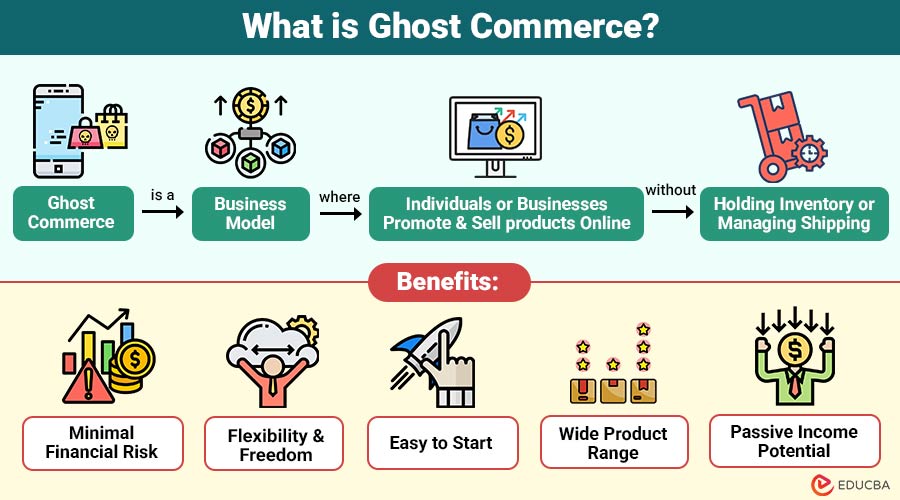
Ghost commerce is a business model where individuals or businesses promote and sell products online without holding inventory or managing shipping. Instead, they act as intermediaries, earning commissions or profits through affiliate links, dropshipping, or digital storefronts.
In simple terms, ghost commerce allows you to run an online store without ever touching the product.
Table of Contents:
- Meaning
- Key Features
- Types
- Working
- Benefits
- Challenges
- Tools
- Real-World Examples
- Difference
- Best Practices
Key Takeaways:
- Ghost commerce enables selling products online without inventory, reducing costs, risks, and operational complexities significantly.
- It relies on digital platforms, third-party suppliers, and marketing strategies to generate sales and commissions efficiently.
- This model offers flexibility, scalability, and passive income potential with minimal upfront investment and technical skills.
- Success depends on niche selection, consistent marketing efforts, reliable suppliers, and effective audience trust-building.
Key Features of Ghost Commerce
Here are the key features that define how ghost commerce operates and scales efficiently:
1. No Inventory Management
Ghost commerce significantly reduces the need to store physical products, reducing warehousing costs, inventory risks, and operational complexities for businesses.
2. Low Startup Costs
Ghost commerce enables entrepreneurs to launch businesses with minimal upfront investment since product purchasing and storage are unnecessary expenses.
3. Digital-First Approach
Ghost commerce relies heavily on digital platforms, such as websites, social media channels, and online marketplaces, to drive sales growth.
4. Third-Party Fulfillment
Suppliers and manufacturers manage packaging, shipping, and delivery directly to customers without businesses handling logistics or storage operations themselves.
5. Scalable Business Model
Ghost commerce allows effortless scaling of product offerings without worrying about storage limitations, inventory costs, or logistical constraints.
Types of Ghost Commerce
Here are the main types of ghost commerce explained below:
1. Affiliate Marketing
Promoting goods via referral links and receiving commissions when clients make purchases via such links is known as affiliate marketing.
2. Dropshipping
Dropshipping lets sellers run online stores where products are listed, but suppliers handle storage, packaging, and direct customer shipping.
3. Print-on-Demand
Print-on-demand allows businesses to sell customized items like t-shirts and mugs, produced and shipped only after customer orders are received.
4. Digital Product Promotion
Digital product promotion focuses on selling eBooks, courses, or software delivered instantly online without physical handling or manual distribution.
5. Social Commerce
Social commerce enables selling products directly through social media platforms by effectively leveraging engaging content, influencer marketing, and targeted audience interactions.
How Does Ghost Commerce Work?
Ghost commerce follows a simple workflow:
1. Niche Selection
Select a specific niche market based on interests, demand, competition, and long-term profitability potential for sustainable growth in ghost commerce.
2. Product Selection
Identify relevant products or services from suppliers or affiliate networks that match your chosen niche and audience preferences
3. Platform Creation
Build an online presence using websites, blogs, or social media channels to showcase products and attract target audiences.
4. Traffic Generation
Use SEO strategies, paid advertising, and engaging content marketing techniques to attract visitors and increase product visibility effectively
5. Order Placement
Customers click your affiliate link or visit your store and complete purchases through integrated checkout or referral systems.
6. Order Fulfillment
Third-party suppliers handle packaging, shipping, and delivery directly to customers without your involvement in logistics or inventory management.
7. Earnings
You receive commission or profit margin from each successful sale generated through your platform, links, or marketing efforts.
Benefits of Ghost Commerce
Here are the key benefits of ghost commerce:
1. Minimal Financial Risk
Ghost commerce significantly reduces financial risk because there is no need to invest in inventory or warehousing upfront.
2. Flexibility and Freedom
Ghost commerce lets you work from anywhere with internet access, offering global flexibility and complete location independence.
3. Easy to Start
Ghost commerce is easy to start with basic digital skills and requires minimal setup, tools, and prior business experience initially.
4. Wide Product Range
Ghost commerce enables offering a wide variety of products without worrying about storage, inventory management, or logistical limitations.
5. Passive Income Potential
Ghost commerce can generate passive income over time through automation, content marketing, and consistent traffic with minimal effort.
Challenges of Ghost Commerce
Below are the key challenges associated with ghost commerce models:
1. High Competition
Ghost commerce faces intense competition due to low entry barriers, making it difficult to stand out and attract customers.
2. Dependence on Suppliers
Businesses rely on third-party suppliers for product quality, shipping times, and overall customer satisfaction, significantly limiting control.
3. Lower Profit Margins
Profit margins are often lower since suppliers take a share, reducing overall earnings compared to selling owned products directly.
4. Branding Limitations
Building a unique brand is challenging when you lack control over product design, packaging, and overall customer experience.
5. Marketing Effort Required
Success requires consistent marketing efforts, including SEO, ads, and content strategies to attract, engage, and convert customers effectively.
Tools Used in Ghost Commerce
Below are the essential tools that help run and scale a ghost commerce business effectively:
1. Website Builders
Platforms like Shopify or WordPress help users easily create professional online stores, blogs, and websites without requiring advanced technical skills.
2. Affiliate Networks
Thousands of products are available for marketing and commission earning through networks like ClickBank, ShareASale, and Amazon Associates.
3. Dropshipping Platforms
Tools like Oberlo and Spocket connect online stores with suppliers, simplifying product sourcing and order fulfillment.
4. SEO Tools
Tools such as Google Keyword Planner, Ahrefs, and SEMrush help optimize content, improve rankings, and increase website traffic effectively.
5. Social Media Platforms
Platforms like Instagram, TikTok, and YouTube are powerful channels for promoting products and engaging target audiences online.
Real-World Examples
Below are some practical examples of how ghost commerce works in real-world scenarios:
1. Niche Blog Website
A blogger creates fitness-related content and earns commissions by promoting products through affiliate links on their website.
2. Instagram Store
An influencer promotes fashion products on Instagram and directs followers to purchase through affiliate or store links.
3. YouTube Channel
A tech reviewer on YouTube earns revenue by sharing product links in video descriptions and reviews.
Difference Between Ghost Commerce vs Traditional E-Commerce
Below is a comparison highlighting the key differences between ghost commerce and traditional e-commerce models:
| Aspect | Ghost Commerce | Traditional E-Commerce |
| Inventory | Not required | Required |
| Investment | Low | High |
| Risk | Low | Moderate to High |
| Control | Limited | Full control |
| Profit Margins | Lower | Higher |
| Scalability | High | Moderate |
Best Practices for Success in Ghost Commerce
Below are the key best practices to build and grow a successful ghost commerce business:
1. Choose the Right Niche
Select a niche with high demand and moderate competition to improve visibility, targeting, and long-term business success potential.
2. Build Trust with Content
Create authentic, valuable content consistently to build audience trust and credibility, to effectively encourage higher engagement and purchase decisions.
3. Optimize for SEO
Use relevant keywords, optimize content structure, and improve website performance to rank higher and attract consistent organic traffic.
4. Leverage Social Media
Use engaging reels, short videos, and posts on platforms like Instagram to boost visibility, engagement, and sales conversions.
5. Partner with Reliable Suppliers
Collaborate with reliable vendors to guarantee timely delivery and high-quality products, as well as to preserve client pleasure and a long-term company reputation.
Final Thoughts
Ghost commerce is a modern, flexible online business model eliminating inventory and logistics barriers, enabling low-cost, scalable ventures through digital platforms. Despite challenges like competition and supplier dependence, it offers strong earning potential. With effective strategies, reliable tools, and consistent effort, entrepreneurs can successfully build sustainable, profitable businesses in the evolving digital marketplace.
Frequently Asked Questions (FAQs)
Q1. Is ghost commerce legal?
Answer: Yes, ghost commerce is completely legal as long as you follow the platform’s policies and disclose any affiliate relationships.
Q2. Do I need technical skills to start?
Answer: Basic digital skills are enough, and many tools make the process beginner-friendly.
Q3. How much can I earn from ghost commerce?
Answer: Earnings vary depending on niche, traffic, and strategy, ranging from small side income to full-time revenue.
Q4. How long does it take to succeed?
Answer: It depends on effort, consistency, and strategy, but results typically take a few months to build.
Recommended Articles
We hope that this EDUCBA information on “Ghost Commerce” was beneficial to you. You can view EDUCBA’s recommended articles for more information.


