


What is an Energy Management System?
An Energy Management System (EnMS) is a tool that guides businesses on how they can improve their energy usage by tracking and analyzing their energy consumption.
These systems help organizations efficiently manage their energy resources, reduce energy costs, and minimize environmental impact. Currently, where efficiency and sustainability are top priorities, a strong energy management system (EnMS) is necessary for a business. This article explores the key steps for a successful energy management system in your company.
Benefits of Implementing an Energy Management System
There are several benefits of implementing energy management systems in the workplace. Let us delve into it.
1. Cost Savings
One of the important benefits of implementing an EnMS is cost reduction. Organizations can lower costs by effectively managing energy use. They can achieve this by optimizing energy use and identifying opportunities for efficiency improvements.
2. Improved Efficiency
EnMS helps identify energy inefficiencies in facilities, equipment, and processes. By closely monitoring these inefficiencies, businesses can make informed decisions on implementing energy-saving measures and enhancing the organization’s operational efficiency.
3. Environmental Sustainability
Reduced energy consumption helps the environment by reducing greenhouse gas emissions. Implementing an EnMS demonstrates a commitment to sustainability and helps organizations meet regulatory requirements and corporate sustainability goals.
4. Compliance and Reporting
Industries need to adhere to energy rules and standards. An EnMS helps organizations follow energy and environmental regulations by accurately tracking and reporting energy usage, avoiding fines or penalties.
5. Enhanced Reputation
Implementing an EnMS shows commitment to sustainability, boosting the organization’s reputation with customers, investors, employees, and the community. This can increase brand loyalty, customer satisfaction, and trust from stakeholders.
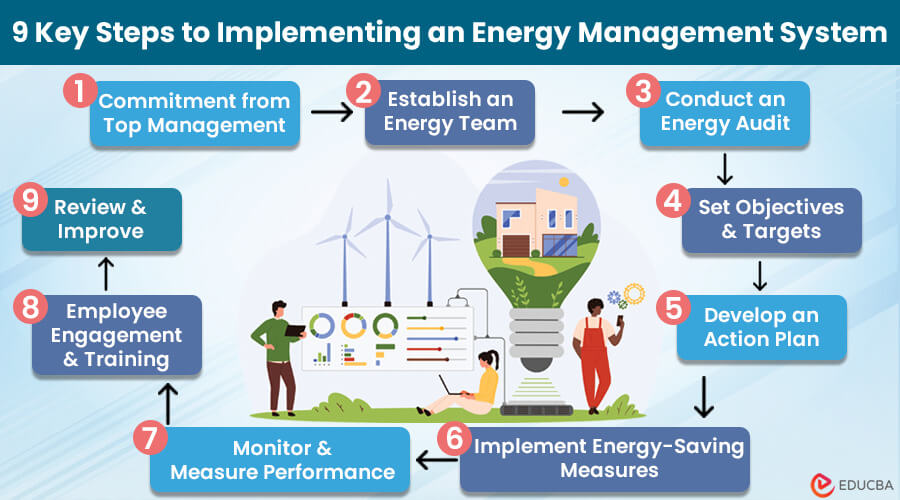
9 Key Steps to Implementing an Energy Management System
Let us look into the nine key steps you can do to implement an energy management system:
1. Commitment from Top Management
Get top management on board to ensure they allocate the time, money, and resources needed to implement the Energy Management System (EnMS) successfully. The top management on the board must lead the charge in changing how the organization operates and make energy management a top concern.
2. Establish an Energy Team
Form an energy management team containing individuals from various departments (Product Design, Manufacturing, Finance) across the organization. This team will oversee the EnMS implementation, identify energy-saving opportunities, and conduct continuous improvement efforts.
3. Conduct an Energy Audit
Before implementing any energy-saving measures, conducting a comprehensive energy audit is essential. This audit helps identify inefficiencies and prioritize areas for improvement by providing valuable insights into equipment efficiency, current energy consumption patterns, and opportunities for optimization.
4. Set Objectives and Targets
Define clear objectives and targets for the EnMS aligned with your organization’s overall energy management goals. Objectives and targets should be specific, measurable, achievable, relevant, and time-bound (SMART) to track progress effectively.
5. Develop an Action Plan
Craft a detailed action plan that outlines specific steps to achieve predetermined goals and targets. This strategy may include upgrading outdated equipment with energy-efficient alternatives, instituting energy-saving practices, optimizing workflows, and exploring investments in renewable energy sources.
6. Implement Energy-Saving Measures
When the action plan is in place, implement energy management controls and procedures to monitor, measure, and manage energy consumption effectively. This includes optimizing equipment schedules, upgrading HVAC systems, improving lighting, enhancing insulation, and promoting energy-saving behaviors among staff.
7. Monitor and Measure Performance
Establish monitoring and measurement systems to track energy consumption, performance indicators, and progress toward achieving objectives and targets. Regularly review and analyze energy data to identify differences from expected performance and opportunities for improvement.
8. Employee Engagement and Training
Provide training and awareness campaigns to employees at all levels to encourage energy efficiency and sustainability within the organization’s culture. Educate employees on the importance of energy management, their roles and responsibilities in achieving energy savings, and best practices for conserving energy in their daily activities.
9. Review and Improve
Conduct regular reviews and evaluations of the EnMS to assess its effectiveness, identify areas to improve, and implement corrective actions as necessary. Continuously strive for improvement by incorporating lessons learned, best practices, and technological advancements into your energy management efforts.
Challenges and Solutions
Putting in place an energy management system may present some difficulties as follows:
| Basis | Challenge | Solution |
| Financial constraints | Limited budget for energy-saving initiatives. |
|
| Resistance to change | Resistance from employees or stakeholders towards adopting new procedures. |
|
| Lack of data and monitoring tools | Insufficient information and monitoring resources to track energy efficiency. |
|
| Complexity of implementation | Complexity of implementing an Energy Management System (EnMS), especially for large organizations with multiple locations. |
|
Final Thoughts
Incorporating energy efficiency isn’t just smart for business—it’s also our duty to the planet and future generations. Businesses must take actions by implementing your Energy Management System (EnMS). By doing so, they will enjoy the advantages of running a more efficient and sustainable operation.
Recommended Articles
We hope this article on the energy management system was informative and helpful. You can also refer to the articles below for more information.

