

Difference between Electronics Engineering vs Electrical Engineering
Electronics engineering is a sub division of electrical engineering which involves the design and maintenance of circuits and their systems that help in building the circuit boards. Any nonlinear or active electrical components are used to design the circuits so that communication systems are developed to broadcast the information to other systems. The design and application of any equipment related to electrical energy are called electrical engineering. Any electrical systems including motors of aircraft, radar and navigation systems, generators, etc. are designed and developed by electrical engineers. All the categories of electrical and electronics come under electrical engineering.
Head to Head Comparison between Electronics Engineering vs Electrical Engineering (Infographics)
Below are the top 5 differences between Electronics Engineering vs Electrical Engineering:
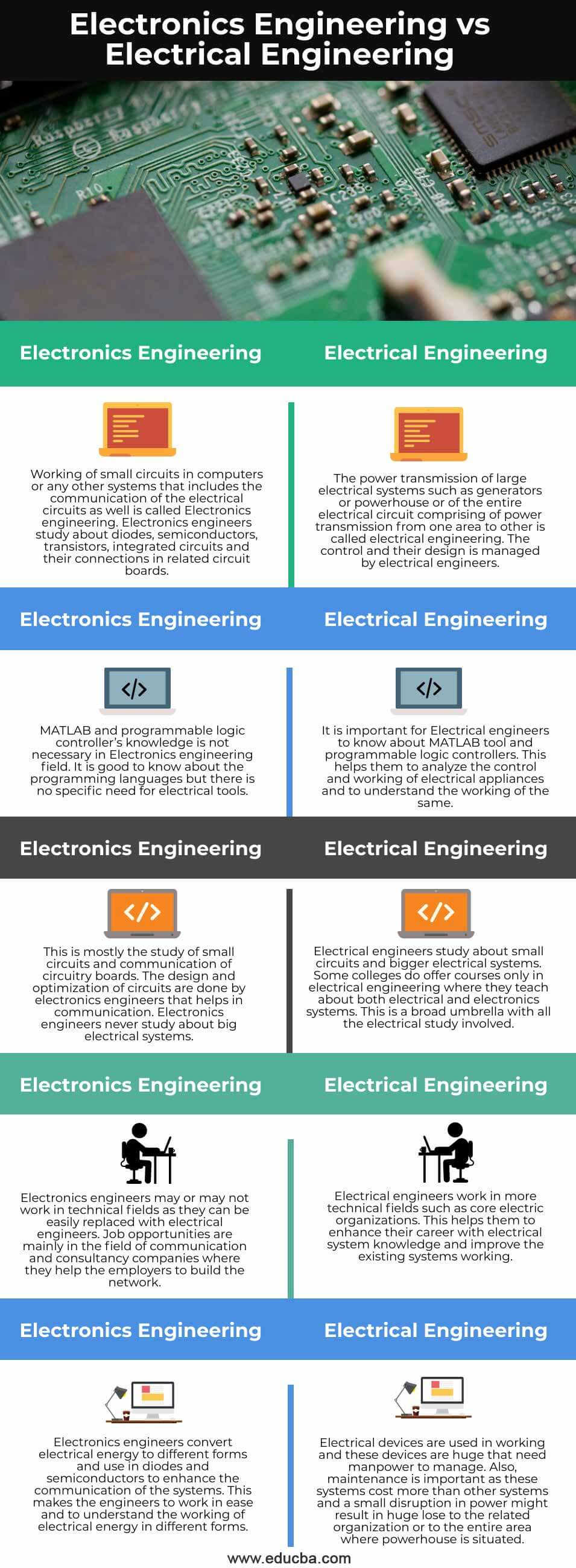
Key Differences between Electronics Engineering vs Electrical Engineering
Following are the Key differences between Electronics Engineering vs Electrical Engineering are given below:
- Electrical engineering includes electronics engineering as well where they will study communication and the working of diodes, how to connect the circuit, and understand about the communications they do. This typically involves the study of big and small electrical systems and understanding the communication features of small systems. But Electronics engineers do not study electrical components and they dive deeper into the communication side of circuitry boards and related programming studies. Electrical engineers will work on sites and power grids where power is transmitted from one area to other in a village or a town. Also, dam sites need electrical engineers to know the working of power grids near the area.
- Electrical engineers have work related to electric power design, generation, transmitting the same, and distributing it to others. They also learn about semiconductors and electronic components design and manufacturing. Control instruments are managed by electrical engineers that help them to control navigational systems. They do research in physics and engineering to bring changes in the electrical field. Electronics engineers also manage control instruments and do the design of the same. Navigational systems are controlled by electronics engineers. Also, they have expertise in electromedical and related fields that uses electrical circuits. The main difference is that electronics engineers have deep knowledge of communication systems. They learn about communication strategies and connect different instruments that help in the communication of people and different systems.
- Electronics devices work in DC current that requires less voltage and hence the power required is less in the electronics systems which help engineers to manage the devices easily. Electrical systems work with AC currents that require high voltage and power. Most of the electrical systems do not convert power from AC to DC where they work with 11KV or 400KV transmission lines.
- Electrical systems are used to control the entire system and the power functions of the same while electronics systems are used to enhance the functions of the same electrical devices. Considering the example of a washing machine, the entire machine can be considered as an electrical system whereas various functions like draining water after washing clothes, timer ability, automatic on/off functions are electronics engineering. Electronics engineers can add various functionalities to an existing electrical device but they cannot build an electrical system from the scratch.
- Communication networks and wireless studies are done by electronics engineers that help them to learn about the working of the systems. Microprocessors and the working of chips are mainly the design of electronics engineers. They also learn about information coding and relate with computers. This is not done in electrical engineering where learn mostly about the working and utilization of electrical power in various systems.
Both the engineering fields are almost similar where electrical and electronics engineers start their work on similar systems but then diverge based on specific skillsets. This makes them to manage the works based on communication and work on bigger power systems. A skilled electrical engineer should have the knowledge of both electrical and electronics systems to manage the flow of current.
Electronics Engineering vs Electrical Engineering Comparison Table
Let’s see some more differences between electronics Engineering vs Electrical Engineering through a comparison table for clear understanding:
|
Electronics Engineering |
Electrical Engineering |
| Working of small circuits in computers or any other systems that include the communication of the electrical circuits as well is called Electronics engineering. Electronics engineers study diodes, semiconductors, transistors, integrated circuits, and their connections in related circuit boards. | The power transmission of large electrical systems such as generators or powerhouses or of the entire electrical circuit comprising of power transmission from one area to other is called electrical engineering. The control and their design is managed by electrical engineers. |
| MATLAB and programmable logic controller knowledge is not necessary for the Electronics engineering field. It is good to know about the programming languages but there is no specific need for electrical tools. | It is important for Electrical engineers to know about MATLAB tools and programmable logic controllers. This helps them to analyze the control and working of electrical appliances and to understand the working of the same. |
| This is mostly the study of small circuits and the communication of circuitry boards. The design and optimization of circuits are done by electronics engineers that help in communication. Electronics engineers never study big electrical systems. | Electrical engineers study small circuits and bigger electrical systems. Some colleges do offer courses only in electrical engineering where they teach about both electrical and electronics systems. This is a broad umbrella with all the electrical studies involved. There are also post-undergraduate certifications, such as the FE electrical exam which pave the path towards electrical engineering licensure in the US. |
| Electronics engineers may or may not work in technical fields as they can be easily replaced with electrical engineers. Job opportunities are mainly in the field of communication and consultancy companies where they help the employers to build the network. | Electrical engineers work in more technical fields such as core electric organizations. This helps them to enhance their career with electrical system knowledge and improve the existing systems working. |
| Electronics engineers convert electrical energy to different forms and use it in diodes and semiconductors to enhance the communication of the systems. This makes the engineers work with ease and understand the working of electrical energy in different forms. | Electrical devices are used in working and these devices are huge that need manpower to manage. Also, maintenance is important as these systems cost more than other systems and a small disruption in power might result in a huge loss to the related organization or to the entire area where the powerhouse is situated. |
Recommended Articles
This is a guide to Electronics Engineering vs Electrical Engineering. Here we also discuss the electronics engineering vs electrical engineering key differences with infographics and a comparison table. You may also have a look at the following articles to learn more –

