
What is Electronic Data Interchange (EDI)?
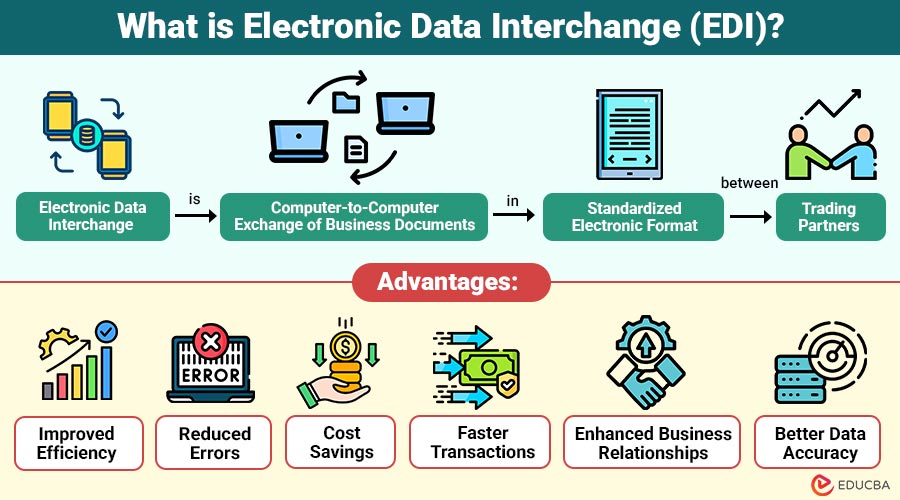
Electronic Data Interchange is computer-to-computer exchange of business documents in standardized electronic format between trading partners. Instead of relying on paper documents such as invoices, purchase orders, and shipping notices, EDI allows businesses to transmit data directly between systems.
In simple terms, EDI eliminates manual data entry, reduces errors, and accelerates business transactions by automating document exchange.
Table of Contents:
- Meaning
- Key Features
- Working
- Types
- Common Documents
- Advantages
- Limitations
- Standards
- Real-World Example
- Use Cases
- Best Practices
- Future Trends
Key Takeaways:
- Electronic Data Interchange enables automated, standardized exchange of business documents, eliminating manual processes and reducing errors.
- EDI improves efficiency, accuracy, and transaction speed while lowering operational costs across business communication systems.
- EDI continues evolving with cloud, AI, blockchain, and API integration, enhancing flexibility and real-time capabilities.
- EDI supports various document types, such as invoices, purchase orders, and shipping notices, enabling seamless transactions.
Key Features of Electronic Data Interchange
Electronic Data Interchange systems are built on several fundamental features that ensure smooth and secure data exchange:
1. Standardized Formats
EDI uses recognized standards such as ANSI X12, EDIFACT, and XML, ensuring consistent data structures and compatibility across business systems.
2. Automation
EDI automates transaction processing without manual intervention, significantly reducing errors, accelerating workflows, and improving overall operational efficiency across organizations.
3. Security
EDI ensures data security through encryption, authentication, and secure communication protocols, safeguarding sensitive information from unauthorized access and breaches.
4. Integration
EDI integrates seamlessly with enterprise systems such as ERP and supply chain software, enabling data flow and streamlining business operations.
5. Real-Time Processing
Modern EDI systems support near-real-time data exchange, enabling faster decision-making, improved responsiveness, and better coordination across business processes.
How Does Electronic Data Interchange Work?
EDI follows a structured process to ensure accurate and efficient data exchange:
1. Document Preparation
A business document, such as a purchase order, is created within the company’s internal system and contains all required transaction details.
2. Data Translation
Using specialist translation software, the document is transformed into a standardized EDI format, guaranteeing interoperability across various business systems worldwide.
3. Transmission
The formatted EDI data is transmitted securely through communication channels such as Value-Added Networks or the internet.
4. Reception and Translation
The receiving system captures the incoming EDI message and translates it back into a human-readable format for internal use.
5. Processing
The translated document is automatically processed within the recipient’s system, updating records and triggering necessary business actions without manual intervention.
Types of Electronic Data Interchange
EDI can be implemented in multiple types depending on business requirements:
1. Direct EDI (Point-to-Point)
Businesses establish direct connections with trading partners to exchange data without intermediaries, ensuring faster communication and greater control over transactions.
2. EDI via VAN (Value-Added Network)
A third-party network provider manages EDI data transmission, providing services such as security, message tracking, data validation, and reliable communication infrastructure.
3. Web EDI
Small businesses use web-based EDI platforms to create, send, and receive documents without requiring complex systems or dedicated infrastructure investments.
4. Mobile EDI
Mobile EDI enables users to access, send, and manage EDI transactions through smartphones or tablets, supporting business operations on the go.
5. Cloud-Based EDI
Cloud-based EDI solutions provide scalability, flexibility, and cost efficiency by eliminating infrastructure needs and enabling seamless integration with business systems.
Common Electronic Data Interchange Documents
EDI supports wide range of business documents, including:
1. Purchase Orders
Purchase orders are sent by buyers to suppliers to request goods or services, specifying quantities, prices, delivery dates, and terms.
2. Invoices
Invoices are documents that merchants send to customers asking for payment. They include information on the goods or services they have rendered, their costs, any applicable taxes, and the terms of payment.
3. Advance Shipping Notices
Advance shipping notices inform buyers about shipment details before delivery, including contents, quantities, carrier information, and expected arrival timelines.
4. Payment Remittance Advice
Payment remittance advice provides details on payments made, including invoice references, amounts paid, deductions, and payment methods, for reconciliation.
5. Inventory Reports
Inventory reports share information about stock levels, product availability, and inventory movements, helping businesses manage supply chains and prevent shortages.
6. Shipping Status Updates
Shipping status updates provide real-time information on shipment progress, including dispatch, transit, delays, and delivery confirmation, improving visibility.
Advantages of Electronic Data Interchange
Here are the key advantages of Electronic Data Interchange (EDI):
1. Improved Efficiency
EDI eliminates manual paperwork, streamlining processes and significantly speeding up transaction handling, thereby improving productivity across business operations and workflows.
2. Reduced Errors
Automated data exchange reduces human errors caused by manual entry, ensuring higher accuracy, consistency, and reliability in business transaction processing activities.
3. Cost Savings
EDI reduces administrative, printing, and storage expenses, leading to substantial cost savings, improved operational efficiency, and reduced reliance on paper-based processes.
4. Faster Transactions
Real-time data exchange accelerates order processing, approvals, and delivery cycles, enabling businesses to respond quickly to market demands and customer needs.
5. Enhanced Business Relationships
Improved communication and faster transactions foster stronger relationships with trading partners, enhancing trust, collaboration, and long-term business growth opportunities.
6. Better Data Accuracy
Standardized EDI formats ensure consistent data structure, improving accuracy, reducing discrepancies, and enabling reliable information exchange between different business systems.
Limitations of Electronic Data Interchange
Here are the key limitations of Electronic Data Interchange:
1. High Initial Setup Cost
Implementing EDI systems requires significant upfront investment in software, infrastructure, and training, especially challenging for small businesses.
2. Complexity
EDI implementation involves technical expertise for setup, integration, and maintenance, making it difficult for organizations without skilled IT resources.
3. Limited Flexibility
Standardized EDI formats may restrict customization, making it harder to effectively accommodate unique business processes or specific industry requirements.
4. Dependence on Standards
Businesses must follow specific EDI standards, which may differ by region, significantly complicating communication with global trading partners.
5. Integration Challenges
Integrating EDI with legacy systems can be complex, time-consuming, and costly, often requiring system upgrades or middleware to ensure compatibility.
Electronic Data Interchange Standards
Here are the key standards used in Electronic Data Interchange (EDI):
1. ANSI X12
ANSI X12 is a widely used EDI standard in North America for structuring business transaction data exchange.
2. EDIFACT
EDIFACT is an international EDI standard developed by the United Nations that enables the exchange of global electronic business documents.
3. TRADACOMS
TRADACOMS is an EDI standard primarily used in the United Kingdom, especially within the retail and supply chain industries.
4. XML-based EDI
XML-based EDI uses flexible markup language formats, enabling easier integration, scalability, and compatibility with modern digital business systems.
Real-World Example
Here is an example of how Electronic Data Interchange (EDI) works in practice:
A retail company places an order with a supplier using EDI. The purchase order is automatically generated, transmitted, and processed without manual intervention. The supplier sends an advance shipping notice and invoice through the same system, ensuring a seamless and efficient transaction cycle.
Use Cases of Electronic Data Interchange
Here are some key use cases of EDI across various industries:
1. Supply Chain Management
EDI helps manage inventory, process orders, and track shipments, making supply chains faster, clearer, and more efficient.
2. Retail Industry
Retailers use EDI to communicate with suppliers, automate ordering processes, and maintain accurate stock levels across multiple locations.
3. Healthcare Sector
Healthcare organizations use EDI for managing patient records, billing processes, and insurance claims, ensuring accuracy and faster processing.
4. Manufacturing
Manufacturers rely on EDI for procurement, supplier communication, and production planning, significantly reducing operational delays.
5. Logistics and Transportation
EDI enables real-time shipment tracking, status updates, and coordination between partners, significantly improving delivery accuracy and overall transportation efficiency.
Best Practices for Implementing Electronic Data Interchange
Here are some essential best practices to ensure successful EDI implementation:
1. Choose the Right EDI Solution
Select an EDI solution that matches your business size, transaction volume, and integration requirements for optimal performance and scalability.
2. Ensure Data Standardization
Adopt globally recognized EDI standards to ensure compatibility, consistency, and seamless data exchange across different business systems and partners.
3. Focus on Security
Protect sensitive company data from unwanted access and any cyber attacks by putting strong encryption, authentication, and secure communication protocols in place.
4. Train Employees
Provide employees with proper training to ensure they understand EDI processes, tools, and best practices for efficient system use.
5. Monitor Performance
Maintain efficiency and dependable data interchange by continuously monitoring EDI system performance, spotting problems early, and taking necessary action.
Future Trends in Electronic Data Interchange
Here are some emerging trends shaping the future of EDI:
1. Cloud Integration
Cloud-based EDI solutions are gaining popularity due to scalability, flexibility, reduced infrastructure costs, and easier system maintenance and upgrades.
2. AI and Automation
Artificial intelligence makes EDI faster and smarter by automating tasks, reducing errors, and improving decisions
3. Blockchain Integration
Blockchain technology enhances EDI by improving data transparency, traceability, and security, ensuring tamper-proof transactions and increased trust among partners.
4. API Integration
Businesses integrate EDI with APIs to enable flexible, real-time communication, improving interoperability and supporting modern digital transformation initiatives across industries.
Final Thoughts
Electronic Data Interchange transforms business communication by automating and standardizing data exchange, thereby improving efficiency and accuracy and reducing costs. Though challenges exist, its advantages make it essential for modern organizations. EDI continues evolving with cloud computing, artificial intelligence, and API integration, ensuring relevance and adaptability in an increasingly digital environment.
Frequently Asked Questions (FAQs)
Q1. Is EDI still relevant today?
Answer: Yes, EDI remains widely used across industries for efficient data exchange and supply chain management.
Q2. What industries use EDI?
Answer: Industries such as retail, healthcare, manufacturing, logistics, and finance use EDI extensively.
Q3. Is EDI secure?
Answer: Yes, EDI uses encryption and secure communication protocols to ensure data safety.
Recommended Articles
We hope that this EDUCBA information on “Electronic Data Interchange” was beneficial to you. You can view EDUCBA’s recommended articles for more information.


