


DNS Lookup API and Historical DNS API- Introduction
Countless systems and protocols actively work behind the scenes in the vast realm of the internet to ensure the smooth functioning of websites. One such fundamental aspect is the Domain Name System (DNS). It serves as a directory for the internet, translating human-readable domain names into machine-readable IP addresses. DNS Lookup API and Historical DNS API are two tools that provide insights into this critical system, aiding developers, researchers, and cybersecurity experts in their endeavors.
What is the DNS Lookup API?
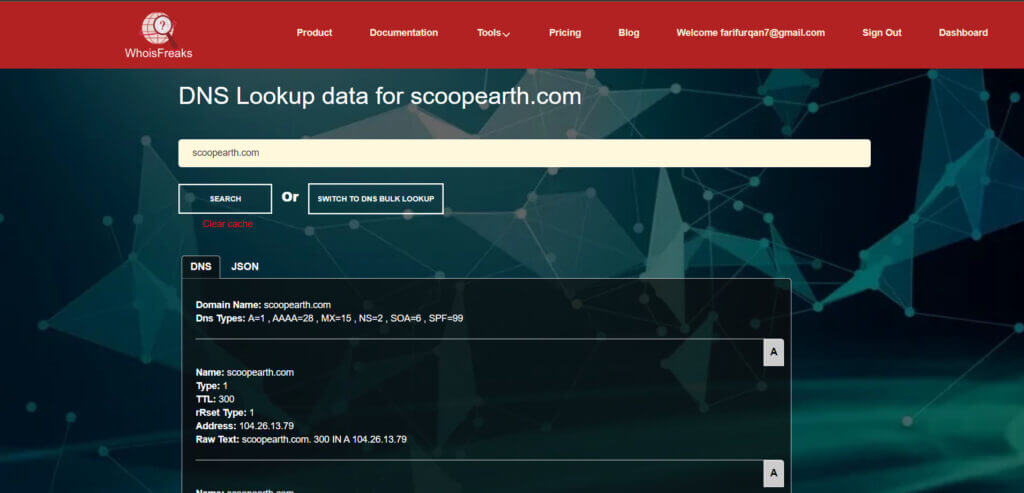
(Image Credit: Whoisfreaks)
The DNS Lookup API is a tool that helps computers find information about domain names. Imagine you want to visit a website like “educba.com.” Your computer needs to find the exact location of that website’s server. This API helps your computer by asking DNS where to find the website. It instantly shows the hidden addresses behind the website name. It is essential for cybersecurity because it helps experts track where internet traffic is coming from or going to. If something suspicious happens, they can spot it quickly and act.
However, it is not just for security reasons. Businesses can use the DNS lookup API to keep an eye on their internet traffic in real-time. This means they can catch any suspicious behavior and shut it down before it causes any harm. For example, if a mysterious website tries to connect with their system, the API can raise a red flag. Similarly, in a cyber attack, a company can identify the source of the attack using the DNS Lookup API.
What is the Historical DNS API?
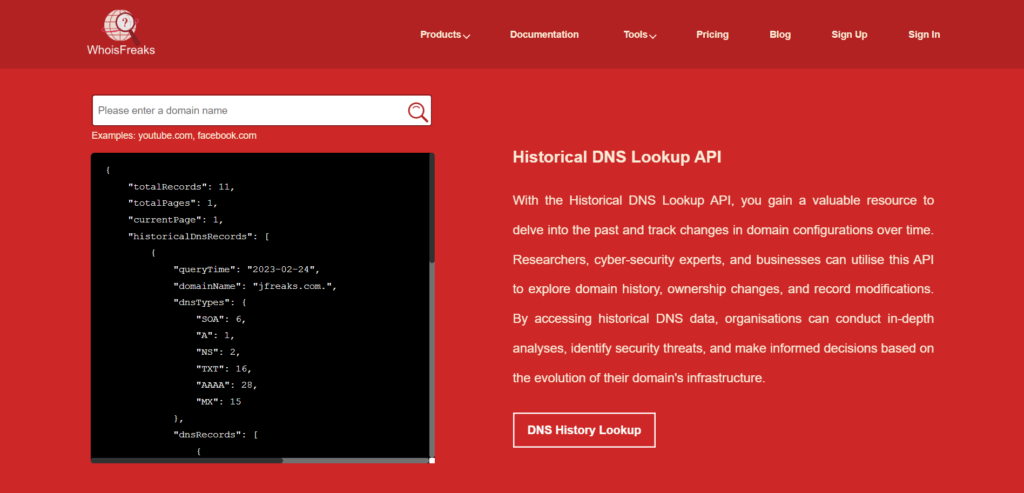
(Image Credit: Whoisfreaks)
The Historical DNS API is a tool that lets you explore the records of domain names and their associated data. The Historical DNS API assists in observing the setup history of a website or domain, including changes such as IP addresses and name servers. This tool is handy for many reasons. For example, you can investigate a website’s history, track changes in domain ownership, or understand how a domain has changed over time.
While the DNS Lookup API focuses on the present, the Historical DNS API dives into the past. This is particularly useful for cybersecurity experts. For instance, if a domain previously associated with malicious activities suddenly becomes active again, the Historical DNS API can provide crucial context. It helps security teams assess the level of threat and take appropriate action.
Applications
Using both the DNS Lookup API and Historical DNS API together forms a powerful tool for cybersecurity.
Here are some benefits of using both APIs together:
- Real-time Monitoring: By integrating the DNS Lookup API, organizations can establish real-time monitoring and receive alerts about suspicious activities with their domain names.
- Forensic Analysis: The Historical DNS API is invaluable for forensic analysts. After a security breach, analysts can utilize this API to delve into a domain’s past activities. This helps them understand the nature of the attack and unravel the tactics employed by the attackers.
- Enhancing Threat Intelligence: These APIs can enrich an organization’s threat intelligence by combining real-time data from the DNS Lookup API and historical insights from the Historical DNS API. This comprehensive view aids in predicting future attacks and perceptive patterns in the behavior of threat actors over time.
- Compliance and Auditing: Maintaining historical DNS data can aid in compliance for regulated organizations. By auditing DNS changes and histories, organizations can ensure transparency and demonstrate adherence to regulatory requirements.
Implementation Tips
When implementing DNS APIs, consider these tips for better management and smoother integration:
- Evaluate and strengthen existing cybersecurity measures to identify potential vulnerabilities.
- Work closely with IT and cybersecurity teams to seamlessly incorporate DNS APIs into current systems.
- Provide comprehensive training sessions to familiarize staff with DNS APIs’ functionality and proper utilization. Doing so enables your employees to actively contribute to threat detection and mitigation efforts, enhancing your overall security posture.
- Implement routine testing protocols to continuously assess DNS APIs’ performance and responsiveness in detecting and addressing potential threats.
Final Thoughts
Cybersecurity threats are becoming more common and complex. To tackle this, we can rely on tools like the DNS Lookup API and Historical DNS API. These tools give real-time and past insights into domain activities, which are crucial for organizations to defend against cyber threats effectively.
By incorporating the DNS Lookup API and Historical DNS API into an organization’s cybersecurity strategy, we can enhance our technical capabilities and take a proactive approach to cybersecurity. These APIs offer important data that assists in spotting and dealing with cyber threats before they do damage.
In essence, adopting these technologies can significantly improve cybersecurity efforts. By using these APIs, organizations can stay well-informed, adaptable, and resilient in the face of evolving cyber threats.
Recommended Articles
We hope this article on “DNS Lookup API and Historical DNS API” was helpful to you. To learn more, refer to the articles below.

