
What is Disaster Recovery?
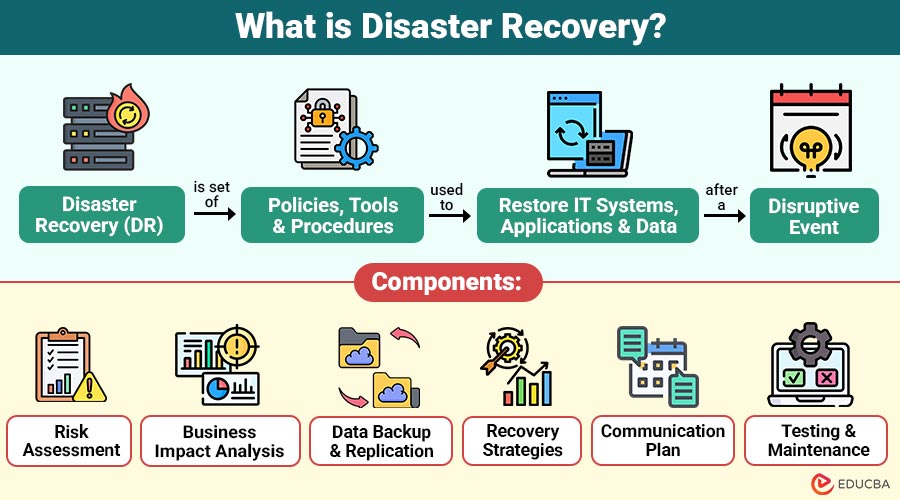
Disaster Recovery (DR) is set of policies, tools, and procedures used to restore IT systems, applications, and data after a disruptive event. These events may include natural disasters, cyber incidents, system outages, or infrastructure failures.
Primary goal of disaster recovery is to make sure that critical business functions can resume as quickly as possible with minimal data loss. Disaster recovery is a subset of key business continuity planning (BCP), focusing specifically on IT and technology recovery.
Table of Contents:
Key Takeaway:
- Disaster recovery minimizes downtime and data loss, ensuring rapid restoration of critical business IT operations.
- Clearly defined RTO and RPO metrics guide recovery priorities and determine acceptable downtime level targets.
- Regular testing, automation, and updates keep disaster recovery plans effective against evolving threats and risks.
- Cloud-based disaster recovery solutions offer scalability, faster recovery, cost efficiency, and enhanced business resilience.
Why is Disaster Recovery Important?
Disaster recovery is crucial for protecting organizations from financial loss, reputational damage, and operational disruptions. The following points help to clarify its importance:
1. Minimizes Downtime
System outages can halt operations, delay services, and impact revenue. It ensures rapid system restoration, significantly reducing downtime.
2. Protects Critical Data
Data is one of the most valuable organizational assets. Disaster recovery strategies include data backups and replication to prevent permanent data loss.
3. Ensures Business Continuity
A strong disaster recovery plan ensures essential services remain available or are restored quickly during crises.
4. Supports Regulatory Compliance
Disaster recovery and data protection procedures are necessary for many industries, including healthcare and banking, to comply with legal and regulatory requirements.
5. Maintains Customer Trust
A quick recovery from disruptions demonstrates reliability and professionalism, strengthening customer confidence.
Key Objectives of Disaster Recovery
A strategy is built around two critical metrics:
1. Recovery Time Objective (RTO)
The maximum permissible downtime for systems following a disaster is defined by RTO. Faster recovery solutions are necessary for lower RTO values.
2. Recovery Point Objective (RPO)
RPO defines the maximum allowable data loss, measured in time. An RPO of one hour, for instance, requires that data backups occur at least once per hour.
Components of Disaster Recovery
An efficient plan includes the following important components:
1. Risk Assessment
Identifies potential threats, such as cyberattacks, system failures, natural disasters, and infrastructure issues, that could impact business continuity.
2. Business Impact Analysis
Analyzes disruption effects on operations, revenue, and customers, and identifies critical systems requiring priority recovery.
3. Data Backup and Replication
Ensures regular, secure backups stored offsite or in the cloud for reliable data restoration during disasters.
4. Recovery Strategies
Defines step-by-step procedures for efficiently restoring applications, servers, databases, and networks after disruptions.
5. Communication Plan
Establishes clear communication methods to inform employees, stakeholders, and customers during and after incidents.
6. Testing and Maintenance
Involves regular testing, reviews, and updates to keep the disaster recovery plan effective and current.
Types of Disaster Recovery Solutions
Different organizations adopt different models based on cost, complexity, and recovery needs.
1. Backup and Restore
Provides basic security with longer recovery times by routinely backing up data and restoring it following disturbances.
- Pros: Cost-effective
- Cons: Longer recovery time
2. Cold Site
Provides a backup location with minimal infrastructure, requiring significant setup time before operations can resume.
- Pros: Low cost
- Cons: High RTO and slower recovery
3. Warm Site
Includes partially configured systems and infrastructure, enabling faster recovery than cold sites but slower than hot sites.
- Pros: Balanced cost and recovery time
- Cons: Not instant recovery
4. Hot Site
Maintains a fully operational replica of the primary environment, allowing immediate recovery with minimal downtime.
- Pros: Fastest recovery
- Cons: High cost
5. Disaster Recovery as a Service (DRaaS)
Uses cloud-based services managed by providers to deliver scalable, automated, and rapid disaster recovery solutions.
- Pros: Scalable, cost-efficient, fast recovery
- Cons: Dependency on the service provider
Best Practices for Effective Disaster Recovery
To maximize the effectiveness, organizations should follow these best practices:
1. Align DR with Business Goals
Align disaster recovery strategies with business goals, ensuring critical processes, revenue streams, and customer commitments receive the highest recovery priority.
2. Automate Backups and Recovery
Automate backup and recovery workflows to minimize human error, accelerate restoration, ensure consistency, and support rapid, reliable disaster response.
3. Use Cloud-Based Solutions
Adopt cloud-based disaster recovery solutions to gain scalability, geographic redundancy, faster deployment, improved accessibility, and optimized overall cost efficiency.
4. Test Regularly
Regularly test plans through drills and simulations to uncover gaps, validate assumptions, and continuously improve response times.
5. Train Employees
Train employees on procedures so they understand their responsibilities, communication channels, escalation paths, and actions during emergencies.
6. Update the Plan Frequently
Frequently update plans to reflect evolving technologies, emerging threats, regulatory requirements, organizational changes, and business priorities accurately.
Real-World Examples
Here are some real-world scenarios that demonstrate how organizations successfully recover from disruptions through disaster recovery strategies.
1. Cyberattack Recovery
A financial services company was hit by a ransomware attack that encrypted its servers. Due to a robust disaster recovery plan with hourly backups and cloud replication, the company restored systems within hours without paying ransom.
2. Natural Disaster
A manufacturing firm faced a flood that damaged its on-premises data center. By switching operations to a warm recovery site, it resumed critical production systems within 24 hours.
3. Cloud Service Outage
An e-commerce business relied on multi-region cloud replication. When one region failed, traffic was automatically redirected to ensure an uninterrupted customer experience.
Challenges in Disaster Recovery
Despite its importance, organizations face several disaster recovery challenges:
1. High Implementation and Maintenance Costs
Solutions require significant upfront investment, ongoing maintenance expenses, skilled resources, and continuous upgrades to remain effective.
2. Complex Hybrid and Multi-Cloud Environments
Managing across hybrid and multi-cloud environments increases architectural complexity, integration challenges, visibility issues, and coordination efforts.
3. Inadequate Testing and Documentation
Insufficient testing and outdated documentation lead to unverified assumptions, slow recovery, confusion, and increased operational risk.
4. Lack of Executive Awareness or Support
Limited executive awareness reduces funding, prioritization, strategic alignment, and organizational commitment toward comprehensive disaster recovery planning initiatives.
Final Thoughts
Disaster recovery is a business necessity in today’s digital, threat-driven environment. A robust strategy protects critical data, minimizes downtime, ensures compliance, and preserves reputation. By understanding core concepts, defining recovery objectives, selecting appropriate solutions, and applying best practices, organizations can build resilient systems. Proactive investment in disaster recovery today secures continuity, stability, and long-term business success.
Frequently Asked Questions (FAQs)
Q1. Is disaster recovery only for large enterprises?
Answer: No. Small and medium businesses also need disaster recovery, as they are often more vulnerable to prolonged outages.
Q2. How often should a disaster recovery plan be tested?
Answer: At least once or twice a year, or whenever significant system or business changes occur.
Q3. What happens if an organization has no disaster recovery plan?
Answer: It risks extended downtime, data loss, financial losses, regulatory penalties, and reputational damage.
Q4. What is the role of backups in disaster recovery?
Answer: Backups ensure data can be restored quickly and accurately after system failures or data loss.
Recommended Articles
We hope that this EDUCBA information on “Disaster Recovery” was beneficial to you. You can view EDUCBA’s recommended articles for more information.

