
What is Decentralized App (DApp)?
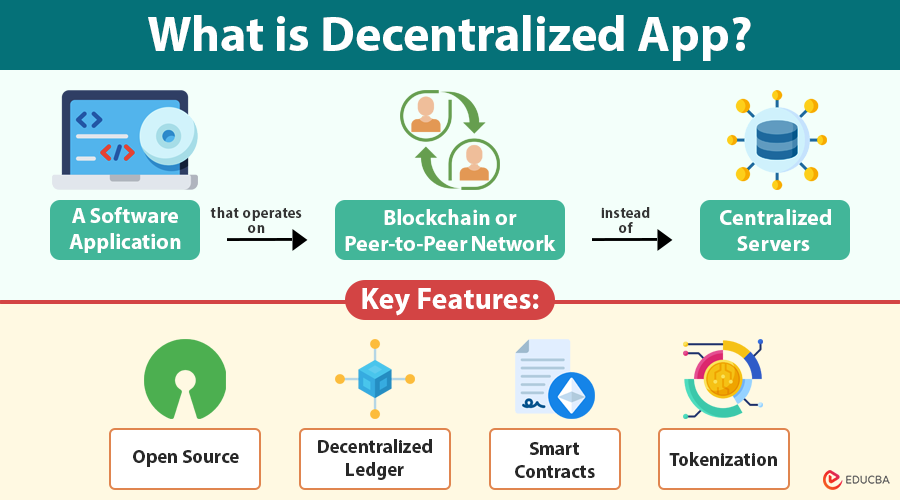
A Decentralized Application (DApp) is software application that operates on a blockchain or (P2P) peer-to-peer network instead of centralized servers. This means that no single entity controls the application’s backend, ensuring it is transparent, censorship-resistant, and trustless.
In essence:
- The frontend (user interface) is similar to traditional apps.
- The backend logic (smart contracts) is deployed on a decentralized blockchain.
Table of Contents:
- Meaning
- Key Features
- Types
- Working
- Benefits
- Challenges
- Popular Platforms
- How to Use a Decentralized App?
- Future
Key Takeaways:
- Decentralized apps eliminate intermediaries by utilizing blockchain technology, thereby enhancing trust, privacy, and user control globally.
- Smart contracts automate DApp operations, ensuring secure, tamper-proof, and decentralized execution of digital actions.
- Despite their high potential, DApps face hurdles such as slow speeds, poor user experience, and unclear global regulations.
- Emerging innovations, such as Layer 2 solutions and cross-chain bridges, aim to unlock mass DApp adoption.
Key Features of Decentralized App
The following traits are usually present in an application for it to be categorized as a Decentralized App:
1. Open Source
DApps must have publicly accessible source code. This promotes transparency, allowing anyone to verify, copy, or improve the application.
2. Decentralized Ledger
All operational records and logic are stored on a public blockchain, such as Ethereum, Solana, or Binance Smart Chain. This ensures data immutability and distributed consensus.
3. Smart Contracts
These self-executing contracts handle the core logic of the application. Once deployed, smart contracts operate autonomously and are tamper-proof.
4. Tokenization
DApps often utilize tokens to incentivize user behavior, govern the platform, or facilitate the exchange of value. These tokens can be fungible (ERC-20) or non-fungible (ERC-721/NFTs).
Types of Decentralized App
Decentralized App can be categorized based on their use case and blockchain dependency:
1. Financial DApps
Traditional banks and other financial intermediaries are no longer necessary because to these applications, which offer decentralized financial services including lending, borrowing, and trading.
2. Gaming DApps
These games let players earn rewards and own in-game assets as NFTs, supporting play-to-earn and decentralized digital economies.
3. NFT Marketplaces
With complete ownership rights, these systems enable users to safely create, purchase, sell, and exchange non-fungible tokens on the blockchain.
4. Social Media DApps
These platforms offer censorship resistance, enabling users to own their data, control identity, and freely share content without central authority.
5. Infrastructure DApps
Provide essential backend services like decentralized file storage, real-world data feeds (oracles), and blockchain indexing for other DApps to function efficiently.
How Decentralized App Work?
The architecture of a Decentralized App can be divided into three layers:
1. Smart Contract Layer
This is the core logic of the DApp. Written in languages like Solidity, smart contracts execute functions when specific conditions are met (e.g., sending tokens, swapping assets).
2. Blockchain Layer
Smart contracts deployed on a blockchain ensure decentralized execution, validation, and record-keeping.
3. Frontend Layer
This is what users interact with. It is built using traditional web technologies (HTML, CSS, JavaScript) and connects to the blockchain via libraries like Web3.js, Ethers.js, or WalletConnect.
Benefits of Decentralized App
DApps provide several compelling benefits over centralized applications:
1. Transparency
All code and transactions are publicly visible on the blockchain, promoting trust, open verification, and decentralized governance by users.
2. Censorship Resistance
DApps operate independently of central authorities, preventing censorship and enabling unrestricted global access and participation for all users.
3. Security & Immutability
Blockchain-stored data is tamper-proof and resistant to hacks, fraud, and unauthorized changes, ensuring robust long-term integrity and safety.
4. User Empowerment
Users retain full control over their data, digital assets, and identities without relying on centralized platforms or intermediaries.
5. Interoperability
DApps can connect and interact with other decentralized systems using common standards, thereby enhancing functionality across platforms such as DeFi and NFTs.
Challenges of Decentralized App
Despite their benefits, Decentralized App face several limitations that hinder mainstream adoption:
1. Scalability
Most blockchains have limited throughput. For instance, Ethereum can process approximately 15 transactions per second (TPS), which may lead to congestion and high gas fees.
2. User Experience
Using DApps often requires a crypto wallet, gas fees, and a technical understanding, making onboarding difficult for non-technical users.
3. Regulatory Uncertainty
Governments are still determining how to regulate DApps, particularly in the finance and gambling sectors.
4. Smart Contract Vulnerabilities
Bugs in smart contracts can lead to critical exploits, hacks, or irreversible fund losses.
Popular Decentralized App Platforms
Several blockchain platforms provide robust environments for building and deploying Decentralized App:
1. Ethereum
Ethereum is the most established DApp platform, offering strong developer support, smart contract functionality, and a vast global user community.
2. Solana
Solana is a popular choice for decentralized banking and blockchain gaming applications, as it offers incredibly fast transactions with low costs.
3. Binance Smart Chain
BSC supports Ethereum-compatible DApps, offering lower transaction fees and faster confirmation times, which are ideal for scalable decentralized application development.
4. Polkadot
Polkadot enables seamless interoperability among different blockchains, allowing DApps to exchange data and assets across diverse decentralized networks effectively.
5. Avalanche
Avalanche features high throughput and sub-second finality, supporting Ethereum Virtual Machine-compatible DApps for efficient and low-latency blockchain deployment.
How to Use a Decentralized App?
Getting started with a Decentralized App usually involves a few key steps:
1. Install a Crypto Wallet
Download a secure cryptocurrency wallet, such as MetaMask or Trust Wallet, to manage assets and interact with decentralized applications safely.
2. Acquire Cryptocurrency
Purchase cryptocurrencies such as ETH, BNB, or SOL on exchanges to cover transaction (gas) fees while using DApps.
3. Connect to the DApp
Open the DApp’s website, click “Connect Wallet,” and approve the connection through your crypto wallet to begin interaction.
4. Interact with Features
Use the DApp’s functionality—trade tokens, mint NFTs, lend assets, or post content—based on the platform’s specific purpose.
Future of Decentralized App
Decentralized App are still in the early stages, but their potential is massive. Here is what the future may hold:
1. Layer 2 Scaling
Layer 2 solutions, such as Arbitrum, Optimism, and zkRollups, reduce congestion and fees, enabling faster and more efficient DApp performance.
2. Cross-Chain Integration
Connecting multiple blockchains through bridges will enable DApps to interact across ecosystems, thereby increasing accessibility, functionality, and global user adoption.
3. Better UX/UI
Improved user interfaces and wallet-free onboarding will make DApps more intuitive and appealing to mainstream users without technical blockchain knowledge.
4. Regulatory Clarity
Clear regulations will foster trust and innovation, encouraging widespread adoption of decentralized applications (DApps) in sectors such as finance, identity, voting, and public administration.
5. Mainstream Use Cases
DApps will power real-world applications—such as voting, logistics, and healthcare—broadening their utility beyond cryptocurrency and tech-savvy user bases.
Frequently Asked Questions (FAQs)
Q1. Are DApps legal?
Answer: Yes, but legal status varies by country and use case. Financial DApps may face scrutiny under securities or AML laws.
Q2. Do DApps require coding knowledge?
Answer: To build DApps, yes—especially in Solidity. Users do not need coding skills to use DApps; they simply need a basic understanding of cryptocurrency.
Q3. Can DApps be hacked?
Answer: While blockchains are secure, smart contracts can have bugs or vulnerabilities. Always audit and use reputable platforms.
Q4. Are all crypto apps DApps?
Answer: No. Many apps, such as exchanges (Coinbase, Binance), are centralized. True DApps are non-custodial and run on-chain.
Final Thoughts
Decentralized apps revolutionize finance, gaming, and social media by offering users autonomy, transparency, and control through blockchain technology. Despite technical and regulatory hurdles, the DApp ecosystem is rapidly expanding, driven by active developers and significant value locked. Whether you are exploring smart contracts, DeFi, or NFTs, now is an ideal time to engage with decentralized technology.
Recommended Articles
We hope that this EDUCBA information on “Decentralized App” was beneficial to you. You can view EDUCBA’s recommended articles for more information.

