


What is Content Relevance?
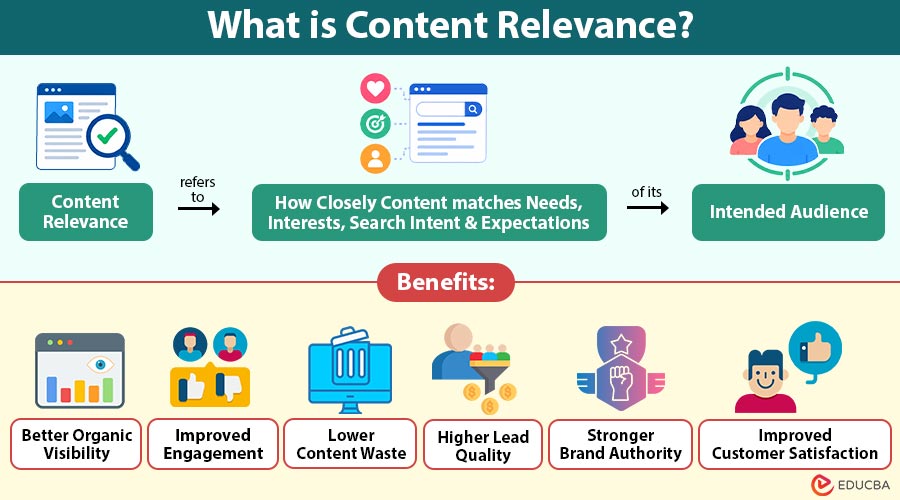
Content relevance refers to how closely content matches the needs, interests, search intent, and expectations of its intended audience.
It determines whether information is useful and appropriate for a particular topic, search query, or user requirement. Relevant content provides meaningful answers, addresses specific problems, and helps readers find the information they are looking for.
In digital marketing and search engine optimization, content relevance plays an important role in connecting users with useful information. Search engines evaluate various signals to understand whether a webpage addresses the topic and intent behind a search query.
For example, if someone searches for “best laptops for students,” an article comparing affordable laptops, specifications, battery life, and performance would be more relevant than an article discussing the history of computers.
Content relevance is not simply about including keywords. It involves understanding user intent, maintaining topical consistency, providing accurate information, and delivering genuine value.
Table of Contents:
- Meaning
- Importance
- Key Factors
- Types
- Working
- Example
- Benefits
- Challenges
- How to Improve Content Relevance?
- How to Measure Content Relevance?
- Applications
Key Takeaways:
- Content relevance ensures information aligns with audience needs, search intent, and specific topic requirements.
- Relevant content improves organic visibility, strengthens audience engagement, builds credibility, and supports business conversions.
- Understanding search intent, maintaining content accuracy, and using relevant keywords improve overall content effectiveness.
- Regular content updates, performance analysis, and audience feedback help businesses keep content relevant long-term.
Why is Content Relevance Important?
Content relevance helps organizations deliver useful information to the right audience. Its importance extends across SEO, digital marketing, customer engagement, and content strategy.
1. Improves Search Engine Visibility
Relevant content aligns with user search intent, helping websites improve visibility, attract organic traffic, and achieve better search engine rankings.
2. Enhances User Experience
Relevant content provides valuable information, answers user questions, addresses specific needs, and creates a more satisfying and meaningful browsing experience.
3. Increases Audience Engagement
Users are more inclined to spend time browsing websites, reading articles, interacting with resources, and interacting with brand offerings when the material is relevant.
4. Supports Higher Conversions
Relevant content addresses customer needs, offers useful solutions, builds purchase confidence, and encourages users to complete desired business actions.
5. Builds Trust and Credibility
Accurate, informative, and relevant content establishes brand authority, strengthens audience relationships, builds credibility, and encourages long-term customer trust and loyalty.
Key Factors that Determine Content Relevance
Several factors influence whether content effectively matches user expectations.
1. Search Intent
Search intent reflects the purpose behind a query, helping creators develop content that satisfies users’ informational, navigational, commercial, or transactional needs.
2. Keyword Relevance
Relevant primary and secondary keywords help search engines understand a webpage’s topic while keeping content natural, readable, and valuable to users.
3. Topical Coverage
Comprehensive topical coverage addresses essential concepts, definitions, examples, and related questions, helping users understand subjects thoroughly without searching multiple sources.
4. Content Accuracy
Accurate content provides factually correct, reliable, and verifiable information, supported by trustworthy sources to establish credibility and maintain audience confidence.
5. Content Freshness
Content freshness keeps information current, especially for rapidly changing topics such as technology, regulations, market prices, and industry developments.
6. Audience Needs
Understanding audience needs helps creators develop content that addresses specific challenges, knowledge levels, interests, preferences, and expectations of target readers.
7. Contextual Meaning
Contextual meaning connects related concepts, terminology, and ideas to explain subjects clearly, ensuring relevance beyond exact keyword matches and repetition.
Types of Content Relevance
Content relevance can be understood through several overlapping dimensions.
| Type | Description |
| Topical Relevance | How closely content relates to a particular subject? |
| Keyword Relevance | How well content addresses the terms and concepts in a search query? |
| Intent Relevance | How effectively content satisfies the purpose behind a search? |
| Contextual Relevance | How appropriately information fits the surrounding topic or situation? |
| Audience Relevance | How closely content matches audience interests and requirements? |
| Temporal Relevance | How appropriate and current information is for a time-sensitive need? |
How Does Content Relevance Work?
Content relevance connects audience requirements with information that satisfies them.
The process generally includes the following stages:
1. Identify Audience Needs
Identify audience interests, preferences, challenges, and expectations to understand what users want to learn, compare, purchase, or accomplish through content.
2. Analyze Search Intent
Analyze search queries to understand user intentions, identify information requirements, and determine whether users seek knowledge, comparisons, or purchasing solutions.
3. Select Relevant Topics
Choose topics that match audience interests, address specific concerns, support business objectives, and provide meaningful value through useful, targeted information.
4. Develop Useful Content
Create informative content with accurate explanations, practical examples, reliable sources, and actionable insights that effectively address audience needs and expectations.
5. Optimize Content Structure
Organize content using clear headings, concise paragraphs, logical sections, and readable formatting to improve accessibility, navigation, and overall user experience.
6. Evaluate Performance
Monitor search rankings, website traffic, audience engagement, and user behavior to identify content gaps, measure effectiveness, and implement necessary improvements.
Example of Content Relevance
Suppose a user searches for “best smartphones under ₹20,000. The user expects information about affordable smartphones, including their features, specifications, battery life, camera quality, and prices.
- Relevant Content: An article comparing the best smartphones under ₹20,000, highlighting specifications, pros and cons, and recommendations based on different user needs.
- Irrelevant Content: An article discussing the history of smartphones, technological advancements, or premium smartphones costing above ₹80,000.
- Explanation: The comparison article is more relevant because it directly addresses the user’s search intent, budget, and purchasing requirements, helping them make an informed decision.
Benefits of Content Relevance
Creating relevant content offers several advantages for businesses and website owners.
1. Better Organic Visibility
Relevant content improves search engine visibility by answering relevant queries, attracting targeted organic traffic, and supporting stronger ranking opportunities.
2. Improved Engagement
Relevant content encourages visitors to explore website pages, read valuable information, interact with resources, and develop stronger connections with brands.
3. Lower Content Waste
Relevant content helps organizations allocate resources efficiently by prioritizing meaningful topics, reducing unnecessary content creation, and improving overall marketing productivity.
4. Higher Lead Quality
Relevant content attracts potential customers whose interests and requirements match business offerings, increasing opportunities for meaningful engagement and successful conversions.
5. Stronger Brand Authority
Consistently relevant content establishes industry expertise, strengthens brand credibility, builds audience confidence, and positions businesses as reliable sources of online information.
6. Improved Customer Satisfaction
Relevant content helps customers quickly find accurate answers, understand available solutions, resolve concerns, and enjoy a more satisfying website experience.
Challenges in Maintaining Content Relevance
Despite its importance, maintaining content relevance can be difficult for several reasons.
1. Changing User Intent
Evolving audience expectations and search behaviors require businesses to regularly adjust content strategies to keep information relevant and meet user needs.
2. Outdated Information
Outdated statistics, examples, industry developments, and recommendations can reduce content accuracy, weaken audience trust, and reduce overall usefulness.
3. Keyword Overoptimization
Excessive keyword repetition reduces readability, disrupts natural language flow, and may harm user experience without improving search relevance.
4. Insufficient Topic Research
Inadequate topic research can overlook important audience questions, resulting in incomplete information that fails to address user expectations and requirements.
5. Audience Diversity
Different audience segments have different interests, knowledge levels, and expectations, making it hard to create content that satisfies everyone.
6. Content Competition
High content competition makes differentiation difficult, requiring businesses to provide unique insights, valuable information, and comprehensive coverage of relevant topics.
How to Improve Content Relevance?
Organizations can improve content relevance by following a structured approach.
1. Understand the Target Audience
Research audience demographics, interests, preferences, challenges, and information needs to create meaningful content that consistently meets specific user expectations.
2. Conduct Search Intent Analysis
Analyze search queries and relevant results to understand user intent, identify information needs, and develop content that meets specific requirements.
3. Use Relevant Keywords Naturally
Incorporate primary keywords, related phrases, and relevant terminology naturally throughout content to improve search visibility while maintaining readability and clarity.
4. Provide Direct Answers
Address primary user questions immediately with clear answers, followed by detailed explanations, practical examples, and supporting information for better understanding.
5. Maintain Topical Consistency
Ensure headings, examples, and supporting sections remain focused on the central topic, avoiding unrelated information that reduces overall content relevance.
6. Update Existing Content
Regularly review existing articles to correct inaccuracies, replace outdated information, incorporate recent developments, and address changing audience needs and expectations.
7. Strengthen Internal Linking
Connect related webpages with descriptive internal links to help visitors find useful information, improve navigation, and strengthen overall topical relevance.
8. Analyze Content Performance
Monitor website analytics, search rankings, user engagement, and conversion metrics to spot content gaps and make improvements that boost relevance.
How to Measure Content Relevance?
You can’t measure content relevance with a single universal metric. Instead, marketers evaluate several indicators together.
| Metric | What it Indicates |
| Organic Search Impressions | How frequently content appears for search queries? |
| Click-Through Rate (CTR) | How often users click after seeing a search result? |
| Engagement Rate | The proportion of sessions classified as engaged. |
| Average Engagement Time | How long users actively engage with content? |
| Conversion Rate | How frequently visitors complete desired actions? |
| Search Query Alignment | Whether a page appears for queries matching its intended topic. |
| User Feedback | Whether readers find the information useful. |
Applications of Content Relevance
Content relevance plays an important role across various digital marketing channels. Below are its key applications in improving audience engagement and communication effectiveness.
1. Search Engine Optimization
Content relevance helps websites address relevant search queries, satisfy user intent, improve organic visibility, and attract targeted traffic.
2. Content Marketing
Relevant content supports informative articles, blogs, guides, and resources that address audience interests and encourage meaningful engagement.
3. Email Marketing
Relevant content helps businesses deliver personalized emails, offers, and information that match subscriber interests, preferences, and needs.
4. Social Media Marketing
Relevant content helps businesses create engaging social media posts that match audience expectations, platform requirements, and current interests and preferences.
5. E-Commerce
Relevant content improves product descriptions, category pages, and buying guides, helping customers compare options and make confident, informed purchasing decisions.
6. Contextual Advertising
Relevant content helps advertisers display ads aligned with webpage topics, improving message suitability and reaching audiences interested in related products.
Final Thoughts
Content relevance plays vital role in SEO and digital marketing by aligning information with audience needs and search intent. Businesses can improve content effectiveness by providing accurate information, maintaining topical consistency, and evaluating performance. Relevance improves user experience, builds audience trust, strengthens engagement, and supports sustainable search visibility and marketing success.
Frequently Asked Questions (FAQs)
Q1. How does search intent influence content relevance?
Answer: Search intent determines what users expect from search results. Understanding it helps creators develop content that provides appropriate answers, comparisons, or solutions.
Q2. How does internal linking improve content relevance?
Answer: Internal linking connects related webpages, helping users discover additional information and helping search engines understand relationships between relevant topics.
Q3. What is the role of user feedback in improving content relevance?
Answer: User feedback helps identify information gaps, unclear explanations, and shifting expectations, enabling businesses to refine content to better meet audience needs.
Q4. Does longer content automatically improve content relevance?
Answer: No. Content length does not guarantee relevance. Clear, accurate, focused information that meets user needs matters more than word count.
Recommended Articles
We hope that this EDUCBA information on “Content Relevance” was beneficial to you. You can view EDUCBA’s recommended articles for more information.


