


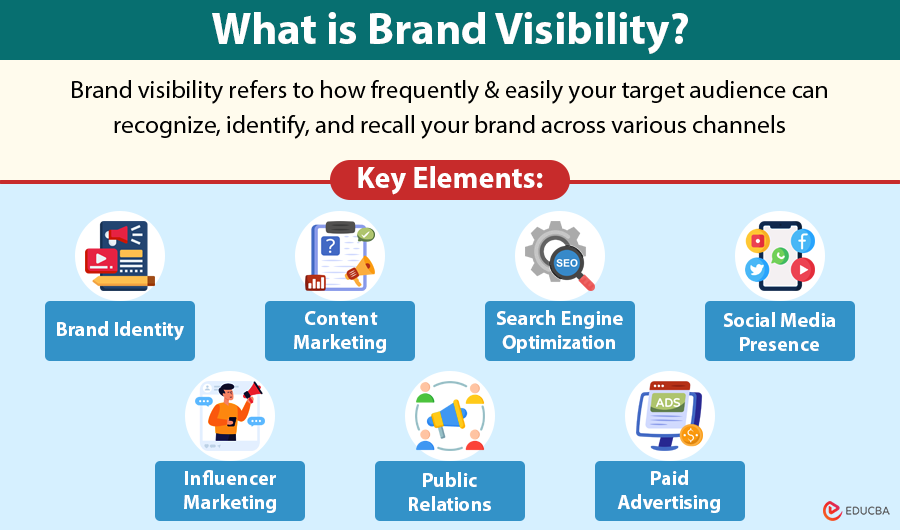
What Is Brand Visibility?
Brand visibility refers to how frequently and easily your target audience can recognize, identify, and recall your brand across various channels. It reflects the overall presence your brand holds in the market, both online and offline, and determines how quickly customers think of you when they need a product or service you offer.
When people regularly see a brand’s logo, ads, social media posts, or packaging, such as Coca-Cola’s presence across billboards, stores, social media, and events, its brand visibility increases, helping audiences recognize it instantly. This frequent exposure strengthens brand recall and keeps the brand at the forefront of consumers’ minds.
Table of Contents
Key Takeaways
- Brand visibility strengthens recognition and recall, making your brand more memorable to your audience.
- Consistent and credible exposure builds trust and enhances your brand’s reputation.
- Core elements, such as content marketing, SEO, social media, and PR, play a vital role in boosting visibility.
- Engagement and community building deepen customer relationships and expand organic reach.
- Data analytics and technology help refine strategies, avoid visibility gaps, and improve targeting.
Why Brand Visibility Matters?
Strong brand visibility does more than attract attention; it builds lasting relationships, strengthens reputation, and drives business growth.
1. Builds Trust and Credibility
When customers repeatedly encounter your brand across credible channels, they begin to develop trust in it. Consistent visibility reinforces your brand’s authenticity, reliability, and authority in the market.
2. Drives Customer Engagement
A highly visible brand draws attention and motivates people to engage. The more frequently customers come across your brand, the more likely they are to visit your website, explore your content, and take steps toward making a purchase.
3. Enhances Competitive Advantage
In crowded markets, strong visibility enables your brand to stand out from the competition. Even if others provide comparable products or services, a brand that remains consistently present is more likely to stay memorable and win customer preference.
4. Improves Conversion Opportunities
The more exposure your brand gains, the stronger the recall. When customers recognize your brand easily, they are more likely to choose it during their purchase decisions. The higher the chances, the more likely they are to remember and choose it when making purchase decisions.
Key Elements That Influence Brand Visibility
Several interconnected factors shape how effectively a brand captures and maintains audience attention. Each element contributes to creating a strong, recognizable, and lasting market presence.
1. Brand Identity
Your logo, color palette, typography, and messaging shape how audiences recognize your brand. Strong visual and verbal consistency ensures easy recall.
2. Content Marketing
High-quality, value-driven content strengthens your online presence. Blogs, videos, podcasts, and infographics help brands connect emotionally with audiences while improving discoverability.
3. Search Engine Optimization (SEO)
Enhancing your website and content for search engines helps your brand appear when customers search for relevant solutions. Strong keywords, authoritative backlinks, and high-quality content all contribute to boosting your rankings and overall visibility.
4. Social Media Presence
Active participation on platforms like LinkedIn, Instagram, and X (Twitter) boosts reach and engagement. Sharing authentic stories and responding to followers enhances brand approachability.
5. Influencer and Partnership Marketing
Collaborating with influencers or other brands allows access to new audiences. Partnerships amplify exposure and strengthen credibility through association.
6. Public Relations (PR)
Press releases, media features, and thought leadership content strengthen your reputation and credibility, helping your brand gain greater visibility within industry discussions.
7. Paid Advertising
Strategic use of paid campaigns such as PPC, display ads, and sponsored posts ensures targeted exposure among potential customers.
Discover more insights on how bloggers and designers build real brands at SpreadThoughts, where practical tips meet creative strategy to help you grow your unique presence. Use the checklist above for each new post and refine your media kit as you collect proof points.
Strategies to Increase Brand Visibility
Boosting brand visibility requires consistent effort and a well-planned approach. By combining creativity with data-driven tactics, brands can strengthen their presence and connect more meaningfully with their target audience.
1. Define a Clear Brand Message
Ensure that your message clearly and consistently communicates your value proposition and mission. A unified message helps customers understand what your brand stands for.
2. Leverage Multi-Channel Marketing
Combine digital and traditional marketing to maximize the number of touchpoints. Each channel reinforces your brand presence in a unique and complementary way.
3. Engage Consistently with Your Audience
Connect with your audience by responding to their comments, participating in discussions, and posting engaging content that keeps your brand memorable and top of mind. Consistent engagement helps strengthen trust and loyalty over time.
4. Optimize for Voice and Mobile Search
As consumers increasingly use mobile devices and voice assistants, optimizing for these platforms enhances discoverability and accessibility.
5. Use Data Analytics
Track key visibility metrics, including impressions, engagement rates, and branded search volume. Analyze what works, identify trends, and continually refine your strategy for improved outcomes.
6. Invest in Community Building
Encourage your audience to produce and share their own content while building a community where they feel appreciated and connected. Active communities naturally expand your reach and advocacy through word of mouth.
Measuring Brand Visibility
Accurate measurement reveals how well your brand connects with its audience and highlights areas that need improvement. To evaluate brand visibility, monitor metrics that indicate how frequently and through which channels your audience encounters your brand. Common indicators include:
- Website traffic and impressions
- Social media mentions and reach
- Search engine rankings for branded and non-branded keywords
- Media coverage and backlinks
- Customer recall and awareness surveys
Regular monitoring enables marketers to identify visibility gaps and optimize their strategies more effectively.
Common Mistakes That Reduce Brand Visibility
Several avoidable mistakes can weaken your brand’s presence and limit how effectively audiences recognize and engage with it. Being aware of these pitfalls helps you maintain consistency and strengthen your visibility over time.
1. Inconsistent Messaging
Changing your tone, design elements, or messaging from one platform to another can confuse your audience and dilute your brand identity.
2. Ignoring SEO Fundamentals
Without proper SEO, even high-quality content may remain undiscovered, reducing your chances of reaching potential customers.
3. Neglecting Customer Engagement
Failing to interact with your audience makes your brand appear distant and unapproachable, weakening trust and connection.
4. Overlooking Analytics
Making decisions based on guesswork instead of data leads to ineffective strategies and wasted marketing efforts.
The Role of Technology in Enhancing Visibility
- Modern tools and technologies empower brands to expand their reach more effectively.
- Automation streamlines repetitive marketing tasks, ensuring consistent visibility across all channels.
- AI-driven analytics provide deeper insights into audience behavior and improve targeting precision.
- Programmatic advertising automates ad placements to reach the right audience at the right time.
- Social listening tools help monitor brand mentions, sentiment, and conversations in real time.
- CRM systems enable personalized communication and engagement, strengthening brand relevance.
Final Thoughts
Brand visibility is more than just being seen; it is about being remembered, trusted, and chosen. In a highly competitive marketplace, visibility acts as the foundation for building strong customer relationships and long-term brand success. By staying consistent, leveraging the right channels, and embracing technology, brands can strengthen their presence and remain relevant in the minds of consumers.
A thoughtful approach supported by clear messaging, active engagement, smart analytics, and continuous optimization ensures that visibility translates into meaningful growth. Ultimately, brands that invest in visibility not only attract attention but also create lasting impact and loyalty in an ever-evolving digital landscape.
Frequently Asked Questions (FAQ’s)
Q1. What is the difference between brand visibility and brand awareness?
Answer: Brand visibility refers to how frequently and easily people see your brand, while brand awareness reflects how well people recognize and understand your brand’s values, offerings, and identity. Visibility is the first step; awareness is the deeper connection that follows.
Q2. How long does it take to improve brand visibility?
Answer: The timeline varies depending on your strategy, industry, and competition. With consistent content, SEO efforts, and engagement, noticeable improvements often appear within 3–6 months.
Q3. Does brand visibility affect customer loyalty?
Answer: Indirectly, yes. Consistent visibility fosters familiarity and trust over time, ultimately contributing to stronger customer loyalty and increased repeat purchases.
Q4. What role does customer experience play in visibility?
Answer: Positive customer experiences generate word-of-mouth, reviews, and referrals, powerful drivers of organic visibility that money cannot buy.
Recommended Articles
We hope this guide on Brand Visibility was helpful. Explore related articles on Brand Awareness, Digital Marketing Strategies, and Content Optimization Techniques to gain deeper insights into building a stronger and more recognizable brand presence.

