
What is the Bandwagon Effect?
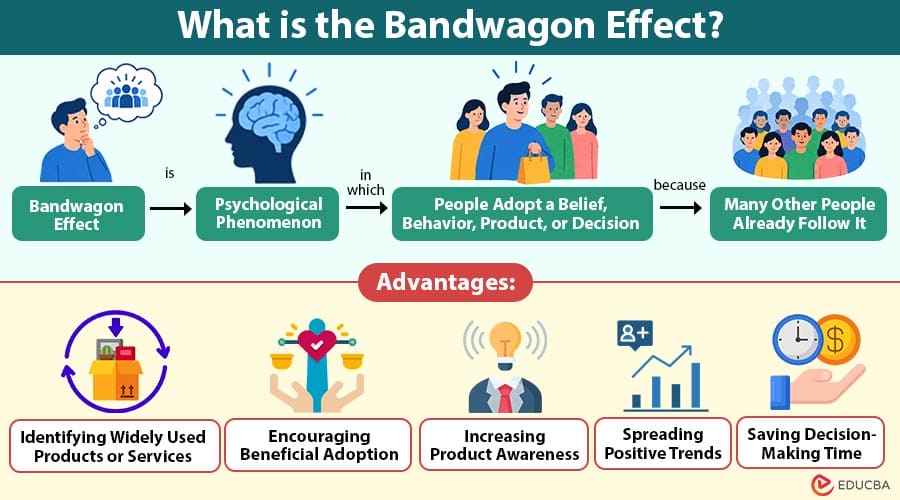
The bandwagon effect is psychological phenomenon in which people adopt a belief, behavior, product, or decision because many other people already follow it.
People often look at what others are doing when making decisions, especially when they are uncertain or have limited information. Seeing many people choose the same product, trend, opinion, or behavior can make the choice seem reliable, popular, or socially accepted.
For example, when a product becomes highly popular on social media, more people may purchase it because they see influencers, friends, or large groups using it. The growing popularity can attract additional users, creating a cycle in which increased adoption encourages even more adoption.
The bandwagon effect occurs in areas such as consumer behavior, marketing, finance, politics, fashion, social media, and everyday decision-making.
Table of Contents:
- Meaning
- Importance
- Working
- Types
- Examples
- Difference
- Factors Influencing the Bandwagon Effect
- Advantages
- Limitations
- How Can Businesses Use the Bandwagon Effect?
Key Takeaways:
- The bandwagon effect occurs when people follow choices that appear popular among others.
- Social influence and the desire for acceptance can contribute to this behavior.
- Businesses often use popularity indicators, reviews, trends, and social proof to influence purchasing decisions.
- The effect can encourage product adoption but may also lead to poor decisions when popularity replaces careful evaluation.
Importance of the Bandwagon Effect
The Bandwagon Effect is important because social influence can significantly affect how people form opinions and make decisions. Instead of evaluating every option independently, people may use others’ choices as a reference point.
Businesses study this effect to understand consumer behavior. Showing that a product is popular can encourage potential customers to consider it. Statements such as “best-selling product,” customer ratings, and large user numbers can signal popularity.
The effect is also relevant to social media. Viral content can attract more attention because users notice that many other people are watching, sharing, or commenting on it. As visibility increases, additional users may join the trend.
Understanding this effect helps businesses, marketers, researchers, and consumers recognize how group behavior can influence individual choices.
How Does the Bandwagon Effect Work?
The bandwagon effect generally develops through social observation and repeated exposure to other people’s choices. The process can be explained through the following steps:
1. People Observe Others
Individuals notice that many people choose a particular product, opinion, activity, or trend, which draws their attention.
2. Popularity Creates Social Evidence
Seeing many people make the same choice can create social evidence, making the option appear valuable, trustworthy, or widely accepted.
3. Uncertainty Encourages Following
When individuals lack enough information to decide, they may look to others and follow their choices for guidance and reassurance.
4. The Individual Adopts the Choice
The individual eventually adopts the same product, belief, behavior, or trend because it appears popular, accepted, and suitable.
5. Popularity Increases Further
As more people adopt the same choice, its visibility and perceived popularity increase, encouraging additional individuals to follow the trend.
Types of Bandwagon Effect
The bandwagon effect can appear in different forms depending on the context.
1. Consumer Bandwagon Effect
Consumers may purchase products because many other people appear to use or recommend them. Popular clothing, smartphones, restaurants, and subscription services can experience this effect.
2. Social Bandwagon Effect
People may adopt behaviors, lifestyles, or activities because they are common within their social groups. Individuals may join popular activities to feel connected to others.
3. Political Bandwagon Effect
People may support a political candidate, party, or position because they perceive that many others support it. Polls, public events, endorsements, and visible campaign support can contribute to perceptions of popularity.
4. Investment Bandwagon Effect
Investors may purchase an asset because many other investors are buying it. Rising demand can attract additional buyers, particularly when people fear missing an opportunity.
5. Fashion Bandwagon Effect
People may adopt clothing styles, accessories, hairstyles, or beauty trends because they see them frequently among celebrities, influencers, or peers.
6. Digital Bandwagon Effect
Online platforms can amplify the effect through views, likes, shares, comments, follower counts, and trending lists. High engagement can make content appear more attractive or important.
Examples of the Bandwagon Effect
The bandwagon effect shows up in many everyday situations.
1. Popular Restaurant
Suppose a new restaurant frequently has a long queue outside. People passing by may assume that the restaurant serves good food because many customers are willing to wait. Some may decide to visit it because of its visible popularity.
2. Viral Product
A skincare product becomes popular on social media after several influencers post about it. Thousands of people begin purchasing the product. Other consumers notice the growing interest and decide to try it because it seems like a popular choice.
3. Investment Trend
An asset experiences a rapid increase in buying activity. Investors notice the rising interest and may purchase the asset because many other market participants appear to be doing the same.
Difference Between Bandwagon Effect and Social Proof
The table below highlights the key differences between the two:
| Basis | Bandwagon Effect | Social Proof |
| Meaning | Following a choice because many others are doing so | Using others’ behavior as information when making a decision |
| Main Focus | Adoption of a popular choice | Influence of observed behavior |
| Common Trigger | Perceived popularity | Uncertainty or lack of information |
| Example | Buying a product because it is trending | Reading reviews before purchasing |
| Outcome | Greater adoption of the popular option | Greater confidence in a decision |
Factors Influencing the Bandwagon Effect
Several factors can increase the likelihood of bandwagon behavior.
1. Social Acceptance
People may follow popular choices to gain acceptance from peers, maintain social connections, and feel included in their groups.
2. Uncertainty
When individuals are uncertain about a decision, they may observe others’ choices and follow them for guidance, reassurance, or added confidence.
3. Visibility
Highly visible products, opinions, and trends can spread quickly because repeated exposure makes them more familiar and noticeable to individuals.
4. Group Size
A choice may seem more credible or desirable when many people visibly support, buy, recommend, or adopt it.
5. Authority and Influencers
Celebrities, experts, influencers, and prominent individuals can increase trend visibility, attract attention, and encourage audiences to adopt similar choices or behaviors.
6. Fear of Missing Out
People may follow popular trends because they fear missing opportunities, experiences, conversations, or social activities that others are enjoying.
Advantages of the Bandwagon Effect
Below are the key advantages of the bandwagon effect and how they can influence consumer decisions and business outcomes.
1. Identifying Widely Used Products or Services
The bandwagon effect can help people identify widely used products or services by observing what others frequently purchase, recommend, or use.
2. Encouraging Beneficial Adoption
It can encourage people to adopt beneficial technologies, practices, or innovations when they see others using them successfully.
3. Increasing Product Awareness
Businesses can increase awareness of new products by highlighting genuine popularity, customer adoption, positive reviews, or widespread usage among target audiences.
4. Spreading Positive Trends
Positive trends can spread quickly through communities when individuals observe others adopting beneficial behaviors, ideas, technologies, or socially valuable practices.
5. Saving Decision-Making Time
Consumers may save time when popularity provides an initial basis for comparison, helping them identify commonly selected products before evaluating options.
Limitations of the Bandwagon Effect
Below are the key limitations of the bandwagon effect and how they can affect individual decisions, consumer behavior, and market outcomes.
1. Unsuitable Choices
Popular choices may not match individual needs, preferences, budgets, or circumstances, leading people toward unsuitable decisions.
2. Unnecessary Purchases
Consumers may buy unnecessary products because trends create social pressure or make certain items seem desirable.
3. Poor Investment Decisions
Investors may make decisions based on market enthusiasm rather than research, increasing exposure to poorly evaluated investment opportunities.
4. Rapid Misinformation
Incorrect information can spread rapidly when many people repeat it, making false claims appear credible and trustworthy.
5. Reduced Individual Choice
People may suppress their own preferences to conform to group expectations, reducing independent thinking and personal choice.
6. Unrealistic Expectations
Temporary trends can create unrealistic expectations about products or ideas, causing disappointment when popularity declines or outcomes differ.
How Businesses Can Use the Bandwagon Effect?
The Bandwagon Effect influences decisions by making popular choices seem more trustworthy or desirable. It can support useful adoption and increase product awareness, but it may also encourage conformity and poor decisions. Understanding this effect helps people evaluate choices more independently.
Final Thoughts
The bandwagon effect describes the tendency to adopt a belief, behavior, product, or trend because many other people appear to support or follow it. It influences consumer decisions, social behavior, marketing, finance, fashion, and digital activity. While popularity can provide useful social information, individuals should evaluate choices based on evidence, personal needs, and relevant factors rather than popularity alone.
Frequently Asked Questions (FAQs)
Q1. Is the bandwagon effect always intentional?
Answer: No. People may follow popular choices automatically without consciously realizing that others’ behavior influenced their decisions.
Q2. Can the Bandwagon Effect influence brand loyalty?
Answer: Yes. Widespread use of a brand can create familiarity and encourage customers to continue choosing it when they observe strong acceptance among others.
Q3. How does the Bandwagon Effect differ from conformity?
Answer: Conformity broadly involves adjusting behavior or opinions to align with a group, while the bandwagon effect specifically emphasizes following a choice because it appears increasingly popular.
Q4. Can the Bandwagon Effect occur without social media?
Answer: Yes. It can occur through word-of-mouth, community behavior, workplace trends, advertising, public events, and recommendations from people in one’s social circle.
Recommended Articles
We hope that this EDUCBA information on “Bandwagon Effect” was beneficial to you. You can view EDUCBA’s recommended articles for more information.

