
What is Ad Fatigue?
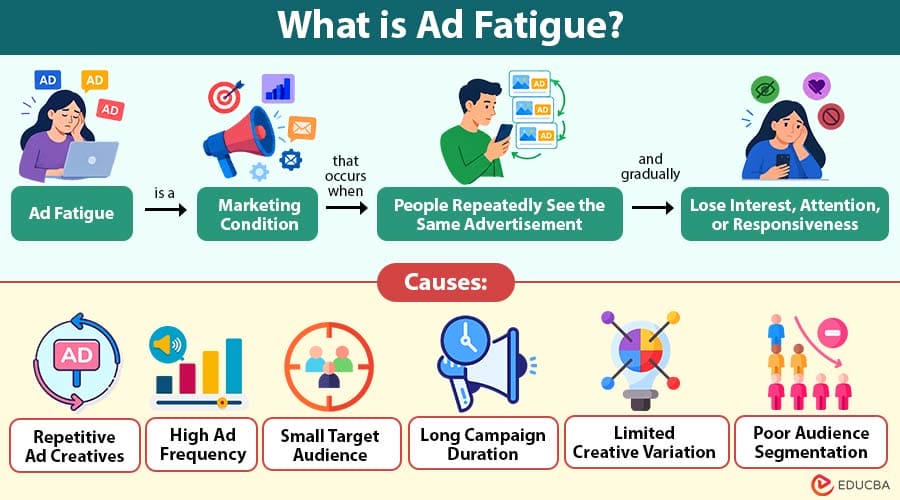
Ad fatigue is a marketing condition that occurs when people repeatedly see the same advertisement and gradually lose interest, attention, or responsiveness.
When an advertisement appears too often or stays unchanged for too long, audiences may stop noticing it. They may also become less likely to click, engage, or purchase. Ad fatigue is common in digital advertising because platforms continuously deliver ads to selected audiences based on targeting, bidding, and campaign settings.
Marketers can manage ad fatigue by refreshing creative content, adjusting audience targeting, controlling ad frequency, testing different formats, and monitoring campaign performance.
Table of Contents:
Key Takeaways:
- Ad fatigue occurs when audiences become less responsive after seeing the same advertisement repeatedly.
- High ad frequency, limited audiences, and repetitive creatives can contribute to ad fatigue.
- Declining click-through rates and engagement can indicate that an audience is becoming tired of an advertisement.
- Ad fatigue can increase advertising costs and reduce campaign effectiveness.
Causes of Ad Fatigue
Below are the common factors that can cause audiences to lose interest in an advertisement.
1. Repetitive Ad Creatives
Showing the same image, video, headline, or message repeatedly can make an advertisement less noticeable. Audiences may become familiar with the content and stop paying attention.
2. High Ad Frequency
Frequency refers to average number of times a person sees an advertisement. Excessively high frequency can increase exposure without producing additional engagement.
3. Small Target Audience
A campaign targeting a limited audience may repeatedly show the same advertisement to the same people. This can accelerate audience fatigue.
4. Long Campaign Duration
Running identical advertisements for an extended period can reduce their ability to attract attention. Even successful creatives may eventually experience declining engagement.
5. Limited Creative Variation
Using only one or two creative versions provides audiences with little visual or messaging variety. This can make campaigns feel repetitive.
6. Poor Audience Segmentation
When different customer groups receive identical messages despite having different interests or needs, the advertisements may become less relevant.
How Does Ad Fatigue Work?
Ad fatigue generally develops through repeated exposure. Initially, an advertisement may attract attention because the message or creative is new. People may click, watch, share, or respond to it.
As exposure increases, familiarity also increases. The audience may begin paying less attention to the advertisement. Over time, engagement can decline, while metrics such as cost per click or cost per conversion may increase.
A simplified progression is:
New Advertisement → Repeated Exposure → Reduced Attention → Lower Engagement → Declining Campaign Performance
The speed at which fatigue develops varies by audience, industry, campaign objective, creative quality, platform, and frequency.
Signs of Ad Fatigue
Below are the common signs that may indicate an advertisement is experiencing fatigue among its target audience:
1. Declining Click-Through Rate
A declining click-through rate may indicate that fewer users respond to an advertisement after seeing it repeatedly.
2. Increasing Cost per Click
An increasing cost per click may occur when repeated exposure reduces user interest and generates fewer interactions.
3. Lower Conversion Rate
A lower conversion rate may suggest that an advertisement reaches users but becomes less effective at encouraging desired actions.
4. Rising Ad Frequency
Rising ad frequency indicates that the same audience members see an advertisement repeatedly within a short period.
5. Declining Engagement
Declining engagement may occur when likes, comments, shares, video views, and other interactions decrease due to repeated exposure.
6. Negative Feedback
Negative feedback may increase when users repeatedly see an advertisement and consider it irrelevant, repetitive, intrusive, or uninteresting.
Effects of Ad Fatigue
The following are the common effects of ad fatigue:
1. Reduced Audience Attention
People may gradually ignore an advertisement after repeated exposure, even if they initially considered its message relevant and engaging.
2. Lower Engagement
Repeated exposure can reduce clicks, reactions, comments, shares, video views, and other audience interactions.
3. Higher Advertising Costs
Lower engagement and conversion rates can increase the cost of achieving campaign objectives and maintaining desired advertising performance.
4. Reduced Conversion Performance
An advertisement that previously generated strong results may produce fewer leads, sales, registrations, or other desired actions.
5. Weaker Brand Perception
Excessive advertising repetition can make promotional messages feel intrusive, annoying, or less appealing to certain audience segments.
6. Lower Return on Advertising Spend
When advertising expenses remain high while conversions decline, campaign profitability and return on advertising spend may decrease.
Types of Ad Fatigue
Ad fatigue can take different forms, depending on which part of the ad becomes repetitive.
| Type | Meaning |
| Creative Fatigue | Audiences become tired of repeatedly seeing the same visual or video. |
| Message Fatigue | The same advertising message becomes less persuasive over time. |
| Audience Fatigue | A specific audience receives excessive advertising exposure. |
| Format Fatigue | Repeated use of the same advertising format reduces attention. |
| Channel Fatigue | Users receive similar ads too frequently across the same marketing channel. |
How to Measure Ad Fatigue?
There is no single metric that universally measures ad fatigue. Instead, marketers examine several performance indicators together.
1. Frequency
Frequency measures how frequently each audience member sees an advertisement throughout a given campaign period.
2. Click-Through Rate
Click-through rate helps determine whether users continue clicking or interacting with an advertisement after repeated exposure.
3. Conversion Rate
Conversion rate shows whether continued advertising exposure still encourages users to complete the desired action or purchase.
4. Cost Per Result
Cost per result helps identify whether obtaining clicks, leads, purchases, registrations, or other outcomes is becoming increasingly expensive.
5. Engagement Rate
Engagement rate provides insight into how actively users interact with an advertisement through clicks, reactions, comments, shares, or views.
How to Prevent Ad Fatigue?
The following are effective ways to prevent ad fatigue:
1. Refresh Creative Content
Introduce new images, videos, headlines, layouts, and calls to action regularly to maintain audience interest and attention.
2. Control Ad Frequency
Monitor how often users see ads and adjust campaign settings when repeated exposure starts affecting audience responsiveness.
3. Rotate Advertisements
Using multiple creative variations helps prevent audiences from repeatedly seeing the same advertisement throughout the campaign.
4. Expand Audience Segments
When appropriate, broaden audience segments to distribute ad exposure across more potential customers and reduce repetitive impressions.
5. Personalize Messages
Tailoring messages to audience interests, behaviors, purchase stages, and needs can make advertisements more relevant and engaging.
6. Test Different Formats
Experimenting with videos, carousels, images, stories, short-form content, and other suitable formats can maintain audience interest.
7. Use A/B Testing
Comparing different headlines, visuals, offers, and calls to action helps identify creative elements that continue attracting audience attention.
8. Monitor Performance Regularly
Regularly tracking campaign metrics helps marketers identify performance changes early and address potential fatigue before results decline.
Example
Suppose an online clothing store launches a social media campaign promoting a new collection. The company uses one video advertisement targeting 100,000 potential customers.
During the first few weeks, the advertisement generates strong engagement and sales. However, the company continues using the same video without changing the audience or creative.
After several weeks, the same users begin seeing the advertisement repeatedly. The campaign’s frequency increases, while the click-through rate and conversion rate decline.
The company responds by introducing new product images, short videos, customer-focused messages, and different audience segments. These changes provide more variety and reduce dependence on a single creative.
This example shows how repeated exposure can reduce advertising performance and why creative rotation matters.
Benefits of Managing Ad Fatigue
Effective management of ad fatigue can help businesses:
1. Maintain Audience Attention
Keep audiences interested in advertising messages for longer periods through fresh and relevant content.
2. Support Consistent Engagement
Encourage steady clicks, reactions, comments, shares, views, and other meaningful interactions throughout campaigns.
3. Improve Creative Relevance
Ensure advertisements remain aligned with audience interests, preferences, behaviors, and changing needs.
4. Reduce Repeated Exposure
Limit unnecessary repetition by adjusting frequency, rotating creatives, and reaching suitable audience segments.
5. Identify Underperforming Ads
Recognize advertisements experiencing declining engagement, conversions, or other performance indicators requiring attention.
6. Support Campaign Efficiency
Help marketers maintain effective campaign performance by addressing declining audience responsiveness at an early stage.
7. Improve Budget Utilization
Reduce inefficient advertising spending by focusing resources on relevant, engaging, and better-performing creative content.
8. Maintain Positive Audience Experience
Create a less repetitive advertising experience that respects audience attention and reduces potential annoyance.
Challenges in Managing Ad Fatigue
Managing ad fatigue can involve several challenges.
1. Finding the Right Frequency
No universal frequency level fits every campaign because audience behavior, platform, objectives, and ad types can differ significantly.
2. Producing New Creatives
Regularly developing fresh images, videos, headlines, and messages requires sufficient time, planning, creative resources, and ongoing marketing effort.
3. Maintaining Brand Consistency
Creative variations should introduce enough freshness while maintaining the brand’s established visual identity, tone, messaging, and overall communication style.
4. Separating Fatigue from Other Problems
Declining advertising performance may result from competition, seasonality, pricing changes, audience shifts, or other factors besides ad fatigue.
Final Thoughts
Ad fatigue is common challenge in digital advertising that develops when audiences are exposed to repetitive ads. It can reduce attention, engagement, conversions, and campaign efficiency. Monitoring frequency and performance metrics, rotating creative content, segmenting audiences, and testing new messages can help marketers maintain advertising relevance and audience responsiveness.
Frequently Asked Questions (FAQs)
Q1. Does ad fatigue affect every advertising platform?
Answer: Ad fatigue can occur across social media, search, display, video, mobile, and other advertising channels. However, its occurrence and severity vary by platform design, audience behavior, campaign settings, and advertising format.
Q2. Can a successful advertisement still experience fatigue?
Answer: Yes. An advertisement can perform strongly initially and later lose effectiveness as audience familiarity increases. Previous campaign success does not guarantee that the same creative will continue producing similar results indefinitely.
Q3. How quickly can ad fatigue develop?
Answer: The timeframe varies considerably. A highly concentrated campaign may see reduced responsiveness quickly, while a broad campaign with varied creatives may maintain audience interest longer.
Q4. Can changing only the advertisement headline reduce fatigue?
Answer: Changing the headline may provide some variation, but its impact depends on what is causing the fatigue. In some cases, marketers may need to modify the visual, offer, format, audience, or overall creative concept.
Recommended Articles
We hope that this EDUCBA information on “Ad Fatigue” was beneficial to you. You can view EDUCBA’s recommended articles for more information.


