


What is Audience Suppression?
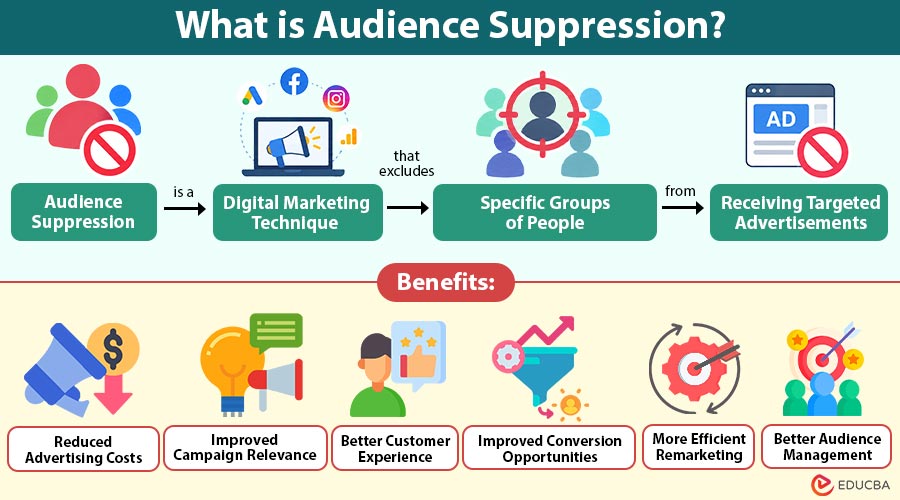
Audience suppression is a digital marketing technique that prevents selected groups of people from seeing advertisements or receiving marketing messages.
Imagine purchasing a new smartphone online. A few hours later, you start seeing advertisements encouraging you to buy the same smartphone again. These ads are no longer useful because you have already purchased the product. They may also waste the advertiser’s money.
Audience suppression helps businesses avoid such situations. Instead of showing every advertisement to everyone, marketers exclude people who do not need to see a particular campaign.
For example, an online clothing store may stop showing promotional advertisements to customers who have already purchased the advertised products. The company can then focus its advertising budget on people who are more likely to make a purchase.
Table of Contents:
Key Takeaways:
- Audience suppression helps businesses exclude unsuitable customers from advertising campaigns, reducing unnecessary marketing expenses.
- Businesses can improve campaign relevance by excluding customers who have already completed desired actions.
- Different audience suppression types help marketers manage customer segments based on behavior and engagement.
- Successful audience suppression requires accurate customer data, regular updates, and proper audience exclusion strategies.
Objectives of Audience Suppression
The main objective of audience suppression is to make marketing campaigns more relevant and cost-effective.
1. Reduce Unnecessary Advertising
Businesses can avoid displaying advertisements to people who have already completed the desired action.
2. Improve Budget Utilization
Marketers can spend more money reaching potential customers instead of repeatedly targeting people who are unlikely to respond.
3. Improve Customer Experience
People receive fewer irrelevant advertisements, making their interactions with the brand more meaningful.
4. Prevent Excessive Marketing
Audience suppression helps businesses avoid sending too many promotional messages to the same customers.
5. Support Better Targeting
By excluding unsuitable audiences, businesses can focus their campaigns on people who match their marketing objectives.
How Does Audience Suppression Work?
Audience suppression works by identifying people who should not receive a particular advertisement and excluding them from the campaign.
Step 1: Identify the Target Audience
Marketers first decide who should see their advertisements based on interests, behavior, demographics, or previous interactions.
Step 2: Identify People to Exclude
The business creates a list of people who should not receive the advertisement. This may include existing customers, recent buyers, or people who have opted out of marketing.
Step 3: Create a Suppression Audience
The selected users are grouped into a suppression list using available customer data or advertising platform tools.
Step 4: Apply Audience Exclusions
Marketers add the suppression audience to their advertising campaign settings so the platform can exclude matching users.
Step 5: Monitor Campaign Performance
The business reviews advertising costs, conversions, and audience performance to check whether the exclusions are working effectively.
For example, a software company advertising a paid subscription may exclude customers who already have an active subscription to the same plan.
Types of Audience Suppression
Different types of audience suppression are used depending on the marketing campaign and business requirements.
1. Customer Suppression
Customer suppression excludes existing customers from campaigns designed to attract new buyers.
For example, a streaming service may exclude its current subscribers from advertisements offering introductory subscriptions.
2. Conversion-Based Suppression
Conversion-based suppression excludes people who have already completed a specific action, such as making a purchase or submitting a registration form.
For example, an online course provider may stop showing enrollment advertisements to students who have already registered.
3. Behavioral Suppression
Behavioral suppression excludes users based on their previous actions or interactions with a business.
For example, a company may exclude users who recently declined a particular promotional offer.
4. Frequency-Based Suppression
Frequency-based suppression excludes users after they have received a specified number of advertisements or marketing messages.
For example, a business may stop targeting someone after they have seen a campaign advertisement several times without responding.
5. Engagement-Based Suppression
Engagement-based suppression excludes people based on their level of interaction with marketing content.
For example, an email marketing team may exclude subscribers who have not interacted with its emails for an extended period from a particular promotional campaign.
6. Compliance-Based Suppression
Compliance-based suppression excludes people who should not receive certain marketing communications because of consent preferences or applicable regulations.
For example, a company must respect a customer’s request to unsubscribe from promotional emails.
Process of Audience Suppression
Businesses generally follow a structured process to implement effectively.
1. Define Campaign Goals
Determine whether the campaign aims to generate leads, increase sales, attract new customers, and encourage repeat purchases.
2. Collect Relevant Audience Data
Gather appropriate information from customer databases, website interactions, purchase records, or marketing platforms.
3. Segment the Audience
Divide users into the groups based on their behavior, purchase history, customer status, or engagement.
4. Create Suppression Lists
Prepare lists of users who should be excluded from specific marketing campaigns.
5. Apply the Lists to Campaigns
Upload or connect the suppression lists to supported advertising and marketing platforms.
6. Update and Review
Regularly update the lists to reflect new purchases, changing customer preferences, and other relevant activities.
Examples of Audience Suppression
Audience suppression can be used in different industries to make marketing campaigns more effective.
| Industry | Audience Suppression Example |
| E-commerce | Excluding customers who recently purchased the advertised product |
| Banking | Excluding existing credit card holders from new-card acquisition campaigns |
| Education | Excluding students who have already enrolled in a course |
| Travel | Excluding customers who have already booked the promoted holiday package |
| Software | Excluding active subscribers from advertisements for the same subscription |
| Real Estate | Excluding leads who have already purchased the advertised property |
These examples show how businesses can reduce unnecessary advertising while reaching more relevant audiences.
Benefits of Audience Suppression
Audience suppression offers several benefits for businesses running digital marketing campaigns.
1. Reduced Advertising Costs
Excluding unsuitable audiences can reduce unnecessary advertising expenditure and help businesses manage their budgets.
2. Improved Campaign Relevance
Advertisements reach people who are more likely to find the promoted products or services useful.
3. Better Customer Experience
Customers are less likely to receive repeated promotions for products they have already purchased.
4. Improved Conversion Opportunities
Businesses can concentrate their advertising efforts on audiences who have not yet completed the desired action.
5. More Efficient Remarketing
Marketers can exclude converted users from acquisition campaigns while targeting them with suitable follow-up offers when appropriate.
6. Better Audience Management
Audience suppression helps marketing teams organize customer segments and manage different campaigns more effectively.
Challenges of Audience Suppression
Although audience suppression is useful, businesses may face certain difficulties while implementing it.
1. Inaccurate Customer Data
Outdated or incorrect information may result in the wrong people being excluded from campaigns.
2. Audience Matching Limitations
Advertising platforms may not identify every person included in a suppression list, particularly when identifiers are unavailable or cannot be matched.
3. Frequent Updates Required
Suppression lists need regular updates as customers make purchases, subscribe to services, or change their preferences.
4. Over-Suppression
Excluding too many people can reduce campaign reach and prevent businesses from connecting with potential customers.
5. Technical Integration Issues
Connecting customer databases with advertising platforms may require additional tools and technical knowledge.
6. Privacy and Compliance Requirements
Businesses must handle customer information carefully and follow applicable privacy and data protection requirements.
Difference Between Audience Suppression and Audience Targeting
The table below highlights the differences between the two:
| Basis | Audience Suppression | Audience Targeting |
| Meaning | Excludes selected audiences from campaigns | Selects audiences to receive campaigns |
| Main Goal | Avoid irrelevant advertising | Reach relevant potential customers |
| Focus | People who should not receive advertisements | People who should receive advertisements |
| Example | Excluding existing subscribers | Targeting people interested in subscriptions |
| Application | Campaign exclusions | Campaign audience selection |
Applications
Audience suppression is used across several digital marketing activities.
1. Search Advertising
Audience suppression helps advertisers exclude selected customer groups from eligible search campaigns, reducing unnecessary ad exposure and improving overall advertising budget efficiency.
2. Social Media Advertising
Businesses use audience suppression to prevent specific customer groups from seeing irrelevant promotional advertisements on social media platforms, improving overall campaign targeting.
3. Email Marketing
Audience suppression helps businesses exclude unsubscribed or unsuitable contacts from promotional email campaigns, ensuring messages reach appropriate recipients and reducing unwanted communication.
4. Remarketing Campaigns
Advertisers use audience suppression to exclude customers who have already completed desired actions, preventing unnecessary advertisements and improving the relevance of remarketing campaigns.
5. Lead Generation
Audience suppression helps businesses exclude people who have already submitted lead forms, reducing repeated advertisements and allowing campaigns to reach new potential customers.
6. Customer Retention
Businesses use audience suppression to separate existing customers from acquisition campaigns, allowing them to receive more relevant offers, updates, and retention messages.
Final Thoughts
Audience suppression helps businesses make digital marketing more focused and efficient. By excluding people who do not need particular advertisements, companies can reduce wasted spending and improve customer experience. However, successful audience suppression requires accurate data, regular updates, and clear exclusion rules to ensure marketing campaigns continue reaching the right people.
Frequently Asked Questions (FAQs)
Q1. Can audience suppression be automated?
Answer: Yes, businesses can automate audience suppression by connecting customer relationship management (CRM) systems with supported advertising platforms to update exclusion lists automatically.
Q2. Does audience suppression affect campaign reach?
Answer: Yes, audience suppression reduces the number of eligible people who can receive advertisements. However, carefully selected exclusions can make campaign reach more relevant.
Q3. What customer information is commonly used for audience suppression?
Answer: Businesses may use email addresses, customer IDs, purchase records, subscription details, and website activity to identify audiences for exclusion, subject to privacy requirements.
Q4. Is audience suppression suitable for small businesses?
Answer: Yes, small businesses can use audience suppression to manage limited advertising budgets and avoid spending money on audiences unlikely to respond.
Recommended Articles
We hope that this EDUCBA information on “Audience Suppression” was beneficial to you. You can view EDUCBA’s recommended articles for more information


