


What is Cognitive Fluency?
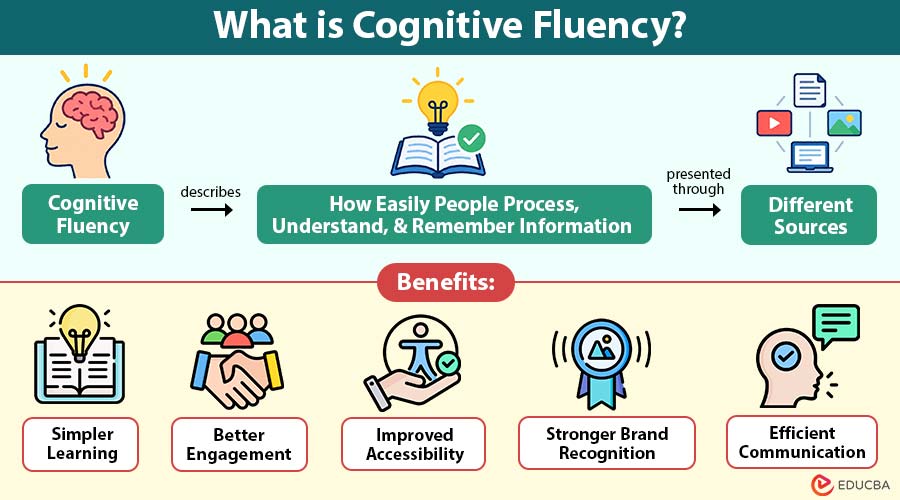
Cognitive fluency describes how easily people process, understand, and remember information presented through different sources.
People regularly receive information through advertisements, conversations, websites, books, and digital applications. Some information feels easy to understand, while other information requires greater attention and mental effort. This difference is related to cognitive fluency.
When information is presented clearly, people can process it with less mental effort. Familiar words, simple sentences, organized layouts, and recognizable patterns often make information easier to understand.
For example, an online shopping website that displays clear product descriptions, readable fonts, and simple navigation provides a smoother experience. Customers can quickly understand product details and make purchasing decisions without spending unnecessary effort.
Cognitive fluency plays an important role in communication, learning, marketing, user experience, and decision-making.
Table of Contents:
- Meaning
- Importance
- Working
- Types
- Factors Affecting Cognitive Fluency
- Examples
- Benefits
- Limitations
- Applications
- Difference
Key Takeaways:
- Cognitive fluency helps people understand, process, and remember information with less mental effort.
- Clear language, familiar visuals, and organized layouts improve information processing and user experiences.
- Cognitive fluency influences learning, purchasing decisions, communication, brand recognition, and everyday judgments.
- Excessive simplicity can create false confidence, familiarity bias, and misunderstandings about complex information.
Importance of Cognitive Fluency
Cognitive fluency plays an important role in several aspects of everyday life and professional activities.
1. Better Understanding
Clear information requires less mental effort, helping people understand important messages without spending unnecessary time interpreting complicated words or instructions.
2. Improved Memory
Information presented in a familiar and organized manner can be easier to process, making important details easier to remember later.
3. Faster Decisions
When people understand available information quickly, they can compare options more easily and make decisions without feeling unnecessarily confused.
4. Positive User Experience
Simple layouts, readable content, and familiar navigation help users interact with websites, applications, and digital services more comfortably.
5. Effective Communication
Presenting messages in clear language helps businesses, teachers, and professionals share ideas without creating unnecessary confusion among their audiences.
How Does Cognitive Fluency Work?
Cognitive fluency works through the mental processes people use to understand and interpret information. When something is easy to process, the brain requires less effort to make sense of it. Several factors influence this experience:
1. Information Presentation
People process information more easily when it is arranged logically, with clear headings, short sentences, and meaningful explanations.
2. Familiarity
Previously encountered words, images, and ideas often feel easier to understand because people already have some knowledge of them.
3. Mental Processing
Brain uses existing knowledge and experiences to interpret new information, making familiar concepts easier to recognize and understand.
4. Processing Experience
When information feels easy to understand, people may develop a positive impression of the message, product, or experience.
5. Judgment Formation
People sometimes use processing ease as a signal when evaluating information, although ease does not always indicate accuracy or quality.
Types of Cognitive Fluency
Cognitive fluency can be experienced in different ways depending on how information reaches the brain and how people process it. The common types include:
1. Perceptual Fluency
It refers to how easily people recognize or process visual information, such as images, shapes, colors, and familiar symbols.
2. Linguistic Fluency
It describes how easily people understand written or spoken language, including familiar words, simple sentences, and clearly structured messages.
3. Conceptual Fluency
It involves understanding ideas and connecting them with existing knowledge, making familiar concepts easier to interpret and remember.
4. Retrieval Fluency
It describes how easily people recall information from memory when answering questions, recognizing familiar details, or making decisions.
Factors Affecting Cognitive Fluency
Several factors influence how easily people understand and process information. Some make information clearer, while others increase the effort required to interpret it.
1. Language Simplicity
Common words and short sentences make messages easier to understand, while unfamiliar terminology can create additional mental effort.
2. Visual Design
Balanced layouts, readable fonts, and suitable spacing help people process visual information without unnecessary distractions.
3. Familiarity
Information connected to previous experiences often feels easier to understand because people can relate it to what they already know.
4. Information Structure
Proper headings, organized paragraphs, and logical explanations help readers follow ideas without struggling to connect different points.
5. Repetition
Repeated exposure to information can increase familiarity, making certain words, messages, and concepts easier to recognize over time.
6. Distractions
Background noise, crowded designs, and unrelated information can interrupt attention and make understanding more difficult.
Examples of Cognitive Fluency
Cognitive fluency appears in everyday activities, from reading online content to choosing products and understanding instructions. The following examples explain how it works:
1. Website Content
A website uses short paragraphs, descriptive headings, and familiar language, helping visitors find information and understand its purpose quickly.
2. Product Packaging
A food company uses clear labels and recognizable symbols, allowing customers to identify product information without reading lengthy descriptions.
3. Educational Materials
A teacher explains a difficult concept through familiar examples, helping students connect new information with knowledge they already understand.
4. Brand Recognition
A company uses consistent colors, logos, and visual elements, making its products easier for customers to recognize across different platforms.
5. Mobile Applications
An application places commonly used features in familiar locations, helping users complete tasks without spending time learning complicated navigation.
Benefits of Cognitive Fluency
Cognitive fluency offers several benefits in communication, education, marketing, and digital experiences.
1. Simpler Learning
Students can understand new topics more comfortably when teachers present explanations using familiar words, organized information, and relatable examples.
2. Better Engagement
Clear and readable content encourages people to continue reading, watching, or interacting with information instead of leaving because of confusion.
3. Improved Accessibility
Simple language and organized presentation help people with different knowledge levels access and understand important information more comfortably.
4. Stronger Brand Recognition
Consistent visual elements make brands easier to identify, helping customers remember their appearance across advertisements, packaging, and websites.
5. Efficient Communication
Well-organized messages reduce misunderstandings and help people exchange information more effectively in professional and personal situations.
Limitations of Cognitive Fluency
Although cognitive fluency improves information processing, relying on it too much can sometimes create problems.
1. False Confidence
People may believe information is correct simply because it is easy to understand, even when the message contains inaccurate details.
2. Oversimplification
Reducing complex subjects too much can remove important details, leading readers to develop incomplete or incorrect understandings of certain topics.
3. Familiarity Bias
People may prefer familiar ideas over unfamiliar but useful information, limiting their willingness to consider different viewpoints or solutions.
4. Misleading Communication
Businesses may use attractive designs and simple messages to make weak products appear more reliable or valuable than they actually are.
5. Reduced Critical Thinking
Information that feels immediately convincing may discourage people from checking evidence, comparing alternatives, or questioning the message carefully.
Applications of Cognitive Fluency
Cognitive fluency is useful in several fields where people need to understand information, recognize patterns, and make decisions.
1. Education
Teachers organize lessons using simple explanations, familiar examples, and clear learning materials to help students understand unfamiliar subjects.
2. Digital Design
Designers create easy navigation, readable text, and familiar controls to make websites and applications more comfortable to use.
3. Advertising
Marketers develop clear messages and recognizable visuals so customers can understand promotional content without unnecessary effort.
4. Business Communication
Organizations use structured presentations, straightforward reports, and clear instructions to improve communication between employees and stakeholders.
5. Public Information
Government agencies and public organizations use simple language and recognizable signs to communicate important instructions to different audiences.
Difference Between Cognitive Fluency and Cognitive Load
The table below highlights the differences between the two:
| Basis | Cognitive Fluency | Cognitive Load |
| Meaning | Ease of processing information | Amount of mental effort required |
| Focus | How easily information is understood | How much information the brain must handle |
| Experience | Information feels easy to process | Information requires mental resources |
| Influence | Affects understanding and judgments | Affects learning and information processing |
| Example | Reading a clearly written article | Understanding several complicated instructions together |
Final Thoughts
Cognitive fluency explains why people prefer information that is easy to understand and process. It influences learning, communication, marketing, and everyday decisions. By using clear language, familiar visuals, and organized information, businesses and educators can improve understanding and user experiences. However, simplicity should never replace accuracy or meaningful details.
Frequently Asked Questions (FAQs)
Q1. Can cognitive fluency influence purchasing decisions?
Answer: Yes, customers may respond more positively to products and advertisements that present information clearly, although price, quality, trust, and personal preferences also influence purchasing decisions.
Q2. How can writers improve cognitive fluency?
Answer: Writers can improve it by using familiar words, shorter sentences, meaningful headings, logical paragraph structures, and examples that help readers understand unfamiliar ideas.
Q3. Does repetition improve cognitive fluency?
Answer: Repeated exposure can make information more familiar and easier to recognize. However, repetition alone does not guarantee that people will understand or remember every detail.
Q4. Why is cognitive fluency important in user experience design?
Answer: It helps designers create websites and applications that users can understand and navigate easily, reducing confusion and making common tasks more comfortable to complete.
Recommended Articles
We hope that this EDUCBA information on “Cognitive Fluency” was beneficial to you. You can view EDUCBA’s recommended articles for more information –