


What is Learning Agility?
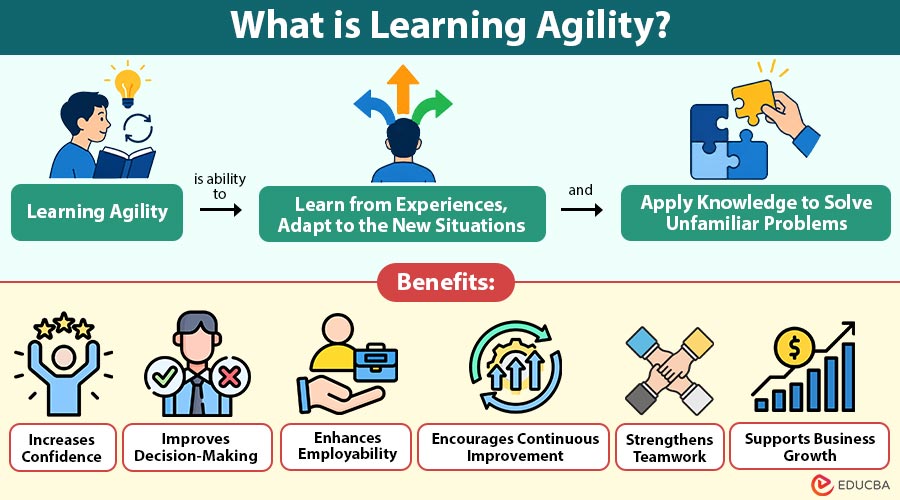
Learning agility is ability to learn from experiences, adapt to the new situations, and apply knowledge to solve unfamiliar problems.
In today’s changing workplace, employees often face new responsibilities, unexpected challenges, and different ways of working. The knowledge gained through previous experiences may not always provide the right answers. People need to understand new situations, learn quickly, and adjust their approach when circumstances change.
Learning agility helps individuals handle these situations with confidence. It encourages them to remain curious, accept feedback, experiment with different ideas, and learn from both successful and unsuccessful experiences. This ability is valuable for employees, managers, and business leaders who want to improve their performance and prepare for future opportunities.
Table of Contents:
- Meaning
- Importance
- Characteristics
- Types
- Examples
- Benefits
- Challenges
- How to Develop Learning Agility?
- Applications
Key Takeaways:
- Learning agility helps individuals adapt to unfamiliar situations by applying knowledge gained through previous experiences.
- Learning agility involves adapting to change, understanding new situations, and applying previous experiences to solve unfamiliar problems.
- Continuous learning, constructive feedback, and self-reflection help individuals strengthen their learning agility over time.
- Learning agility improves career growth, workplace performance, decision-making, and organizational adaptability in changing environments.
Importance of Learning Agility
Learning agility is important because knowledge, technology, and workplace expectations continue to change. Individuals must develop new abilities to remain effective in different situations.
Its importance can be understood through following points:
1. Supports Career Growth
Employees who learn new skills and adjust to changing responsibilities can prepare themselves for promotions and more challenging professional opportunities.
2. Improves Workplace Performance
Applying lessons from previous experiences helps employees make better decisions and handle unfamiliar responsibilities with greater confidence.
3. Encourages Innovation
Individuals who explore different ideas and question existing methods can contribute fresh solutions to workplace problems and business challenges.
4. Prepares Future Leaders
Managers with learning agility can handle new responsibilities, understand changing business needs, and guide teams through uncertain situations.
5. Supports Organizational Change
Employees who learn quickly can adjust to new technologies, business processes, and workplace expectations with less difficulty.
Characteristics of Learning Agility
People with learning agility approach unfamiliar situations with curiosity and a willingness to improve. They do not depend entirely on previously learned methods when facing new challenges.
Some important characteristics include:
1. Curiosity
They show interest in new ideas, ask questions, and actively seek information to understand unfamiliar situations and different ways of working.
2. Adaptability
They adjust their working methods, decisions, and behavior when responsibilities, business conditions, or unexpected circumstances change.
3. Self-Awareness
They understand their strengths, weaknesses, and learning needs, allowing them to recognize areas that require improvement.
4. Openness to Feedback
They accept suggestions from others and use constructive criticism to improve their skills, decisions, and overall performance.
5. Problem-Solving
They examine unfamiliar challenges from different perspectives and identify suitable solutions instead of depending only on familiar methods.
6. Willingness to Experiment
They try different approaches, evaluate the results, and learn from mistakes without treating every unsuccessful attempt as a failure.
Types of Learning Agility
Learning agility includes different abilities that help individuals understand experiences and respond effectively to changing situations. The commonly discussed types include:
1. Mental Agility
The ability to understand complex information, consider different viewpoints, and develop solutions when dealing with unfamiliar problems or difficult decisions.
2. People Agility
The ability to understand others, communicate effectively, and work with individuals who have different personalities, experiences, and working styles.
3. Change Agility
The willingness to accept new situations, adjust existing habits, and remain productive when familiar processes or working conditions change.
4. Results Agility
The ability to achieve positive outcomes in unfamiliar situations by using available resources, learning quickly, and maintaining focus on important goals.
5. Self-Awareness Agility
The ability to understand personal behavior, recognize learning gaps, and make necessary adjustments based on feedback and previous experiences.
Examples of Learning Agility
Learning agility can be seen in everyday situations where individuals use previous experiences to understand new challenges and improve their responses. Some practical examples include:
1. Learning New Technology
An employee learns a newly introduced project management tool and applies its features to organize tasks and improve team coordination.
2. Handling New Responsibilities
A marketing executive takes responsibility for managing a new campaign, studies unfamiliar strategies, and adjusts the promotional plan based on results.
3. Learning from Mistakes
A sales professional reviews unsuccessful customer interactions, identifies communication gaps, and changes the approach to improve future conversations.
4. Adapting to Workplace Changes
An employee adjusts to remote working arrangements by learning digital communication tools and developing better methods for managing daily responsibilities.
5. Solving Unexpected Problems
A team leader faces a sudden project delay, reviews available resources, learns from earlier experiences, and develops an alternative work schedule.
6. Accepting Feedback
A designer receives suggestions about a presentation, studies the feedback, and improves the layout and content in the next version.
Benefits of Learning Agility
Learning agility provides benefits for individuals as well as organizations. It helps people improve their abilities while supporting better workplace performance.
1. Increases Confidence
Learning from different experiences helps individuals approach unfamiliar responsibilities with greater confidence and a willingness to handle new challenges.
2. Improves Decision-Making
People can use lessons from previous situations to evaluate available choices and make informed decisions when facing unfamiliar circumstances.
3. Enhances Employability
Individuals who continuously develop their abilities can become better prepared for changing job requirements and new employment opportunities.
4. Encourages Continuous Improvement
Regular learning helps employees identify performance gaps, update their knowledge, and improve the quality of their work over time.
5. Strengthens Teamwork
People who understand different working styles can communicate better, share knowledge, and cooperate effectively with colleagues from different backgrounds.
6. Supports Business Growth
Organizations with adaptable employees can respond to market changes, adopt new practices, and improve their ability to handle business challenges.
Challenges of Learning Agility
Although learning agility offers several benefits, developing and applying it can be difficult in certain situations.
1. Fear of Failure
Some individuals avoid unfamiliar tasks because they worry about making mistakes, receiving criticism, or performing poorly in new situations.
2. Resistance to Change
Employees who feel comfortable with existing routines may find it difficult to accept new responsibilities, technologies, or working methods.
3. Limited Learning Opportunities
Heavy workloads, insufficient training, and limited access to resources can prevent employees from developing new skills and gaining experience.
4. Difficulty Accepting Feedback
Some individuals take constructive suggestions personally, making it harder to recognize weaknesses and improve their working methods.
5. Information Overload
Without specific learning objectives, having excessive access to information can lead to confusion and make it challenging to find relevant information.
How to Develop Learning Agility?
Learning agility can improve through regular practice, reflection, and exposure to different experiences. Individuals can develop this ability by following these approaches:
1. Accept New Challenges
Take responsibility for unfamiliar tasks and projects to gain practical experience and understand different ways of solving workplace problems.
2. Ask Questions
Develop curiosity by asking relevant questions, discussing unfamiliar topics, and seeking explanations whenever new information or situations create confusion.
3. Learn from Mistakes
Review unsuccessful experiences, identify what went wrong, and use those lessons to make better decisions during future assignments.
4. Seek Constructive Feedback
Ask managers, colleagues, and mentors for honest suggestions to understand performance gaps and identify opportunities for personal improvement.
5. Explore Different Perspectives
Listen to people with different experiences and opinions to understand alternative approaches and develop more flexible thinking.
6. Set Learning Goals
Identify specific skills to improve, create realistic learning targets, and regularly review progress to maintain consistent personal development.
7. Practice Self-Reflection
Spend time reviewing daily experiences, recognizing successful decisions, and identifying areas where different actions could produce better results.
Applications of Learning Agility
Learning agility is useful across different professional environments because employees regularly encounter new tasks, changing expectations, and unfamiliar challenges.
1. Human Resource Management
HR professionals use learning agility to understand changing employee expectations, adopt new recruitment practices, and improve workplace development programs.
2. Leadership Development
Organizations identify agile learners for leadership roles because they can handle unfamiliar responsibilities and adjust their management approaches when necessary.
3. Project Management
Project managers apply lessons from previous assignments to manage changing deadlines, coordinate teams, and respond to unexpected project requirements.
4. Technology and IT
Technology professionals continuously learn new programming languages, software tools, and technical methods to keep their knowledge relevant.
5. Customer Service
Customer service employees adapt their communication methods to understand different customer concerns and provide suitable solutions.
6. Business Management
Business leaders use learning agility to understand market changes, evaluate new opportunities, and adjust business strategies when conditions shift.
Final Thoughts
Learning agility helps individuals learn from experiences, adapt to unfamiliar situations, and apply new knowledge to solve problems. It supports career growth, leadership, and workplace performance. By accepting challenges, seeking feedback, and exploring new ideas, individuals can improve their abilities and prepare for changing responsibilities and future opportunities.
Frequently Asked Questions (FAQs)
Q1. Is learning agility an inborn quality or a learned skill?
Answer: Learning agility is a developable ability that improves through experience, self-reflection, continuous learning, and regular exposure to unfamiliar situations.
Q2. Can learning agility be measured?
Answer: Yes. Organizations can assess it through behavioral interviews, workplace observations, feedback assessments, and specialized learning agility assessment tools.
Q3. Why do employers look for learning agility during recruitment?
Answer: Employers value candidates who can adjust to changing responsibilities, learn unfamiliar processes, and develop the skills needed for future workplace demands.
Q4. Does learning agility help with career transitions?
Answer: Yes. It helps professionals understand unfamiliar job responsibilities, develop relevant skills, and adjust to different industries or working environments.
Recommended Articles
We hope that this EDUCBA information on “Learning Agility” was beneficial to you. You can view EDUCBA’s recommended articles for more information –

