


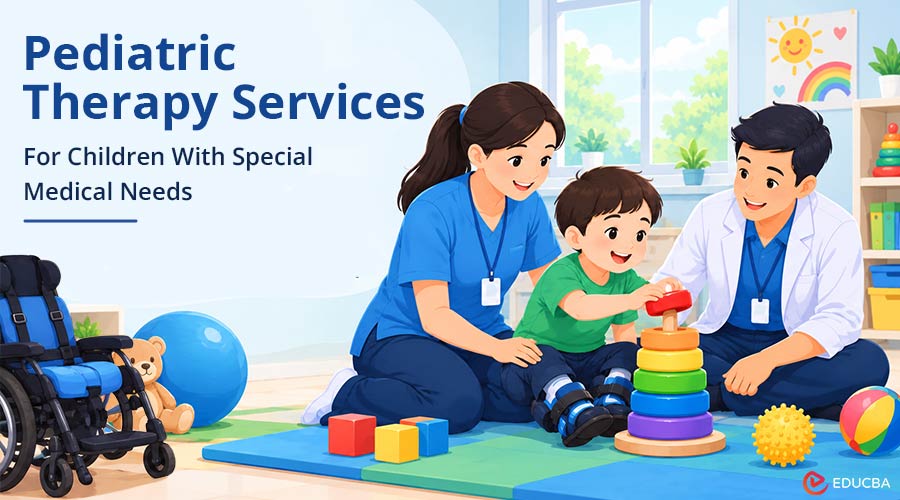
Children with complex medical conditions often face developmental hurdles that go beyond their diagnosis. Long hospital stays, limited mobility, medical equipment, and frequent illness can make it harder to build the everyday skills most kids pick up naturally. Therapy gives these children a structured way to build strength, independence, and communication, one small step at a time. Pediatric therapy services for children with complex medical needs include physical therapy, occupational therapy, and speech therapy, with licensed professionals customizing each treatment plan to address the child’s unique medical needs and developmental objectives.
Together, these three disciplines support the whole child: how they move, how they care for themselves and play, and how they communicate.
Pediatric Therapy Services for Medically Complex Children
Pediatric therapy services support children with complex medical needs through the following therapies:
1. Physical Therapy: Building Strength and Movement
Physical therapy focuses on how a child moves and how their body supports them. For children with conditions such as neuromuscular disorders, chronic lung disease, prematurity, or developmental delays, movement milestones can take more time and more support.
A pediatric physical therapist can work with a child on:
- Head and trunk control
- Rolling, sitting, crawling, standing, and walking
- Balance and coordination
- Strengthening and stretching to reduce stiffness
- Safe positioning and use of adaptive equipment such as standers, walkers, or wheelchairs
- Building endurance, with attention to breathing needs and medical equipment
For children who use a ventilator, oxygen, or a tracheostomy, therapists adapt each session to the child’s stamina and medical plan. Sessions often turn exercises into play, so a child reaches for a toy or follows a song while building the strength they need.
2. Occupational Therapy: Growing Independence and Everyday Skills
Occupational therapy helps children take part in the daily activities that make up childhood: playing, eating, dressing, learning, and interacting with others. For a medically complex child, those activities may need extra support, creative adjustments, or specialized tools.
An occupational therapist can help with:
- Developing fine motor abilities, including gripping objects, holding items, and using hands during play.
- Feeding and mealtime skills, including oral motor development and sensory comfort with food
- Self-care routines, such as dressing, grooming, and hygiene, as appropriate for age and ability
- Sensory processing, helping children respond comfortably to touch, sound, light, and movement
- Positioning and seating for comfort and participation
- Recommendations for adaptive toys, switches, and equipment
Small gains can make a big difference. Learning to bring a hand to the mouth, hold a cup, or activate a switch toy can open the door to more independence and more ways to engage with the world.
3. Speech Therapy: Supporting Communication and Feeding
Speech therapy goes well beyond pronunciation. For medically complex children, speech-language pathologists support communication in all its forms, as well as the muscles and coordination involved in swallowing and feeding.
A speech therapist can work with a child on:
- Early communication, such as eye contact, gestures, and responding to voices
- Expressive and receptive language
- Alternative and augmentative communication (AAC), including picture boards, sign language, and speech-generating devices
- Communication strategies for children with a tracheostomy, such as speaking valves when appropriate and approved by the care team
- Oral motor skills and safe swallowing
- Transitions toward or alongside oral feeding, when medically appropriate
Every child communicates, even if they do not use words. Speech therapy helps families recognize those signals, expand them, and give children reliable ways to share what they want, need, and feel.
Why the Three Therapies Work Better Together?
Physical, occupational, and speech therapy overlap more than most people realize. A child with better trunk control can sit more comfortably, making feeding safer and easier, and use their hands more effectively. A child with stronger communication can participate more in play and therapy sessions. Better sensory regulation can improve focus across all three areas.
When therapists share observations and coordinate goals, a child’s progress can build across every part of their day. Care teams can also align therapy plans with nursing care, so that routines, positioning, and equipment support what the child is working on.
Therapy at Home, Where Skills Get Used
Therapy at home gives children the chance to practice where they spend most of their time. Clinicians can see how a child moves around their own space, how mealtimes go, and what a typical day looks like. That context helps them set realistic goals and recommend practical changes, such as rearranging a play area, adjusting seating, or building communication into daily routines. It also reduces the effort of getting to appointments, which can be hard when a child relies on medical equipment or tires easily.
Involving Parents and Caregivers
Parents are a child’s most consistent teachers. Good therapy includes coaching for families so skills practiced in a session carry over into the rest of the week. Therapists can show caregivers simple techniques for positioning, play, feeding, and communication, and adjust the plan as the child grows or their needs change.
Progress is rarely a straight line for medically complex children. Illness, surgery, and hospital stays can interrupt momentum. A steady therapy relationship helps children and families pick back up and keep moving toward their goals.
Getting Started
Therapy typically begins with a conversation with your child’s physician, who can provide an order and recommend which disciplines make sense. From there, a therapist evaluates the child, sets goals with the family, and builds a plan. Coverage, authorization, and visit frequency vary by health plan and state program, so confirm details with your plan or case manager early on. Angels of Care supports children and young adults with complex health conditions through home-based pediatric care in the regions where the organization operates.
Room for Every Child to Grow
A complex medical condition may shape a child’s path, but it does not limit their potential to learn, connect, and gain new skills. Pediatric therapy services bring together specialized clinical support, family involvement, and practical strategies to help children work toward goals that matter to them.
Recommended Articles
We hope this comprehensive guide to pediatric therapy services helps you understand how specialized care can support children with complex medical needs and developmental goals. Check out these recommended articles for more insights and guidance on child development and family support.

