
What is the Decoy Effect?
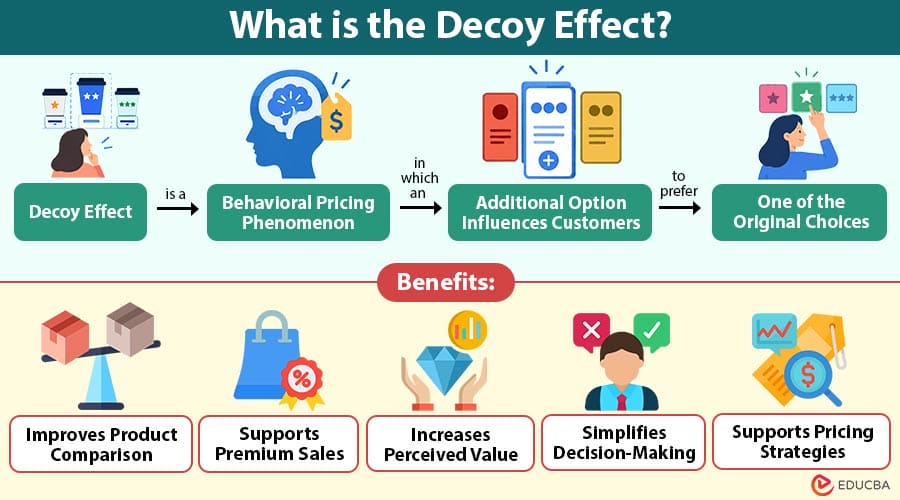
The decoy effect is a behavioral pricing phenomenon in which an additional option influences customers to prefer one of the original choices.
When people compare products or services, they often evaluate options relative to one another rather than independently. A business can introduce a third option, known as a decoy, that is intentionally designed to make another option appear more attractive. The decoy is usually less appealing than the preferred option but similar enough to create a clear comparison.
For example, a cinema may offer a small popcorn for $5 and a large popcorn for $9. If a medium popcorn is added for $8.50, the large option may suddenly appear more valuable because customers can get significantly more popcorn for only a small additional amount.
Table of Contents:
- Meaning
- Importance
- Working
- Types
- Examples
- Benefits
- Limitations
- Difference
- Factors Affecting the Decoy Effect
- Applications
- How can Businesses Use the Decoy Effect Responsibly?
Key Takeaways:
- The Decoy Effect influences choices by adding a strategically designed comparison option.
- A decoy is usually inferior to a target option but comparable to it.
- Businesses commonly use the effect in pricing, product packaging, subscriptions, and retail.
- The effect can make a preferred option appear more valuable without changing its original price.
- Customers should compare each option based on actual needs rather than relative presentation.
Importance of Decoy Effect
The Decoy Effect is important because consumers often make decisions through comparisons. When several products have different prices and features, evaluating their absolute value can be difficult.
Businesses can use a carefully designed decoy to establish a clearer comparison between products. Instead of simply presenting a premium option, they can introduce another option that makes the premium choice seem more reasonable.
The effect is particularly useful in markets where customers have several similar choices. Pricing structures, subscription plans, restaurant menus, software packages, and product bundles can all use comparative options to influence purchasing decisions.
How Does the Decoy Effect Work?
The Decoy Effect generally works through a three-option structure:
1. Identify the Target
The business first selects the product or service it wants customers to prefer. This is called the target option.
2. Establish the Competitor
A second option provides a genuine alternative to the target. Customers can compare its price, features, size, or benefits with the target.
3. Introduce the Decoy
The business adds a third option that is less attractive than the target but similar to it. The decoy changes the comparison between the available choices.
For example:
| Option | Price | Storage |
| Basic | $10 | 100 GB |
| Decoy | $18 | 150 GB |
| Premium | $20 | 250 GB |
Types of Decoy Effect
Below are the main types of the decoy effect, each showing how additional options can influence consumer preferences and purchasing decisions.
1. Asymmetric Dominance
Asymmetric dominance occurs when a decoy is inferior to one option, making that target appear more valuable and attractive compared with alternatives.
2. Compromise Effect
The compromise effect occurs when introducing extreme alternatives makes consumers prefer a middle option that appears balanced and reasonable.
3. Phantom Decoy
A phantom decoy is an attractive option with limited availability that influences customers toward another available alternative during decision-making.
Examples of the Decoy Effect
Below are some common examples of the decoy effect showing how pricing and product choices can influence consumer decisions.
1. Coffee Sizes
A café offers:
- Small: $3
- Medium: $5
- Large: $5.50
The medium option may seem reasonable at first. However, the large option provides substantially more coffee for only $0.50 extra, making it appear more valuable.
2. Streaming Plans
A streaming service offers:
- Basic: $8 per month
- Standard: $14 per month
- Premium: $15 per month
If the standard plan has noticeably fewer features than premium but costs nearly the same, customers may see the premium plan as the better choice.
3. Software Subscriptions
A software company may offer:
- Starter: $15 per month
- Professional: $28 per month
- Business: $30 per month
If Business includes substantially more features than Professional for only $2 extra, customers may shift toward the Business plan.
Benefits of the Decoy Effect
Below are the key benefits of the decoy effect, highlighting how businesses can use strategic product comparisons and pricing to influence customer choices.
1. Improves Product Comparison
A decoy creates a clear reference point, helping customers compare similar products and recognize differences in features, pricing, and value.
2. Supports Premium Sales
A strategically positioned decoy can make premium products more attractive by creating stronger perceived value than alternatives.
3. Increases Perceived Value
Customers may perceive an option as more valuable when its price and features compare favorably with a nearby alternative.
4. Simplifies Decision-Making
Clearly structured alternatives help customers understand differences between products, making it easier to evaluate available choices and select one confidently.
5. Supports Pricing Strategies
Businesses can strategically combine prices and features across product options to influence comparisons and structure offerings more effectively.
Limitations of the Decoy Effect
Below are the major limitations of the decoy effect that can affect its effectiveness in influencing consumer choices.
1. Not Effective for Every Customer
Some customers carefully evaluate products independently and may not be strongly influenced by comparative options.
2. Can Reduce Customer Trust
If customers believe a business intentionally created an unattractive option to push another product, they may view the pricing strategy negatively.
3. Requires Suitable Product Design
The effect depends on the relationship between price, features, and customer preferences. A poorly designed decoy may have little influence.
4. May Encourage Unnecessary Spending
Customers may choose a more expensive option because it looks better by comparison, even when the extra features aren’t necessary.
5. Can Create Pricing Complexity
Too many plans or options can make the purchasing process confusing instead of making comparisons easier.
Difference Between Decoy Effect and Anchoring Effect
The table below highlights the key differences between the two:
| Basis | Decoy Effect | Anchoring Effect |
| Meaning | Uses an additional option to influence preference | Uses an initial reference point to influence judgment |
| Main Focus | Comparison among alternatives | Comparison with an initial value |
| Typical Use | Product packages and pricing plans | Discounts, negotiations, and price presentations |
| Example | Adding an inferior plan to make another plan attractive | Showing an original price before a discounted price |
Factors Affecting the Decoy Effect
Several factors can influence how strongly the effect works:
1. Price Difference
A suitable price gap between the decoy and target can make the target option appear relatively more attractive.
2. Feature Differences
Clearly noticeable feature differences help customers recognize the target’s advantages and strengthen comparisons between options.
3. Product Similarity
A decoy generally works better when its features and characteristics closely resemble those of the target product.
4. Customer Knowledge
Experienced customers may understand pricing structures better and become less influenced by strategically arranged product comparisons.
5. Purchase Importance
Customers may carefully evaluate expensive or important purchases, reducing their reliance on simple comparisons between available alternatives.
6. Presentation
The order, layout, descriptions, and visibility of product options can influence how customers compare and evaluate available choices.
Applications of the Decoy Effect
The decoy effect is used across several industries, including:
1. Retail
Retailers can offer different product sizes, packages, and prices to create comparison points that influence customers toward selected options.
2. E-Commerce
Online stores can display multiple product versions with varying prices and features, helping customers compare options more clearly.
3. Restaurants
Restaurants can structure portion sizes and prices to encourage customers toward particular meals that appear to offer better value.
4. Software
Software companies can provide multiple subscription tiers with different features and prices, influencing customers toward specific plans.
5. Hospitality
Hotels can offer different room categories, amenities, and prices to make selected packages appear more attractive to customers.
6. Media Services
Streaming platforms can present membership plans with varying features, prices, and access levels to influence subscription choices.
How Can Businesses Use the Decoy Effect Responsibly?
Businesses should use comparative pricing transparently. The decoy should represent a genuine option with clearly stated features and conditions, not mislead customers.
Companies should also ensure that pricing differences are understandable and that customers can evaluate alternatives based on their actual needs. Providing accurate information helps customers make informed purchasing decisions while allowing businesses to use structured pricing effectively.
Final Thoughts
The decoy effect is a behavioral pricing phenomenon in which an additional, less attractive option changes how customers compare existing choices. Businesses use it in pricing plans, product packages, menus, subscriptions, and other marketing situations. Understanding this effect helps companies structure choices while helping customers recognize how comparisons can influence their purchasing decisions.
Frequently Asked Questions (FAQs)
Q1. Where is the Decoy Effect commonly observed?
Answer: It is commonly observed in retail stores, restaurants, websites, subscription services, advertising, and product pricing.
Q2. Can the Decoy Effect occur in everyday decisions?
Answer: Yes. It can occur whenever people compare multiple alternatives before selecting a product, service, or package.
Q3. Does the Decoy Effect apply only to consumers?
Answer: No. The effect can influence decision-making in various settings where individuals compare alternatives.
Q4. How does the Decoy Effect influence purchasing decisions?
Answer: It introduces an additional option that makes one existing choice appear more attractive, which can influence how customers compare and select available options.
Recommended Articles
We hope that this EDUCBA information on “Decoy Effect” was beneficial to you. You can view EDUCBA’s recommended articles for more information.

