


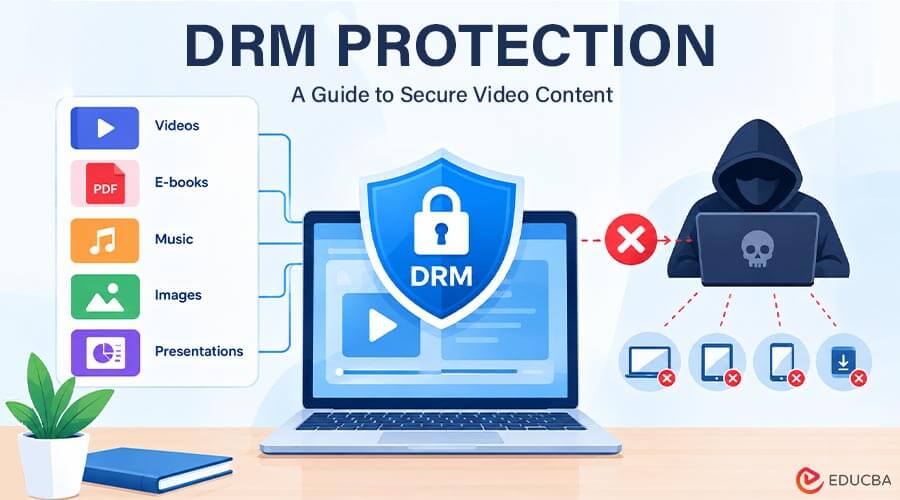
Premium digital video requires controlled access to ensure that valuable content is available only through authorized playback. DRM protection helps achieve this by combining content encryption with licensing mechanisms that control how protected video is accessed across supported devices and environments.
Multi-DRM technology further extends this protection by supporting different DRM standards used across browsers, mobile devices, smart TVs, and other platforms. This approach helps content providers manage secure delivery while maintaining compatibility across viewing environments. Understanding how DRM protected content works helps explain the role of encryption, licensing, and controlled playback in premium video security.
What is DRM Designed to Protect?
Digital Rights Management (DRM) controls access to digital content across browsers, mobile devices, smart TVs, and other environments. It ensures that only authorized users and devices can play protected video.
This approach matters for premium video because content may need to reach audiences across different devices and operating environments. A single DRM technology cannot provide the same coverage across every ecosystem. Multi-DRM approaches therefore bring several DRM technologies together so content can be securely delivered across supported platforms.
Encryption Creates the First Layer of DRM Protection
Content encryption is central to DRM protection. Before delivering protected video, the packaging process encrypts the content. The service can then distribute the encrypted material, while the DRM process controls decryption and playback.
The multi-DRM service supports encrypted DASH, HLS, and CMAF content. An open-source or commercial solution can package the content, after which the service can deliver the protected assets through a content delivery network.
Licensing Controls Playback
Encryption alone does not explain how an authorized viewer receives access. Licensing is another essential part of the process. When a viewer attempts to play protected video, the service application can generate a license request. The backend can use license token generation or proxy-based authentication. The license service manages license issuance for secure playback. This creates a controlled relationship between the request to view content and the rights required to play it.
Multi-DRM Supports Different Ecosystems
Digital video is consumed through many devices, and different ecosystems use different DRM technologies. The major supported technologies include Google Widevine, Apple FairPlay, Microsoft PlayReady, and Huawei WisePlay. Widevine is associated with Android, Chrome, and smart TVs. FairPlay supports Apple environments including iOS, Safari, and Apple TV.
PlayReady is used across Microsoft environments such as Windows, Edge, and Xbox. WisePlay extends support to Huawei devices. A multi-DRM approach brings these technologies together under unified management. This lets content providers apply consistent security policies across environments without managing each DRM system separately.
How the Playback Process Works?
The protection process is a sequence of connected steps. First, encrypt and package the video in a compatible format. Next, the service application integrates the required client-side DRM components. When a viewer requests playback, the application sends the necessary license request.
The licensing process handles the request and authenticates access according to configured requirements. Once the service issues the appropriate license, protected content can proceed to secure playback. The CDN delivers the content while the cloud service manages license issuance.
Supporting Secure Playback Across Devices
A multi DRM approach helps protect video while supporting playback across different devices and operating environments. It brings together technologies such as Google Widevine, Apple FairPlay, Microsoft PlayReady, and Huawei WisePlay.
This allows protected content to work across supported browsers, mobile devices, smart TVs, and other environments while maintaining controlled access through the appropriate DRM technology and licensing process.
Managing Rights Through Licensing
DRM provides a way to manage access. Licensing can include rules governing viewing periods, device limits, offline access, subscriptions, and geographic restrictions. These controls let you define playback conditions instead of leaving access completely open.
Concurrent stream limiting is another feature that controls simultaneous streams associated with a user account. It can identify and limit multiple streams, helping enforce fair usage and discourage credential sharing.
Why DRM is Important for Premium Video?
Premium video represents valuable digital content that organizations must protect during distribution and playback. Without controlled access, encryption alone cannot fully protect these assets because organizations must also govern who can play them. DRM addresses this by combining encryption with licensing and device or platform compatibility.
Multi-DRM extends this approach across major ecosystems, enabling providers to deliver protected video to a wider range of supported devices. DRM is also one component of a broader content security strategy. The company’s content security offering places Multi-DRM alongside forensic watermarking, distributor watermarking, anti-piracy capabilities, content packaging, license services, and DRM License Cipher.
Building a Controlled Content Delivery Process
Effective DRM protection depends on connecting preparation, licensing, application integration, and delivery. Content must first be encrypted and packaged. The application then requests the appropriate license, and the licensing process issues access for authorized playback. A cloud-based, multi-region architecture can support low-latency license delivery. Together, these components make DRM a structured mechanism for protecting premium video from unauthorized access while supporting playback across diverse viewing environments.
Final Thoughts
DRM protection helps secure premium video by combining encryption, licensing, authentication, and controlled playback. DRM protected content stays encrypted during delivery, while licenses regulate access according to defined conditions. Multi-DRM extends this protection across major ecosystems, enabling content providers to support secure, controlled, and compatible distribution across supported browsers, mobile devices, smart TVs, and other environments.
As a comprehensive content security provider, Doverunner supports secure digital content distribution across diverse environments. Their Multi-DRM solution supports Widevine, FairPlay, PlayReady, and WisePlay, alongside content packaging, license services, client SDKs, and DRM License Cipher. Their broader security capabilities include forensic watermarking, distributor watermarking, and anti-piracy technologies, providing content providers with integrated tools to protect premium digital content throughout distribution and playback across supported platforms and devices.
Recommended Articles
We hope this guide to DRM protection helped you understand how to secure premium digital content against unauthorized access. Check out these recommended articles for more insights into digital content security, video protection, and secure content delivery.


