


The Hidden Cost Women Pay When They Negotiate
Most professionals spend hours researching market rates before a salary conversation, then walk into the room and freeze the moment their manager pushes back. For women, that moment carries an extra weight that research keeps confirming: women who negotiate assertively are often judged more harshly than men who do the same thing, a pattern researchers have documented for years and sometimes call a likability penalty. That penalty does not show up as an obvious rejection. It shows up quietly: a slightly cooler reaction from a manager, a raise delayed to the next cycle, or a promotion conversation that never quite happens because asking felt like too big a risk to take twice. Knowing your number was never the hard part. Salary negotiation practice can help bridge the gap between knowing what you deserve and confidently saying it out loud to someone with more power in that moment, especially when you need to hold your ground after pushback.
Knowing Your Worth Is Not the Same as Saying It
This gap between knowing what to ask for and being able to ask for it explains why so many capable women still walk away from raises and offers they had every right to pursue. A candidate might know her market value down to the dollar, having checked salary surveys, talked to recruiters, and compared offers from peers, yet still accept the first number on the table because the conversation itself felt unfamiliar, or because she worried about how asking would be received. Even a fully written script tends to fall apart the moment the other side responds with something unexpected, since a plan on paper cannot account for a raised eyebrow or an unexpected counterargument delivered in real time. Confidence in a negotiation rarely comes from data alone. It comes from salary negotiation practice and having said the words before, more than once, before the moment that actually counts.
Why Salary Negotiation Practice Belongs in Every Negotiation Prep
This is why rehearsal deserves far more attention than it usually gets in career advice aimed at women. Salary negotiation practice gives professionals a chance to test their arguments, refine their responses, and get comfortable handling difficult questions before the real conversation begins. Athletes do not walk onto the field without practice. Actors do not perform a scene they have never read aloud. Public speakers who sound calm and natural on stage have almost always rehearsed the same talk dozens of times in private, often in front of a mirror or a small group, until the words stop sounding like a script. Yet women often enter these high-stakes career conversations with only a number in mind, hoping they will find the right words when they need them. Nobody would suggest that approach for a job interview or a big presentation, and a salary negotiation deserves the same seriousness.
Inside Negotiaelle’s AI-Powered Voice Coaching Tool
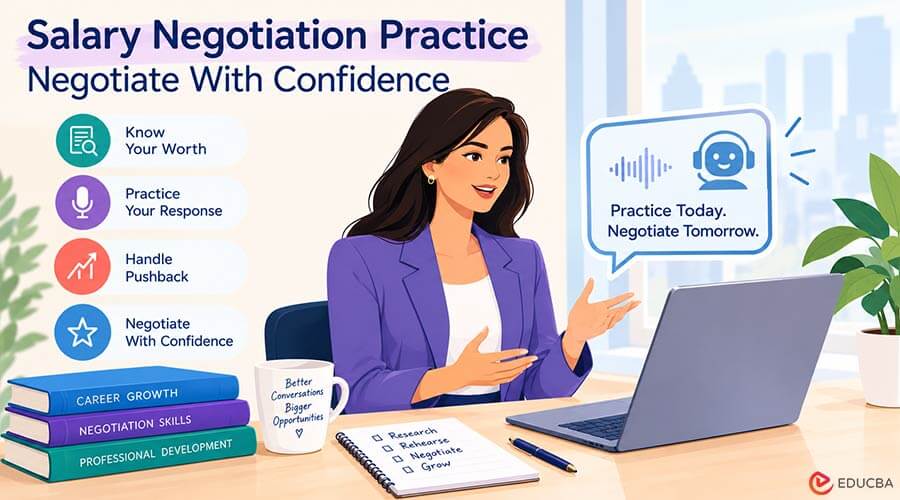
Negotiaelle was built specifically for this gap. The platform gives women a script based on their role, industry, and target salary. It also includes an AI-powered voice coaching tool. Women can use it to rehearse real conversations and practice handling pushback from managers.
Instead of simply reading advice, users hear realistic objections and respond in real time. The experience feels similar to an actual negotiation. After each exchange, the platform provides feedback on tone, pacing, and delivery. It also highlights hesitation and filler words that may reduce confidence.
The sessions are private and repeatable. Women can practice the same difficult exchange three or four times before the real conversation. They can adjust their wording and delivery after each attempt. Over time, uncomfortable responses can start to feel more natural.
Traditional negotiation advice often overlooks this repetition. However, repeated practice can make the real conversation feel more familiar and manageable.
What the Data Shows
The results support this approach. Among women who used the platform, 88 percent reported greater confidence during their actual negotiation. They also felt more prepared to handle the conversation.
More strikingly, the average customer secured about $7,000 more per year than she originally planned to ask for. Rehearsal helped her become comfortable stating a higher number. She had already practiced saying it several times with an AI acting as the other person.
This difference between the planned number and the actual request highlights the value of salary negotiation practice.
Preparation and Practice Work Together
None of this replaces the groundwork of knowing your market value or timing the conversation well. Research still matters, as does understanding a company’s budget cycle and raise approval process. However, women must apply that knowledge under pressure. A script read only in silence rarely prepares them for real objections.
Effective salary negotiation practice complements this preparation by turning research and talking points into natural responses. Repetition builds confidence for difficult conversations. Each practice run strengthens your ability to respond calmly under pressure.
Ready to Rehearse Your Next Negotiation
If you’ve ever left a negotiation replaying the perfect response you thought of five minutes too late, this problem will sound familiar. The fix is not more research. It is rehearsal, done enough times that the real conversation feels like a version she has already lived through. Women preparing for their next raise or offer can start salary negotiation practice before they ever sit down at the table.
Final Thoughts
Salary negotiation is not just about knowing your worth; it is also about communicating it with confidence when the pressure is on. Research, market data, and preparation provide the foundation, but practice helps turn that preparation into a strong real-time response. Women who worry about pushback or being judged for asking can use salary negotiation practice to make the conversation feel more familiar and manageable. Rehearsing different scenarios before the actual discussion can help you speak clearly, handle objections, and stay confident when it matters most. The more you practice, the easier it becomes to walk into your next negotiation prepared to ask for what you deserve.
Recommended Articles
We hope this guide gives you the confidence and preparation you need for your next salary discussion. For more practical advice on salary negotiation practice, explore these recommended articles covering salary negotiations, career advancement, professional growth, workplace confidence, and ways to move forward in your career.

