


What is Cross Default?
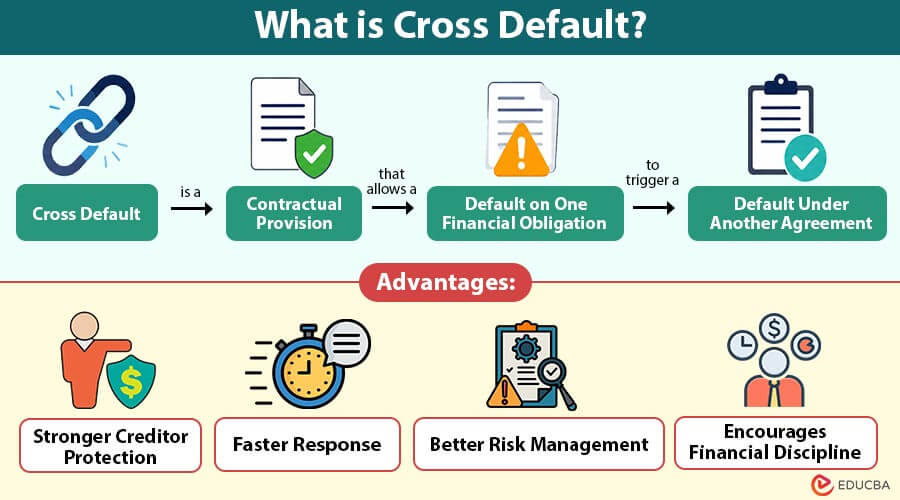
Cross default is a contractual provision that allows a default on one financial obligation to trigger a default under another agreement. In simple terms, if a borrower fails to meet its obligations to one lender, another lender may also have the right to declare a default under its own agreement.
For example, suppose a company breaches a covenant in a syndicated credit facility by exceeding the permitted debt-to-equity ratio. If another financing agreement contains a cross-default clause covering material covenant breaches, the breach may give that creditor the right to declare a default under its own agreement.
This provision helps lenders respond quickly when a borrower’s financial condition deteriorates.
Table of Contents:
- Meaning
- Importance
- Working
- Example
- Difference
- Types
- Advantages
- Disadvantages
- How Can Companies Manage Cross Default Risk?
Key Takeaways:
- Cross default allows a qualifying default under one obligation to trigger rights under another agreement.
- Lenders use cross default provisions to strengthen protection against borrower financial distress and increased credit risk.
- Materiality thresholds and grace periods can prevent minor or temporary defaults from triggering broader consequences.
- Companies can manage risk through liquidity planning, covenant monitoring, and careful contract negotiation.
Why is Cross Default Important?
Cross default is important because financial obligations are often interconnected. A company’s inability to meet one major obligation can indicate broader financial difficulties.
1. Protects Lenders
The provision gives lenders an additional layer of protection. If a borrower’s financial position deteriorates, creditors may have contractual rights to respond before the situation becomes worse.
2. Provides Early Warning
A default under one financing agreement can signal the borrower’s financial condition. Other lenders can use this event as an indication that credit risk has increased.
3. Reduces Creditor Risk
Without provisions, a lender might have limited options until the borrower directly breaches its own agreement.
4. Supports Credit Monitoring
Lenders can monitor defaults across a borrower’s financial obligations and assess whether additional action is necessary.
How Does Cross Default Work?
Cross default generally operates through clauses in financing agreements that specify which defaults under other obligations can trigger consequences. A typical process includes:
1. Borrower Takes Multiple Financial Obligations
A company obtains financing from multiple banks, issues bonds, or enters various credit agreements, creating several financial obligations that must be managed simultaneously.
2. Default Occurs
The company fails to meet an obligation under one agreement, such as missing payments, breaching covenants, or failing to satisfy another contractual requirement.
3. Cross-Default Clause Is Triggered
A qualifying default under one financial obligation triggers the cross-default clause, potentially treating the same event as a default under another financing agreement.
4. Lender Takes Action
Once triggered, the lender may demand immediate repayment, suspend additional funding, enforce collateral, or exercise other contractual rights, depending on the agreement’s terms.
Example of Cross Default
The following example illustrates how a cross-default provision can affect multiple financing arrangements.
Consider Company ABC, which has:
- ₹10 crore loan from Bank A
- ₹8 crore loan from Bank B
- ₹5 crore of corporate bonds
Suppose ABC misses a significant payment on its Bank A loan. The Bank B agreement contains a cross-default provision covering material defaults on other financial debt.
If the Bank A default satisfies the conditions specified in Bank B’s agreement, Bank B may also treat ABC as being in default.
This can create a chain reaction. A relatively isolated financial problem can therefore affect several financing arrangements at the same time.
Difference Between Cross Default and Cross Acceleration
The table below highlights the key differences between both:
| Basis | Cross Default | Cross Acceleration |
| Meaning | Allows a lender to treat a qualifying default under another financial obligation as a default under its own agreement. | Generally requires another creditor to accelerate the debt before the provision becomes effective. |
| Trigger | The occurrence of a qualifying default under another obligation can trigger the clause. | The other creditor must usually demand early repayment or accelerate the debt. |
| Speed of Action | Can allow creditors to exercise rights sooner because actual acceleration may not be required. | May delay action because another creditor must first accelerate the debt. |
| Impact | Creates broader protection for lenders against defaults across a borrower’s financial obligations. | Provides protection while generally requiring a more significant event before triggering lender rights. |
Types of Cross Default Provisions
It can vary depending on the financing agreement.
1. Broad Cross Default
A broad provision covers defaults across numerous financial obligations, providing lenders stronger protection while potentially creating significant consequences for borrowers.
2. Limited Cross Default
A limited provision applies only to specified financial obligations, particular lenders, or defined types of debt under the financing agreement.
3. Materiality-Based Cross Default
A materiality-based provision establishes a minimum monetary threshold, ensuring minor payment defaults do not trigger cross-default consequences under the agreement.
4. Cross Acceleration
Cross acceleration is triggered when another creditor accelerates the borrower’s debt, rather than merely when a qualifying default occurs.
Advantages of Cross Default
Cross default provisions can provide several advantages to creditors and financial markets.
1. Stronger Creditor Protection
Lenders gain greater protection against deterioration in a borrower’s financial position by monitoring defaults across multiple financial obligations.
2. Faster Response
Creditors can respond quickly to signs of financial distress without waiting for a separate breach under their own financing agreement.
3. Better Risk Management
Provisions help lenders assess the borrower’s overall debt position rather than evaluating individual financial obligations separately.
4. Encourages Financial Discipline
Borrowers have stronger incentives to make timely payments across obligations because one default may trigger broader contractual consequences.
Disadvantages of Cross Default
Although it protects lenders, it can disadvantage borrowers.
1. Risk of Contagion
A single default can trigger consequences across multiple financing agreements, potentially spreading financial difficulties and increasing the borrower’s overall exposure.
2. Liquidity Pressure
Multiple lenders may demand repayment simultaneously, creating substantial immediate cash requirements and potentially worsening the borrower’s financial position.
3. Negotiation Complexity
Clauses can be challenging to negotiate because borrowers prefer narrower terms, while lenders generally seek broader protection.
4. Technical Defaults
Contractual breaches may trigger cross default provisions even when they do not necessarily reflect significant financial distress or repayment problems.
5. Reputational Impact
A significant default can damage relationships with banks, investors, suppliers, and other stakeholders, potentially affecting future financing and business opportunities.
How Can Companies Manage Cross Default Risk?
Companies with multiple financing arrangements should carefully review it before accepting new debt.
1. Review All Loan Agreements
Companies should carefully review financing agreements to understand how defaults under one obligation could trigger consequences across other agreements.
2. Maintain Adequate Liquidity
Maintaining sufficient cash reserves helps companies meet payment obligations and reduces the likelihood of defaults caused by temporary liquidity shortages.
3. Monitor Covenants
Companies should regularly monitor financial and operational covenants to identify potential breaches early and take corrective action before defaults occur.
4. Negotiate Materiality Thresholds
Borrowers can negotiate minimum monetary thresholds to ensure that minor defaults do not automatically trigger cross-default consequences.
5. Use Grace Periods
Grace periods provide companies additional time to correct accidental or temporary payment failures before they trigger cross-default provisions.
6. Maintain Communication With Lenders
Early communication with lenders can help companies negotiate waivers, amendments, or restructuring arrangements before a default affects other financing agreements.
Final Thoughts
Cross default protects lenders when borrowers face financial distress by allowing defaults under one obligation to trigger rights under another agreement. Companies should review cross default clauses, materiality thresholds, grace periods, covered obligations, and remedies to manage risks and prevent unexpected financial consequences.
Frequently Asked Questions (FAQs)
Q1. Does cross default apply only to bank loans?
Answer: No. Depending on the agreement, cross default may apply to bonds, credit facilities, leases, guarantees, or other financial obligations.
Q2. Can a cross default clause apply to a subsidiary’s debt?
Answer: Yes. Some agreements extend cross-default provisions to obligations of subsidiaries or related entities within the borrower’s corporate group.
Q3. Can a borrower challenge a cross default claim?
Answer: Yes. A borrower may challenge the claim if the alleged default does not satisfy the specific conditions, definitions, or thresholds stated in the agreement.
Q4. What is a monetary threshold in cross default?
Answer: A monetary threshold specifies the minimum value of a default required before the cross-default provision can be triggered.
Recommended Articles
We hope that this EDUCBA information on “Cross Default” was beneficial to you. You can view EDUCBA’s recommended articles for more information.


