


What are Discretionary Expenses?
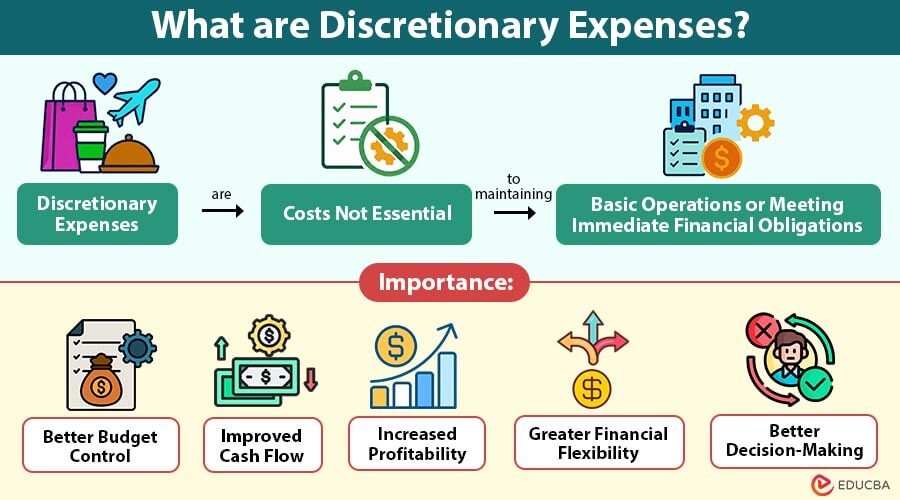
Discretionary expenses are costs not essential to maintaining basic operations or meeting immediate financial obligations. Unlike fixed or mandatory expenses, discretionary spending usually involves choices based on priorities, available budgets, and financial goals.
For example, a business may need to pay employee salaries, rent, utilities, and taxes. These are generally essential expenses. However, spending on employee entertainment, premium office upgrades, optional training programs, or promotional events may be discretionary.
The importance of a discretionary expense can vary by situation. An expense considered optional during a financial downturn may become valuable when the business has sufficient cash flow and wants to invest in growth.
Table of Contents:
- Meaning
- Importance
- Working
- Common Types
- Difference
- Example
- How to Manage Discretionary Expenses?
- Challenges
- Best Practices
Key Takeaways:
- Discretionary expenses are optional costs that businesses can control, reduce, or postpone when necessary.
- Effective expense management improves cash flow, profitability, flexibility, and overall financial decision-making.
- Businesses should prioritize discretionary spending that supports growth, productivity, employee satisfaction, and strategic objectives.
- Regular reviews, clear budgets, approval limits, and ROI measurement help control discretionary spending effectively.
Why are Discretionary Expenses Important?
Managing discretionary expenses matters because these costs can significantly affect profitability and cash flow.
1. Better Budget Control
Tracking discretionary spending gives businesses greater control over how they allocate money. Managers can determine whether optional expenses support current business objectives.
2. Improved Cash Flow
Reducing unnecessary discretionary spending can preserve cash. This is particularly useful when a business experiences seasonal fluctuations, declining revenue, or unexpected costs.
3. Increased Profitability
Lower unnecessary expenses can increase operating margins. Even relatively small savings across multiple discretionary categories can produce meaningful financial improvements over time.
4. Greater Financial Flexibility
A business with controlled discretionary spending has more flexibility to respond to changing market conditions. Saved funds can be redirected toward strategic opportunities or urgent requirements.
5. Better Decision-Making
Categorizing expenses helps management distinguish between essential, valuable, and unnecessary spending. This creates a stronger foundation for financial planning.
How do Discretionary Expenses Work?
Discretionary expenses are generally controlled through budgeting and spending decisions. Businesses first identify essential expenses and allocate funds to meet those obligations. Businesses then consider remaining funds for optional spending based on priorities.
For example, suppose a company has a monthly budget of ₹10,00,000. It spends ₹7,00,000 on salaries, rent, utilities, technology, and other essential costs. The remaining ₹3,00,000 could be allocated toward discretionary activities such as marketing events, team outings, professional development, or office improvements.
Management can adjust these expenses when financial conditions change. If revenue declines, businesses can often reduce discretionary spending before cutting essential operational expenses.
Common Types of Discretionary Expenses
Discretionary expenses can occur across personal and business finances. Common types include:
1. Entertainment Expenses
Businesses may spend money on team celebrations, corporate events, employee entertainment, or client entertainment. These expenses can support workplace culture and relationships but are generally not essential to daily operations.
2. Advertising and Promotional Activities
Some promotional activities may be discretionary because companies can adjust their advertising budgets according to business needs. Businesses may increase spending during product launches and reduce it during periods of lower demand.
3. Employee Training
Training can improve employee skills and productivity. However, certain optional workshops, conferences, seminars, and professional development programs may be postponed when budgets are tight.
4. Office Improvements
Businesses may choose to spend on upgraded furniture, decorative improvements, recreational facilities, premium equipment, or redesigned workspaces. These expenses can improve the workplace but may not be necessary for basic operations.
5. Business Travel
Some business travel is essential, such as travel required for meetings or operations. Other trips, conferences, networking events, and optional business activities may be discretionary.
6. Employee Benefits and Perks
Additional benefits such as company outings, recreational activities, meal programs, or wellness initiatives can fall into the discretionary category depending on the organization’s policies and contractual obligations.
7. Personal Lifestyle Spending
For individuals, discretionary expenses may include dining at restaurants, entertainment subscriptions, vacations, hobbies, shopping, and recreational activities. These costs can usually be adjusted based on income and financial priorities.
Difference Between Discretionary and Non-Discretionary Expenses
The table below highlights the key differences between discretionary and non-discretionary expenses.
| Aspect | Discretionary Expenses | Non-Discretionary Expenses |
| Meaning | Optional expenses that can usually be reduced, modified, or postponed. | Necessary expenses that generally must be paid on time |
| Flexibility | High flexibility; spending can often be adjusted. | Low flexibility; obligations are difficult to avoid or delay. |
| Examples | Entertainment, luxury purchases, optional events, extra advertising, non-essential upgrades. | Rent or mortgage, basic utilities, essential insurance, taxes, debt payments, necessary operating costs. |
| Cost Reduction | Often the first area considered for cost reduction. | Usually harder to reduce without affecting essential needs or obligations. |
| Business Use | Helps organizations identify spending that can be reduced during financial pressure. | Supports essential operations and financial obligations. |
| Priority | Lower priority compared with essential expenses. | Higher priority because these expenses are necessary. |
Example of Discretionary Expenses
Consider an individual who earns ₹80,000 per month. After paying essential expenses such as rent, groceries, electricity, transportation, insurance, and loan payments, the person has ₹15,000 remaining for optional spending.
The individual may use this amount for expenses such as:
- Dining at restaurants: ₹4,000
- Entertainment subscriptions: ₹1,500
- Weekend activities: ₹3,000
- Shopping for non-essential items: ₹3,500
- Hobbies and recreational activities: ₹3,000
These expenses are discretionary because they are not required to meet basic financial obligations. If the individual wants to increase savings or faces a temporary reduction in income, some of these expenses can be reduced or postponed without affecting essential needs.
How to Manage Discretionary Expenses?
Effective management does not necessarily mean eliminating all optional spending. Instead, organizations should determine which discretionary expenses provide sufficient value.
1. Create a Detailed Budget
Businesses should establish spending limits for discretionary categories. A defined budget prevents optional expenses from growing without proper oversight.
2. Prioritize Spending
Not every discretionary expense has the same value. Management should prioritize spending that contributes directly to revenue, productivity, employee retention, customer relationships, or strategic objectives.
3. Review Expenses Regularly
Discretionary expenses should be reviewed periodically rather than approved indefinitely. Monthly or quarterly reviews can reveal unnecessary subscriptions, unused services, and low-value activities.
4. Set Approval Limits
Organizations can establish approval requirements for larger discretionary purchases. This creates accountability and reduces impulsive or unnecessary spending.
5. Measure Return on Investment
For expenses such as marketing campaigns, conferences, training, and promotional activities, businesses should evaluate the results generated. Spending should continue when the benefits justify the cost.
6. Negotiate Supplier Costs
Companies can negotiate discounts, volume pricing, or better contract terms for optional services. This can reduce discretionary spending without completely eliminating useful activities.
7. Use Technology for Expense Tracking
Expense management and accounting software can help businesses categorize, monitor, and analyze spending. Automated reports can make it easier to identify unusual or unnecessary expenses.
Challenges in Managing Discretionary Expenses
The following points highlight the key challenges businesses face when managing discretionary expenses.
1. Identifying Optional Expenses
Businesses may find it difficult to determine whether an expense is truly optional or necessary for operations and growth.
2. Avoiding Excessive Cost-Cutting
Cutting too many discretionary expenses can reduce productivity, employee satisfaction, innovation, and business growth over time.
3. Employee Resistance
Employees and departments may resist budget cuts, especially when reduced spending affects important activities, resources, or workplace benefits.
4. Balancing Short-Term and Long-Term Goals
Reducing expenses now may create long-term challenges by limiting growth, innovation, employee development, or performance.
5. Maintaining Budget Control
Businesses may struggle to control discretionary spending when expenses are not regularly monitor, review, and compare expenses with budgets.
6. Setting Spending Priorities
Organizations must carefully identify which discretionary expenses provide the greatest value and deserve continued funding.
Best Practices for Managing Discretionary Spending
Businesses can follow best practices to manage discretionary expenses effectively:
1. Establish Clear Spending Policies
Create clear spending policies that explain which discretionary expenses are allowed, restricted, or require approval before purchase.
2. Separate Essential and Optional Expenses
Clearly separate essential expenses from optional spending to help businesses prioritize important costs and manage budgets effectively.
3. Set Department-Level Discretionary Budgets
Give each department a specific discretionary budget to control spending and encourage responsible use of company resources.
4. Review Recurring Subscriptions Regularly
Regularly review subscriptions to identify unused services, unnecessary renewals, and opportunities to reduce recurring business expenses.
5. Require Approval for High-Value Purchases
Require managers or authorized employees to approve high-value discretionary purchases before committing funds.
6. Track Spending Against Budgets
Monitor actual discretionary spending against approved budgets to identify overspending, unusual expenses, and areas requiring corrective action.
7. Measure Results of Discretionary Investments
Evaluate the results of discretionary investments to determine whether they deliver expected financial, operational, or business benefits.
Final Thoughts
Discretionary expenses are optional costs that businesses can control, reduce, or postpone. Examples include travel, training, entertainment, promotions, and office improvements. When managed carefully, these expenses can add value. By setting budgets, reviewing spending, measuring returns, and aligning expenses with business goals, organizations can reduce unnecessary costs while maintaining efficiency, flexibility, productivity, and growth.
Frequently Asked Questions (FAQs)
Q1. Are discretionary expenses necessary for a business?
Answer: No. Discretionary expenses are generally not essential for basic operations, although some can support business growth, employee satisfaction, or productivity.
Q2. Can discretionary expenses be reduced during financial difficulties?
Answer: Yes. Businesses can often reduce or postpone discretionary spending before cutting essential expenses when facing cash-flow or financial challenges.
Q3. How can businesses determine whether a discretionary expense is worthwhile?
Answer: Businesses can assess its expected benefits, strategic relevance, cost, and measurable outcomes before approving the expense.
Q4. Do discretionary expenses affect business profitability?
Answer: Yes. Poorly controlled discretionary spending can reduce profits, while carefully selected expenses can generate value without unnecessarily increasing costs.
Recommended Articles
We hope that this EDUCBA information on “Discretionary Expenses” was beneficial to you. You can view EDUCBA’s recommended articles for more information.


