


What is Liquidity Forecasting?
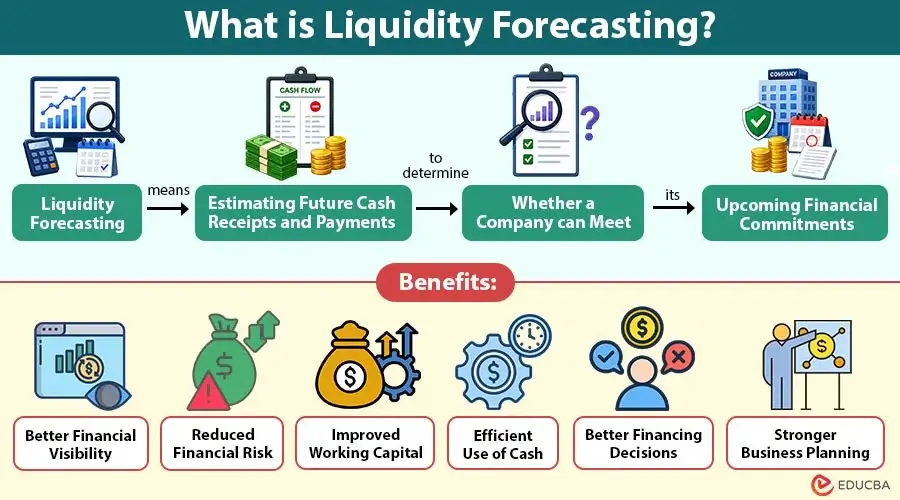
Liquidity forecasting means estimating future cash receipts and payments to determine whether a company can meet its upcoming financial commitments.
It helps the businesses understand how much cash they are likely to have at a specific future time. By forecasting liquidity, companies can prepare for upcoming expenses, manage working capital, plan investments, and avoid cash shortages.
For example, a company may expect ₹50 lakh in customer payments next month but have ₹40 lakh in expenses, including salaries, supplier payments, rent, and loan repayments. A liquidity forecast helps the company determine whether the expected cash balance will be sufficient or whether additional financing may be required.
Liquidity forecasting is especially important for businesses with seasonal sales, long payment cycles, high operating costs, or unpredictable cash flows.
Table of Contents:
Key Takeaways:
- Liquidity forecasting helps businesses predict cash availability and prepare for upcoming financial obligations effectively.
- Regular forecasting identifies potential cash shortages, improves working capital management, and supports better financial decisions.
- Accurate cash flow estimates help businesses plan investments, financing needs, expenses, and debt repayments efficiently.
- Reliable data, regular updates, and scenario analysis can improve forecasting accuracy despite changing business conditions.
Why is Liquidity Forecasting Important?
Liquidity forecasting plays an important role in financial planning and cash management. The main reasons businesses use it include:
1. Prevents Cash Shortages
A liquidity forecast can identify periods when expected cash balances may fall below required levels. Businesses can then arrange financing, delay non-essential expenses, or accelerate collections before a shortage occurs.
2. Improves Cash Management
Forecasting helps finance teams understand when cash will enter and leave the business. This allows them to manage available funds more efficiently instead of keeping excessive amounts of unused cash.
3. Supports Financial Planning
Businesses can use liquidity forecasts to plan major expenses such as equipment purchases, expansion projects, debt repayments, and hiring.
4. Helps Manage Working Capital
Liquidity forecasting provides insights into receivables, payables, inventory, and operating expenses. This helps businesses improve their working capital cycle and maintain healthier cash positions.
5. Supports Better Decision-Making
Management can make more informed financial decisions when it understands future cash availability. Forecasting can help determine whether the company can afford an investment, repay debt, or fund an expansion.
How Does Liquidity Forecasting Work?
Liquidity forecasting generally involves estimating future cash inflows and outflows over a specific period. The process usually includes the following steps.
1. Determine the Forecasting Period
The company first decides how far into the future it wants to forecast liquidity. Forecasts may cover days, weeks, months, or longer periods depending on the business requirement. Short-term forecasts are commonly used for daily cash management, while longer forecasts support strategic financial planning.
2. Calculate the Opening Cash Balance
The existing cash and cash equivalents are used as the starting point. This includes available bank balances and other highly liquid funds.
3. Estimate Cash Inflows
The business identifies expected sources of cash. These may include customer payments, sales receipts, interest income, asset sales, loans, investments, and other sources. Accounts receivable data can help estimate when customers are likely to make payments.
4. Estimate Cash Outflows
The company forecasts expected payments such as salaries, supplier invoices, rent, taxes, loan repayments, interest, utilities, operating expenses, and capital expenditures.
5. Calculate the Expected Closing Balance
The expected closing cash balance can be calculated using:
This calculation helps determine whether sufficient liquidity will be available during the forecast period.
6. Identify Liquidity Gaps
If projected cash outflows exceed the sum of available cash and expected inflows, the company may face a liquidity gap. Finance teams can then evaluate solutions such as short-term borrowing, improving collections, reducing expenses, or delaying discretionary spending.
7. Update the Forecast Regularly
Liquidity forecasts should not remain static. Actual cash flows can differ from estimates because of delayed customer payments, unexpected expenses, changes in sales, or other factors. Regular updates help keep the forecast accurate and useful.
Types of Liquidity Forecasting
Businesses can use different types of liquidity forecasts depending on their objectives.
1. Short-Term Liquidity Forecasting
Short-term forecasting focuses on immediate cash requirements, usually over days, weeks, or several months. It helps businesses manage payroll, supplier payments, taxes, debt obligations, and other near-term expenses.
2. Medium-Term Liquidity Forecasting
Medium-term forecasting typically covers several months to a year. It supports budgeting, working capital management, financing decisions, and business planning.
3. Long-Term Liquidity Forecasting
Long-term forecasting looks beyond the immediate operating cycle. It can help businesses assess funding requirements for expansion, acquisitions, major investments, and long-term debt commitments.
4. Rolling Liquidity Forecasting
A rolling forecast is continuously updated as new financial information becomes available. Instead of creating one fixed forecast, companies regularly add a new future period and revise previous estimates.
Key Components of a Liquidity Forecasting
A reliable liquidity forecast generally includes several important components.
1. Opening Cash Balance
The total cash available at the start of the forecast period, including balances carried forward from previous periods.
2. Accounts Receivable
Expected payments from customers, including estimated amounts, collection dates, outstanding invoices, and anticipated payment delays.
3. Accounts Payable
Expected payments to suppliers, vendors, and other creditors, including scheduled amounts and their respective due dates.
4. Operating Expenses
Regular business costs, including salaries, rent, utilities, insurance, maintenance, and other administrative operating expenses.
5. Capital Expenditure
Planned investments in equipment, technology, property, machinery, and other long-term assets required for business operations.
6. Debt Payments
Scheduled principal and interest payments for loans, credit facilities, bonds, and other outstanding borrowing obligations.
7. Taxes
Expected tax payments based on applicable business obligations, estimated liabilities, filing requirements, and scheduled payment deadlines.
8. Financing Activities
Expected funding from loans, credit facilities, equity investments, refinancing, or other available financing sources during periods.
Benefits of Liquidity Forecasting
Liquidity forecasting provides several benefits to businesses.
1. Better Financial Visibility
It gives management a clear view of expected cash positions, supporting informed decisions about future liquidity conditions.
2. Reduced Financial Risk
Early identification of potential cash shortages allows businesses to take corrective measures before serious financial problems develop.
3. Improved Working Capital
Forecasting enables organizations to manage receivables, payables, and inventory more efficiently while maintaining sufficient operational liquidity.
4. Efficient Use of Cash
Businesses can identify surplus cash and decide whether to invest, repay debt, or support business initiatives.
5. Better Financing Decisions
Companies can anticipate funding requirements and arrange suitable financing before potential cash shortages or liquidity pressures occur.
6. Stronger Business Planning
Liquidity forecasts help management determine whether planned projects, investments, and operational activities can be supported by available cash.
Liquidity Forecasting Example
Consider a company with an opening cash balance of ₹20 lakh.
During the next month, it expects:
- Customer collections: ₹35 lakh
- Other cash receipts: ₹5 lakh
- Supplier payments: ₹18 lakh
- Salaries: ₹10 lakh
- Rent and utilities: ₹3 lakh
- Loan repayment: ₹4 lakh
The total expected cash inflow is ₹40 lakh, while the total cash outflow is ₹35 lakh.
Using the liquidity forecasting formula:
- Closing Cash Balance = ₹20 lakh + ₹40 lakh − ₹35 lakh
- Closing Cash Balance = ₹25 lakh
The company expects to end the month with ₹25 lakh in cash. Management can compare this amount with its minimum required cash balance to determine whether additional action is necessary.
Factors that Affect Liquidity Forecasting
Several factors can influence accuracy of a liquidity forecast.
1. Customer Payment Behavior
Delays in customer payments can reduce anticipated cash inflows and create temporary liquidity challenges for businesses.
2. Sales Volatility
Unexpected changes in sales volumes can significantly affect projected revenue, cash receipts, and overall liquidity positions.
3. Supplier Terms
Changes in supplier payment terms can influence the timing and amount of expected cash outflows.
4. Seasonality
Seasonal business patterns can cause significant fluctuations in revenue, expenses, and cash flow across different periods.
5. Interest Rates
Interest rate fluctuations may result in higher or lower borrowing costs, financing charges, and scheduled debt payments.
6. Economic Conditions
Inflation, economic slowdowns, and changing market conditions can influence business revenue, operating costs, and cash requirements.
7. Unexpected Expenses
Emergencies, repairs, legal expenses, or other unplanned costs can create sudden cash outflows and liquidity pressures.
Challenges of Liquidity Forecasting
Although liquidity forecasting is valuable, businesses may face several challenges.
1. Inaccurate Data
Poor-quality financial data can lead to unreliable forecasts. Missing or outdated information can make it difficult to estimate future cash flows accurately.
2. Uncertain Customer Payments
Customers may pay earlier or later than expected, making cash inflow estimates difficult.
3. Changing Business Conditions
Changes in demand, pricing, market conditions, or supplier relationships can quickly make a forecast outdated.
4. Complex Cash Flows
Large organizations may have multiple subsidiaries, currencies, bank accounts, and business units, making liquidity forecasting more complex.
5. Forecasting Bias
Overly optimistic sales expectations or underestimated expenses can create unrealistic forecasts and lead to poor financial decisions.
Final Thoughts
Liquidity forecasting helps businesses anticipate future cash positions, identify potential shortfalls, manage working capital, plan financing, and meet financial obligations. Despite uncertainties, regular updates, scenario analysis, reliable data, and technology can improve accuracy, supporting financial stability, flexibility, effective cash management, and informed decision-making.
Frequently Asked Questions (FAQs)
Q1. Who is responsible for preparing a liquidity forecast?
Answer: Finance teams, treasury professionals, accountants, and financial managers commonly prepare and monitor liquidity forecasts.
Q2. How often should a liquidity forecast be reviewed?
Answer: The review frequency depends on business needs, with companies often updating forecasts weekly, monthly, or more frequently.
Q3. What data is needed to prepare a liquidity forecast?
Answer: Businesses typically need sales projections, payment schedules, expense estimates, bank balances, debt information, and planned investments.
Q4. Can liquidity forecasting help during periods of financial uncertainty?
Answer: Yes, it can help businesses evaluate possible cash positions under changing market, sales, or expense conditions.
Recommended Articles
We hope that this EDUCBA information on “Liquidity Forecasting” was beneficial to you. You can view EDUCBA’s recommended articles for more information.

