


What is Data Security Posture Management?
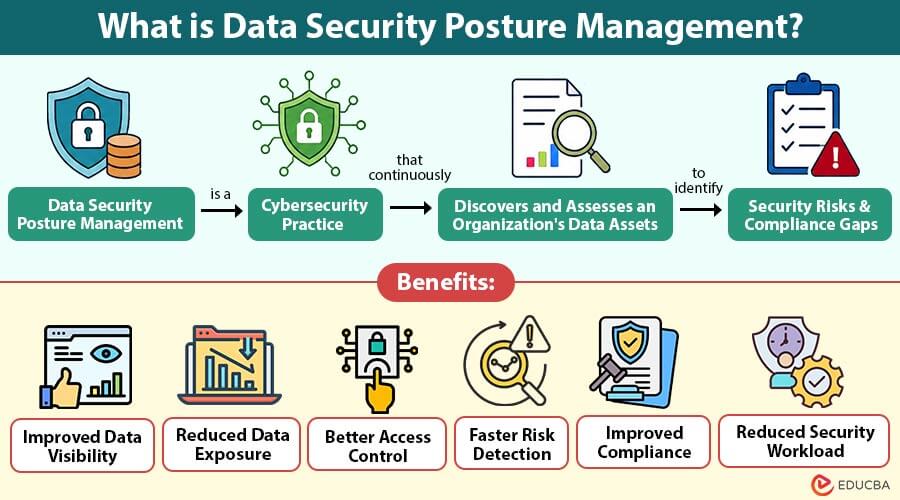
Data Security Posture Management is a cybersecurity practice that continuously discovers and assesses an organization’s data assets to identify security risks and compliance gaps. It provides visibility into sensitive information across databases, cloud storage, data warehouses, SaaS platforms, and other environments.
Traditional security solutions often focus on networks, endpoints, applications, or identities. DSPM adds a data-centric layer by examining relationships among data, users, applications, permissions, and infrastructure.
For example, an organization may have sensitive customer information stored in a cloud database. DSPM can identify the database, classify the information, determine who has access, detect excessive permissions, and highlight potential exposure risks. Security teams can then take corrective action before the data is compromised.
Table of Contents:
Key Takeaways:
- Data Security Posture Management continuously discovers and classifies sensitive data across complex organizational environments to identify security risks.
- DSPM analyzes permissions, configurations, and data exposure to reduce unnecessary access and potential vulnerabilities.
- Continuous monitoring helps organizations detect emerging data security risks and respond quickly to potential threats.
- DSPM supports compliance by providing visibility into sensitive data, access controls, storage locations, and security practices.
How Does Data Security Posture Management Work?
DSPM generally follows a continuous process that combines data discovery, classification, analysis, risk assessment, monitoring, and remediation.
1. Data Discovery
DSPM identifies data across databases, cloud storage, warehouses, SaaS applications, and repositories, creating a comprehensive inventory of organizational data assets.
2. Data Classification
DSPM classifies discovered information based on sensitivity, identifying personal information, financial records, credentials, customer data, and valuable intellectual property assets.
3. Access Analysis
DSPM examines user permissions and access rights to identify excessive privileges, inactive accounts, unnecessary access, and violations of least-privilege principles.
4. Risk Assessment
DSPM evaluates risks by analyzing data sensitivity, location, permissions, configuration, exposure, and usage to prioritize potentially dangerous security issues.
5. Continuous Monitoring
DSPM continuously monitors changing data environments, detecting newly created resources, modified permissions, transferred sensitive information, and emerging security risks.
6. Remediation
DSPM supports remediation by helping organizations adjust permissions, secure exposed storage, remove unnecessary data, correct configurations, and strengthen security controls.
Key Features of Data Security Posture Management
A modern DSPM solution typically provides several capabilities.
1. Data Discovery and Inventory
DSPM automatically identifies data stores and creates an inventory of the organization’s data environment. This helps security teams understand what information exists and where it is stored.
2. Sensitive Data Identification
DSPM can detect sensitive information using classification rules, patterns, metadata, and machine learning techniques. This allows organizations to prioritize protection for their most valuable data.
3. Risk Prioritization
Not every security issue matters equally. DSPM helps prioritize risks according to factors such as sensitivity, exposure, accessibility, and business impact.
4. Configuration Monitoring
Misconfigured cloud storage, databases, and other systems can expose sensitive information. DSPM can identify configuration issues that increase the risk of data exposure.
5. Data Flow Visibility
Understanding how data moves between applications and environments is essential for security. DSPM helps organizations map data flows and understand where sensitive information travels.
6. Compliance Support
DSPM can support compliance initiatives by helping organizations identify sensitive data, monitor access, and maintain visibility into security controls.
Data Security Posture Management Use Cases
Data Security Posture Management has several important use cases that help organizations protect sensitive data and reduce security risks.
1. Cloud Data Security
Organizations can use DSPM to monitor sensitive information stored across cloud environments and identify exposed resources.
2. Data Breach Prevention
DSPM can identify conditions that may contribute to data breaches, such as public storage, excessive permissions, and weak security controls.
3. Insider Risk Management
By monitoring access to sensitive information, organizations can identify unusual access patterns and reduce unnecessary privileges.
4. Data Migration
During cloud or system migrations, DSPM can help organizations identify sensitive information and understand where it is being transferred.
5. Third-Party Data Access
Organizations can assess which external applications, vendors, and service accounts can access sensitive data and determine whether that access is necessary.
Benefits of Data Security Posture Management
DSPM provides several benefits for modern organizations.
1. Improved Data Visibility
DSPM provides organizations with clear visibility into sensitive data locations, helping security teams understand their data environment and make informed decisions.
2. Reduced Data Exposure
DSPM identifies exposed, misconfigured, or poorly protected sensitive data, enabling organizations to address vulnerabilities before attackers can potentially exploit them.
3. Better Access Control
DSPM identifies excessive permissions and unnecessary access, helping organizations limit sensitive data access according to least-privilege security principles.
4. Faster Risk Detection
Continuous monitoring allows DSPM to detect data security risks quickly, reducing reliance on periodic manual assessments and improving security responsiveness.
5. Improved Compliance
DSPM supports compliance efforts by providing visibility into sensitive data, access permissions, storage locations, and security controls across organizational environments.
6. Reduced Security Workload
Automation minimizes manual security tasks by continuously analyzing databases, storage systems, permissions, and sensitive information across complex technology environments.
Challenges of Implementing Data Security Posture Management
Despite its advantages, DSPM implementation can present several challenges.
1. Complex Data Environments
Organizations may have thousands of databases, cloud resources, applications, and storage locations. Discovering and monitoring everything can be difficult.
2. Data Classification Accuracy
Automated classification may occasionally misidentify information. Organizations should validate classification policies and regularly improve detection rules.
3. Large Numbers of Alerts
Poorly configured DSPM systems may generate too many alerts. Security teams should prioritize findings based on risk and business impact.
4. Integration Requirements
DSPM may need to integrate with cloud platforms, databases, identity systems, SIEM platforms, security operations tools, and ticketing systems.
5. Privacy Considerations
DSPM solutions may inspect sensitive information to identify risks. Organizations must ensure that the DSPM platform itself follows appropriate privacy and security controls.
Best Practices for Implementing the Data Security Posture Management
Organizations can improve DSPM implementation by following several practices.
1. Create a Complete Data Inventory
Identify databases, cloud storage, applications, and other locations where the organization stores data across the entire technology environment.
2. Classify Sensitive Data
Establish clear categories for personal, financial, confidential, regulated, and other sensitive information to ensure appropriate security controls.
3. Apply Least Privilege
Ensure users and applications receive only the access they need, reducing unnecessary permissions and limiting potential data exposure.
4. Prioritize Critical Risks
Focus remediation efforts on highly sensitive data with significant exposure, excessive permissions, or weak security controls.
5. Monitor Continuously
Track changes in data locations, permissions, configurations, and access patterns to identify emerging security risks promptly.
6. Integrate Security Tools
Connect DSPM with identity, cloud security, SIEM, ticketing, and incident response systems for coordinated security management.
7. Review Policies Regularly
Update data classification, access, and security policies as business requirements, technology environments, and regulatory requirements change.
Final Thoughts
Data Security Posture Management provides a data-centric approach to protecting sensitive information across modern IT environments. By discovering data, classifying sensitive information, analyzing access permissions, identifying vulnerabilities, monitoring changes, and supporting remediation, DSPM helps organizations improve their overall security posture.
Frequently Asked Questions (FAQs)
Q1. Can DSPM identify unnecessary data access?
Answer: Yes. DSPM can analyze relationships between users, applications, service accounts, and data resources to highlight unnecessary or excessive access that may increase security risks.
Q2. How does DSPM support data governance?
Answer: DSPM provides visibility into data locations, classifications, access patterns, and security conditions. This information helps organizations strengthen governance processes and maintain appropriate data controls.
Q3. What should organizations consider before deploying DSPM?
Answer: Organizations should evaluate their data environment, classification requirements, integration needs, privacy considerations, existing security tools, and risk-prioritization strategy before implementing DSPM.
Q4. How can organizations maintain an effective DSPM program?
Answer: Organizations should continuously monitor data environments, review access permissions, update classification policies, investigate high-priority findings, and regularly adjust security controls as their infrastructure and data requirements change.
Recommended Articles
We hope that this EDUCBA information on “Data Security Posture Management” was beneficial to you. You can view EDUCBA’s recommended articles for more information.


