


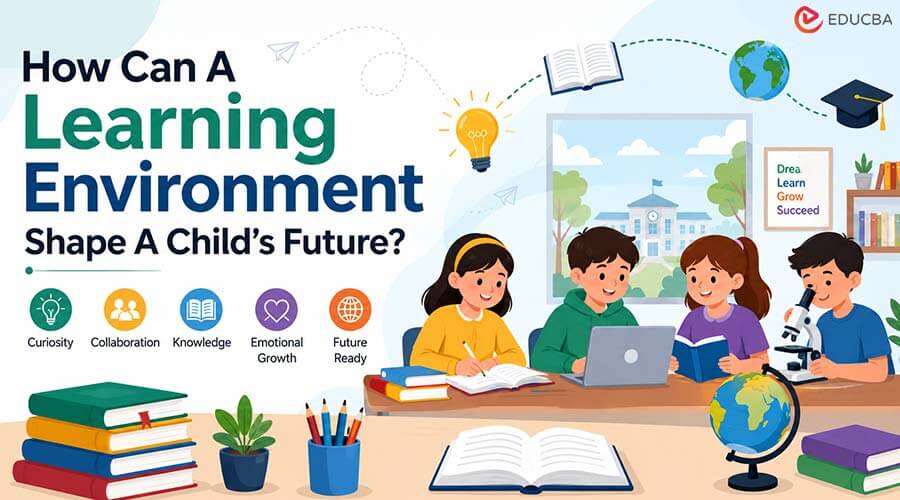
The learning environment in which children learn has an impact on their future. The development of student knowledge, confidence, and personal values happens across the classroom, teacher, activities, and daily interactions. In modern education, the emphasis is on creating a learning environment that prepares students for challenges beyond assessments. Parents are searching for lessons to give children the opportunity to be inquisitive thinkers, responsible people and adaptable learners in schools.
A positive learning environment offers much more than the simple transfer of knowledge. It encourages students to discover what they’re good at, practice crucial skills, and learn how to apply what they know in the real world. If we focus on the whole child, a positive learning environment helps children prepare for further education, future careers, and everyday life.
How Does a Learning Environment Develop Curiosity Through Exploration?
One of the most forceful motivators for learning is curiosity. Virtually all children want to know how things work, why things happen, and how problems can be solved.
A learning environment that encourages exploration helps students go beyond memorizing facts and figures. They practice probing topics and making connections, as well as forming their own interpretations and understanding.
Learning is better aligned with activities such as research, experiments, creative assignments, and discussions. Students start to see problems as opportunities to learn something new.
Encouraging Independent Decision Making
As students develop, they should be allowed to make judicious decisions for themselves. A supportive learning environment fosters confidence in children’s decision-making skills.
Self-learning is not solitary learning. It is about knowing how to collect data, consider alternatives, and make informed decisions.
In universities and the working world, these skills will prove useful when things start to get on track, and self-management and initiative are paramount.
Building Skills Beyond Academics
Academic knowledge is an essential foundation, but the following steps toward success also rely on hands-on skills. Communication, collaboration, creativity, and problem-solving are all key skills of today’s world.
These skills are cultivated in a positive learning environment through opportunities such as group work, presentations, leadership roles, and practical project experiences. These experiences enable the students to gain insight into how knowledge can be utilized beyond the classroom.
A balanced education equips students with academic and social skills to fulfill academic objectives and responsibilities in their career and personal life.
Value of A Structured Curriculum
The curriculum is carefully designed to provide direction and opportunities for pupils to explore their interests broadly. It contributes to learners developing their analytical and reflective thinking skills and solid subject knowledge.
Families tend to prefer a Cambridge school because it allows for structured learning along with opportunities for independent projects, creativity and comprehensive understanding. Pupils are encouraged to build foundations and to use concepts effectively for purpose.
A well-planned curriculum creates a structured learning environment that provides coherence and continuity for learners as they progress through various stages of learning.
How a Learning Environment Encourages Collaboration?
A collaborative learning environment teaches students how to work effectively with others. Teams in the classroom where collaborative effort is a norm are aware of the need for listening to others, exchanging ideas, and paying due consideration to other views.
Collaborative projects can provide opportunities to troubleshoot problems collectively and acknowledge the merits of each project team member. Students gain experience in these contexts in preparation for workplaces in which they will frequently need to work cooperatively.
By working together, students also learn to be patient, communicate, and manage opposing ideas.
Preparing Students For A Global Society
The world is highly interconnected, and students will meet people from diverse cultures/backgrounds throughout their lives.
Children learn about diverse traditions, perspectives, and experiences in a diverse learning environment. Through these interactions, students learn to empathize and respect diversity.
Global awareness cultivates the learner’s openness of mind and enables them to prepare for involvement in international communities.
How Does a Learning Environment Support Emotional Growth?
Learning isn’t just a head learning issue. Emotional development is equally significant in helping students become confident individuals. A supportive learning environment helps pupils overcome obstacles, respond to feedback, and build resilience. These characteristics help students stay on task when they face challenges.
Children have healthy relationships and become more self-aware when they are aware of their feelings and how to manage challenges.
Technology in a Modern Learning Environment
Technology has revolutionized the way students seek information and learn. Digital technologies offer opportunities to be creative, to research, and to collaborate.
In the modern learning environment, technology supports student learning through digital tools and interactive experiences. Students are taught about the safe and effective use of digital materials and build skills for the future.
The integration of new technology and effective teaching strategies provides a more adaptable and engaging learning experience.
Preparing For Continuous Growth
The purpose of education is to promote the lifelong learning of students. Adaptability, the exploration of new ideas, and the development of new skills are still useful throughout life.
As children grow in a supportive learning environment, they become curious, confident, and more comfortable adapting to change. They know learning goes beyond the classroom.
This attitude equips them with the skills to embrace prospects and adapt to an evolving reality.
Final Thoughts
A well-designed learning environment lays the foundation for a child’s academic achievement, personal growth, and long-term success. By combining knowledge, creativity, collaboration, and emotional support, it helps students build confidence, resilience, and the skills needed to navigate future challenges. A structured program offered by a Cambridge school further strengthens this learning journey by encouraging independent thinking, curiosity, and adaptability. As a result, students are better prepared to contribute positively to society and pursue future opportunities with confidence.
At OWIS, every child’s future is at the heart of the learning experience. A supportive learning environment enables students to build strong academic, social, and life skills while providing the guidance they need to achieve their full potential.
Recommended Articles
We hope this article has given you valuable insights into how a learning environment influences a child’s growth, confidence, and future success. Explore the articles below to discover more about child development, effective teaching methods, and strategies for creating a positive learning environment that supports lifelong learning.


