
What are Sales Quotas?
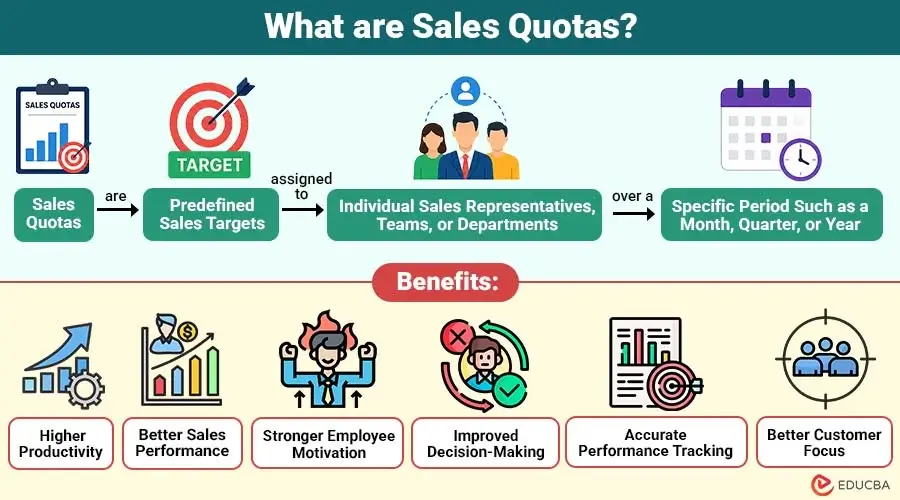
Sales quotas are predefined sales targets assigned to individual sales representatives, teams, or departments over a specific period such as a month, quarter, or year. These targets are usually based on revenue, number of deals closed, units sold, profit margins, or customer acquisition.
A sales quota gives every salesperson a measurable objective. It helps organizations evaluate performance, calculate incentives, and ensure that business revenue goals are achieved.
For example:
- A salesperson may have a monthly sales revenue quota of ₹10 lakh.
- A software sales executive may need to close 20 new subscriptions each month.
- A retail store manager may be assigned a quarterly sales target of ₹50 lakh.
Meeting or exceeding quotas often results in bonuses, commissions, promotions, or recognition.
Table of Contents:
- Meaning
- Importance
- Types
- How Sales Quotas Are Determined?
- Steps to Set Effective Sales Quotas
- Benefits
- Common Challenges
- Tools
- Industries that Use Sales Quotas
Key Takeaways:
- Sales quotas establish measurable performance targets that align individual sales efforts with overall business revenue objectives.
- Different sales quota types measure revenue, volume, activities, profits, customers, or specific product sales performance.
- Effective sales quotas require historical data, market analysis, realistic targets, and regular performance reviews for success.
- Sales quota management software helps organizations track progress, forecast revenue, calculate incentives, and improve accountability.
Why are Sales Quotas Important?
Sales quotas play a vital role in improving sales performance, aligning teams with business goals, and driving consistent revenue growth. Below are the key reasons why it is important.
1. Clear Performance Expectations
Sales representatives know exactly what they need to achieve, reducing confusion and improving focus.
2. Improved Motivation
Defined goals encourage employees to work consistently toward measurable results.
3. Better Revenue Forecasting
Managers can estimate future revenue based on quota achievement and pipeline performance.
4. Fair Performance Evaluation
Provides objective criteria for comparing performance across individuals and teams.
5. Increased Accountability
Every salesperson becomes responsible for achieving assigned goals.
6. Better Resource Planning
Organizations can allocate budgets, marketing support, and staffing based on expected sales performance.
Types of Sales Quotas
Businesses use different types depending on their sales strategy.
1. Revenue Quota
A revenue quota sets a target for the total sales revenue a salesperson must generate within a specific time period.
2. Volume Quota
A volume quota measures success by the number of products or services sold rather than by total sales revenue.
3. Activity Quota
An activity quota measures sales performance through completed selling activities that increase opportunities and support future sales success consistently.
4. Profit Quota
A profit quota focuses on earning higher profits by encouraging sales of products and services with better profit margins.
5. Customer Acquisition Quota
A customer acquisition quota measures success by the number of new customers gained within a defined sales period.
6. Product-Based Quota
A product-based quota sets sales targets for specific products to effectively increase demand, market share, and overall business performance.
How Sales Quotas are Determined?
Several factors influence quota planning.
1. Historical Sales Performance
Previous sales performance helps businesses set realistic sales quotas based on past achievements, trends, and consistent growth patterns.
2. Market Conditions
Market conditions, customer demand, competition, and economic changes influence achievable sales quotas across different industries and regions.
3. Territory Potential
Vary according to regional market size, customer availability, competition, and overall revenue opportunities within territories.
4. Product Pricing
Higher-priced products require fewer sales to meet quotas, while lower-priced products consistently require higher sales volumes.
5. Sales Experience
Experienced sales representatives often receive higher quotas due to stronger skills, stronger customer relationships, and proven sales performance.
6. Business Growth Goals
Organizations adjust sales quotas to support expansion, increase revenue, launch products, and achieve strategic business objectives successfully.
Steps to Set Effective Sales Quotas
Setting effective sales quotas requires careful planning, accurate data analysis, and alignment with business goals. Below are the key steps for creating realistic, achievable sales quotas.
1. Understand Business Objectives
Align sales quotas with business revenue goals, growth strategies, and overall organizational objectives for consistent long-term success.
2. Analyze Historical Data
Review previous sales performance, trends, and achievements to effectively establish realistic, measurable, and attainable sales quota targets.
3. Evaluate Market Opportunities
Assess customer demand, competition, market potential, and industry trends before setting practical, achievable sales quotas.
4. Consider Individual Differences
Assign quotas based on salespeople’s experience, territory potential, product knowledge, and overall sales capabilities to improve performance.
5. Keep Targets Challenging but Achievable
Set motivating sales quotas that encourage improvement without creating unrealistic expectations or reducing employee confidence and productivity.
6. Review Regularly
Regularly evaluate and adjust sales quotas to effectively reflect changing market conditions, business priorities, and organizational growth objectives.
Benefits of Sales Quotas
It provides several business benefits.
1. Higher Productivity
Helps representatives prioritize important activities, improve efficiency, and consistently achieve higher levels of productivity and performance.
2. Better Sales Performance
Clear sales quotas encourage focused efforts, improve closing rates, and increase overall sales performance across teams and territories.
3. Stronger Employee Motivation
Linked to incentives, bonuses, and commissions motivate representatives to consistently achieve targets and exceed performance expectations.
4. Improved Decision-Making
Provides valuable performance insights, helping managers make informed decisions about strategies, resources, and business growth opportunities.
5. Accurate Performance Tracking
Establish measurable benchmarks that enable organizations to monitor progress, evaluate results, and identify opportunities for improvement.
6. Better Customer Focus
Encourages representatives to prioritize high-value prospects while building stronger customer relationships and consistently delivering better service.
Common Challenges in Sales Quotas
Although useful, they also present several challenges.
1. Unrealistic Targets
Excessively high sales quotas reduce motivation, increase stress, lower productivity, and contribute to higher employee turnover over time.
2. Unequal Territories
Differences in market potential across territories lead to unfair sales quotas and unequal opportunities to consistently achieve assigned targets.
3. Changing Market Conditions
Economic changes, shifts in customer demand, and increased competition can significantly affect sales performance and the ability to meet quotas.
4. Poor Data Quality
Inaccurate sales data and forecasting result in unrealistic quotas, poor planning, and ineffective sales performance management decisions.
5. Short-Term Focus
Sales representatives may prioritize immediate sales over building lasting customer relationships and effectively supporting sustainable business growth.
6. Lack of Communication
Poor communication about it creates confusion, reduces trust, and affects employee commitment toward achieving organizational sales goals.
Tools Used to Manage Sales Quotas
Modern businesses rely on sales software to track quotas and monitor performance.
1. Customer Relationship Management
CRM platforms efficiently manage customer interactions, track sales opportunities, monitor quota progress, and improve overall sales team productivity.
2. Sales Analytics Platforms
Sales analytics platforms provide dashboards, forecasting, performance reports, and actionable insights to improve quota achievement and sales decisions.
3. Business Intelligence Tools
Business intelligence tools analyze sales data, identify trends, generate reports, and support informed business and sales decisions effectively.
4. Sales Performance Management Software
Sales performance management software efficiently automates quota assignments, commission calculations, incentive tracking, and performance monitoring across sales teams.
Industries That Use Sales Quotas
Sales quotas are widely used across industries.
1. Software and SaaS Companies
Software and SaaS companies use sales quotas to consistently measure subscription sales, customer growth, renewals, and revenue performance.
2. Insurance
Insurance companies use sales quotas to track policy sales, customer acquisitions, renewals, and overall agent performance effectively.
3. Healthcare and Pharmaceuticals
Healthcare and pharmaceutical organizations measure sales quotas for medicines, medical devices, and healthcare solutions across target markets.
4. Manufacturing
Manufacturing companies assign sales quotas to increase product sales, distributor performance, and revenue across different business regions successfully.
5. Retail
Retail businesses use sales quotas to monitor product sales, store performance, and employee productivity during defined sales periods.
Final Thoughts
Sales quotas establish clear performance targets, improve accountability, motivate sales teams, and support sustainable revenue growth. When based on accurate data, realistic expectations, and regular performance reviews, they enhance productivity, strengthen customer relationships, and help organizations achieve long-term success through informed, performance-driven sales management.
Frequently Asked Questions (FAQs)
Q1. What happens if a salesperson does not meet their sales quota?
Answer: Failing to meet a sales quota does not always result in penalties. Managers typically review the reasons, provide coaching, adjust strategies, or offer additional support to help improve future performance.
Q2. Can sales quotas be adjusted during the year?
Answer: Yes. Organizations often revise sales quotas when there are significant changes in market conditions, product availability, economic factors, or business priorities to keep targets realistic and achievable.
Q3. How is sales quota attainment measured?
Answer: Sales quota attainment is calculated by comparing a salesperson’s actual performance with their assigned quota. It is usually expressed as a percentage to evaluate whether targets have been met or exceeded.
Q4. Are sales quotas the same for every salesperson?
Answer: No. Sales quotas often vary based on factors such as territory size, product portfolio, customer potential, experience level, and market opportunities to ensure fair performance expectations.
Recommended Articles
We hope that this EDUCBA information on “Sales Quotas” was beneficial to you. You can view EDUCBA’s recommended articles for more information.

