
What are Buying Signals?
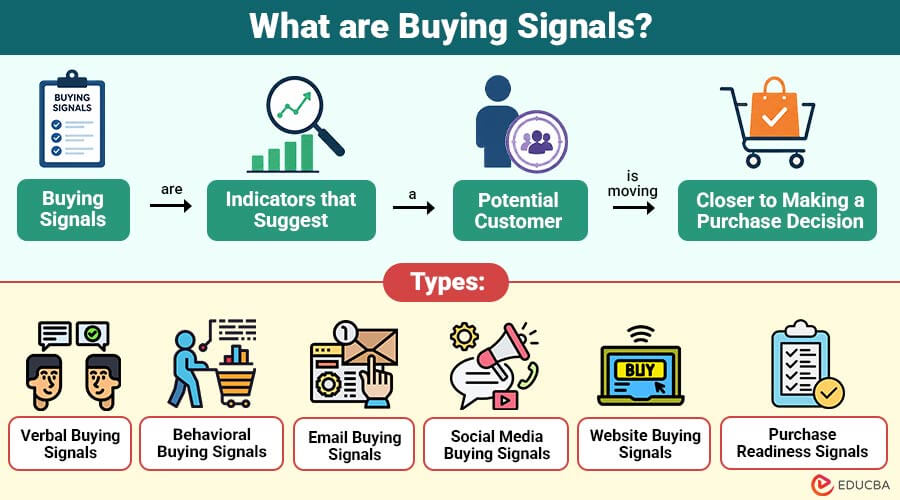
Buying signals are indicators that suggest a potential customer is moving closer to making a purchase decision. These signals can appear during phone calls, emails, website visits, live chats, social media interactions, or face-to-face meetings.
Some buying signals are direct, while others are subtle. For example, asking for pricing is a strong buying signal because it shows purchase intent. On the other hand, repeatedly visiting a product page or downloading a product brochure may indicate growing interest. Businesses that recognize it can prioritize qualified prospects, personalize communication, and improve sales performance.
Table of Contents:
- Meaning
- Why do Buying Signals Matter?
- Types
- Common Examples
- Difference
- How to Identify Buying Signals?
- How Sales Teams Should Respond?
- Tools That Help Track Buying Signals
- Challenges
Key Takeaways:
- Buying signals help identify interested prospects, enabling sales teams to prioritize opportunities and improve conversion rates effectively.
- Monitoring customer conversations, website activity, emails, and social engagement reveals valuable purchase intent throughout sales journeys.
- Prompt, personalized responses to it consistently strengthen customer relationships, accelerate decision-making, and increase successful deal closures.
- Strong buying signals indicate immediate purchase intent, while weak signals require further nurturing before meaningful sales engagement.
Why Do Buying Signals Matter?
Recognizing buying signals helps sales teams identify purchase intent early, prioritize qualified prospects, and improve overall sales performance. Below are the key reasons why it matters:
1. Improves Lead Qualification
Sales teams can focus on higher-quality leads by using buying signals to identify prospects who are genuinely interested.
2. Increases Conversion Rates
Recognizing it allows sales representatives to engage prospects at the right moment, improving deal closure rates.
3. Shortens the Sales Cycle
Early identification of purchase intent reduces delays, accelerates decision-making, and effectively speeds up the overall sales process.
4. Enhances Customer Engagement
Responding to it with relevant information builds trust, strengthens relationships, and keeps prospects actively engaged throughout.
5. Helps Prioritize High-value Prospects
It reveals promising opportunities, allowing sales teams to allocate resources toward prospects with greater revenue potential.
6. Reduces Time Spent on Unqualified Leads
Identifying weak buying intent prevents unnecessary follow-ups, saving valuable time and improving overall sales team productivity.
Types of Buying Signals
Below are the most common types that help identify prospects with strong purchase intent:
1. Verbal Buying Signals
Verbal buying signals are spoken questions or statements that show genuine purchase interest and indicate that prospects are actively evaluating solutions before buying.
Examples:
- “Can you send me a detailed pricing quote?”
- “How soon can your team complete implementation?”
2. Behavioral Buying Signals
Behavioral buying signals are customer actions that demonstrate purchase intent through regular online or offline engagement with products, services, or content.
Examples:
- Visiting the pricing page multiple times.
- Signing up for a free product trial.
3. Email Buying Signals
Email buying signals are engagement activities within emails indicating increasing customer interest, intent, and readiness to continue purchasing discussions actively.
Examples:
- Clicking links to product information.
- Replying with questions about pricing or features.
4. Social Media Buying Signals
Social media buying signals are interactions on social platforms that indicate growing product interest, engagement, and potential purchase intent among prospects.
Examples:
- Commenting on a product announcement.
- Sharing a company webinar with colleagues.
5. Website Buying Signals
Website buying signals are online browsing activities revealing strong customer interest through repeated visits, research, and interactions with key pages.
Examples:
- Viewing customer case studies repeatedly.
- Filling out a product inquiry form.
6. Purchase Readiness Signals
Purchase readiness signals indicate prospects are nearing final decisions by discussing contracts, payments, implementation, and onboarding before completing purchases.
Examples:
- Requesting a sales contract for review.
- Confirming delivery and implementation timelines.
Common Buying Signal Examples
They vary across industries, but some common examples include:
1. Requesting Product Pricing
When prospects ask about pricing, they are evaluating affordability and seriously considering whether the product fits their budget.
2. Asking for Product Demonstrations
Requesting a product demonstration shows prospects want to understand features, functionality, and practical benefits before making purchasing decisions.
3. Comparing Product Packages
Comparing different product packages indicates that prospects are assessing available options to select the solution that best matches their specific requirements.
4. Downloading Product Brochures
Downloading brochures demonstrates genuine interest in learning detailed product information, specifications, features, and potential business value before purchasing.
Difference Between Strong and Weak Buying Signals
The table below highlights the key differences between the two:
| Strong Buying Signals | Weak Buying Signals |
| Asking for pricing | Reading blog articles |
| Requesting proposals | Following social media pages |
| Scheduling product demos | Opening newsletters |
| Discussing implementation | Watching general videos |
| Asking about payment terms | Downloading educational content |
| Requesting contracts | Browsing multiple pages |
How to Identify Buying Signals?
Below are some effective ways to recognize it early:
1. Monitor Customer Conversations
Listen carefully during calls and meetings. Questions about pricing, timelines, implementation, or support usually indicate genuine interest.
2. Analyze Website Behavior
Track pages visited, session duration, repeat visits, downloads, and completed forms. Analytics platforms provide valuable insights into customer intent.
3. Use CRM Systems
Modern CRM software records customer interactions, meeting history, email engagement, and opportunity stages. This helps sales representatives identify prospects who are progressing toward purchase.
4. Monitor Email Engagement
Track email engagement signals that reveal increasing customer interest before direct purchase discussions begin, including email opens, link clicks, attachment downloads, reply rates, and meeting requests.
5. Watch Social Engagement
Monitor prospects who actively engage with your brand, as these interactions often indicate growing purchase intent and stronger buying interest.
How Sales Teams Should Respond?
Recognizing it is only useful if sales teams respond appropriately.
1. Respond Quickly
Respond promptly to buying signals because timely communication keeps prospects engaged and reduces opportunities for competitors to influence purchasing decisions.
2. Answer Questions Clearly
Provide clear, accurate answers on pricing, features, implementation, warranties, support, and policies to build trust and customer confidence.
3. Personalize Communication
Personalize every conversation by referencing past interactions, customer challenges, business goals, and specific requirements to significantly strengthen relationships.
4. Offer Demonstrations
Offer live product demonstrations that allow prospects to experience features, understand benefits, and evaluate practical value before making purchasing decisions with confidence.
5. Share Customer Success Stories
Distribute relevant case studies and consumer success stories that demonstrate quantifiable outcomes, build confidence, reduce risk, and drive purchases.
6. Remove Buying Barriers
Address customer concerns regarding pricing, implementation, security, technical compatibility, or support to eliminate obstacles preventing successful purchasing decisions.
7. Guide the Next Step
Ask simple closing questions that encourage prospects to schedule demonstrations, request proposals, discuss implementation, and confidently progress toward purchasing.
Tools That Help Track Buying Signals
Below are some widely used tools that support effective buying signal tracking:
1. Salesforce
Salesforce tracks customer interactions, opportunity stages, engagement history, and sales activities, helping teams identify and respond to buying signals.
2. HubSpot CRM
HubSpot CRM monitors customer behavior, email engagement, website activity, and communication history to identify prospects with strong buying intent.
3. Microsoft Dynamics 365
Microsoft Dynamics 365 combines customer data, sales insights, and AI-powered analytics to detect buying signals and improve sales performance.
4. Zoho CRM
Zoho CRM tracks customer interactions, lead activities, email engagement, and sales pipelines, helping identify prospects ready for meaningful conversations.
5. Pipedrive
Pipedrive helps sales teams monitor deal progress, customer activities, and communication history to recognize buying signals and close deals faster.
6. Freshsales
Freshsales uses AI, customer engagement tracking, and lead scoring to identify buying signals and effectively prioritize high-potential sales opportunities.
Challenges in Identifying Buying Signals
While it is valuable, businesses may face certain challenges:
1. Misinterpreting Customer Curiosity as Purchase Intent
Customers may ask questions for research purposes only, making it difficult to distinguish genuine buying intent from simple curiosity.
2. Incomplete Customer Data
Missing customer information limits visibility into behaviors, interactions, and preferences, making accurate identification of buying signals more challenging.
3. Poor CRM Adoption
Inconsistent CRM usage results in incomplete records, reducing sales teams’ ability to track interactions and recognize important buying signals.
4. Delayed Sales Responses
Slow responses to it may reduce customer interest, allowing competitors to engage prospects and influence their purchasing decisions.
5. Lack of Lead Scoring
Without lead scoring, sales teams struggle to prioritize prospects, making it harder to identify customers with stronger purchase intent.
6. Multiple Decision-Makers in B2B Sales
B2B purchases often involve several decision-makers, making it difficult to identify collective buying intent and move deals forward efficiently.
Final Thoughts
Buying signals reveal when prospects are genuinely interested in purchasing through conversations, emails, website activity, or engagement. Identifying these signals early helps sales teams prioritize qualified leads, personalize interactions, improve conversions, shorten sales cycles, strengthen customer relationships, and drive consistent long-term business growth.
Frequently Asked Questions (FAQs)
Q1. Can buying signals change during the sales process?
Answer: Yes. A prospect may show strong buying intent at one stage and lose interest later due to budget changes, competitors, or shifting business priorities. Sales teams should continuously monitor customer behavior throughout the sales cycle.
Q2. Should marketing teams also monitor buying signals?
Answer: Absolutely. Marketing teams can use buying signals to create targeted campaigns, personalize content, and pass high-intent leads to the sales team at the right time.
Q3. Can existing customers also show buying signals?
Answer: Yes. Existing customers may show buying signals by exploring premium features, requesting additional licenses, asking about upgrades, or inquiring about complementary products and services.
Q4. How often should businesses review buying signal data?
Answer: Businesses should review buying signal data regularly, ideally daily or weekly, to identify new opportunities quickly, respond faster to interested prospects, and improve overall sales effectiveness.
Recommended Articles
We hope that this EDUCBA information on “Buying Signals” was beneficial to you. You can view EDUCBA’s recommended articles for more information.

