


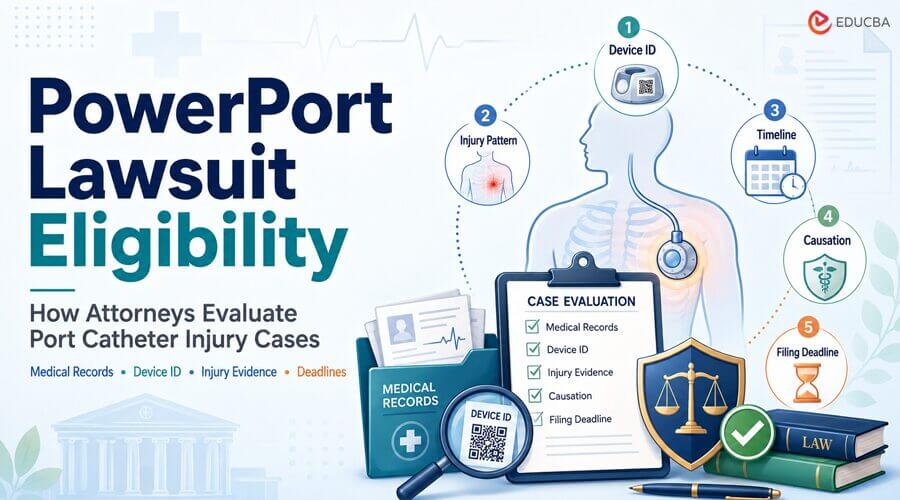
People who were injured by a port often try to work out for themselves whether they have a case. Some decide they probably do not qualify and never make the call. Others assume the harm speaks for itself and expect an easy claim. Both can be off the mark. Whether a case qualifies depends on what the records actually show, and that is not something a patient can judge from the outside.
That is what an eligibility review is for. A PowerPort lawyer can examine what happened in your case and tell you whether there is enough evidence to move forward. You do not need to have any of it figured out before you reach out. If there is a case, they explain what comes next. If not, you know early and can stop second-guessing it.
PowerPort Lawsuit Eligibility
Initial Case Screening
During the initial review, attorneys confirm the port type, implantation date, removal history, and treating facility. They may examine records showing fracture, migration, infection, clot formation, vessel injury, or catheter separation. The main question is whether the documented harm aligns with the device history, clinical findings, and the patient’s treatment timeline. This early screening helps attorneys determine whether further investigation is justified.
Device Identification
Device identification is a central part of evaluating PowerPort Lawsuit Eligibility. Legal teams may request implant cards, operative reports, hospital supply records, radiology notes, or removal summaries.
These documents may reveal:
- Catalog codes
- Lot numbers
- Placement location
- Catheter materials
- Manufacturer information.
Without reliable device identification, connecting an injury to a specific allegedly defective product becomes more difficult.
Injury Pattern Review
Attorneys compare the patient’s injury with failure patterns commonly reported in port catheter claims.
Important findings may include:
- Catheter fracture
- Catheter migration
- Embolization
- Vessel perforation
- Thrombosis
- Bloodstream infection
- Repeat surgery.
Symptoms alone are generally not enough to support a case. Imaging results, physician notes, operative reports, and procedure records provide the clinical evidence needed to evaluate the claim.
Timeline Analysis
Timing can strengthen or weaken PowerPort Lawsuit Eligibility. Lawyers examine whether symptoms such as chest pain, swelling, fever, shortness of breath, or clot-related complications appeared after implantation. They also review how long the port remained in place before the complication occurred. A clear and consistent timeline may support an argument that the device contributed to the injury. Long gaps or unclear symptom histories may require additional medical review.
Medical Records
Attorneys review imaging studies, surgical notes, emergency department records, laboratory results, discharge papers, and specialist opinions.
These records are especially valuable when they:
- Clearly identify the implanted port
- Describe the injury sustained
- Document the timing of complications
- Explain treatment decisions
- Connect the injury to clinical findings.
Vague complaints generally carry less evidentiary weight than documented findings directly linked to medical care.
Causation Evidence
To determine PowerPort Lawsuit Eligibility, attorneys review whether the device caused or contributed to the patient’s injury.
They also consider alternative explanations, including:
- Cancer treatment
- Pre-existing infection risk
- Clotting disorders
- Vascular disease
- Other implanted medical devices
- Unrelated health conditions.
A stronger case file may contain imaging studies, operative findings, removal reports, or physician assessments that directly connect the port to the injury.
Treatment Burden
Lawyers evaluate whether the patient required:
- Port removal
- Vascular repair
- Blood-thinning medication
- Antibiotics
- Hospitalization
- Emergency treatment
- Additional surgery or procedures.
They may also review scarring, physical limitations, missed wages, additional medical expenses, and disruption to daily life. Clear documentation should explain how the injury affected the patient’s mobility, work, family responsibilities, recovery, and quality of life.
Product History
Attorneys may review safety reports, previous complaints, design allegations, warning histories, regulatory information, and related litigation materials. This background helps determine whether the patient’s injury matches known or alleged product failure patterns. Lawyers may also examine what risk information was communicated to healthcare providers and patients. Strong medical evidence becomes more useful when the product history reflects the same type of fracture, migration, perforation, clotting, or infection alleged in the patient’s case.
Deadline Checks
Filing deadlines can directly affect PowerPort Lawsuit Eligibility. Attorneys examine the applicable state statute of limitations, discovery rules, and important dates, including:
- Date of implantation
- Date symptoms began
- Date of diagnosis
- Date of port removal
- Date the patient learned of a possible device connection.
Some patients do not discover the potential link between their injury and the device until months after treatment. Depending on state law, that discovery date may affect whether the claim remains viable.
Client Interview
During the client interview, attorneys ask about symptoms, discussions with doctors, emergency visits, hospitalizations, work restrictions, and the effect of the injury on family life. They may also ask whether the patient retained an implant card, discharge documents, medical bills, photographs, or removal records. Consistent and accurate answers help guide medical record requests, product identification, and expert analysis.
Expert Review
Some claims require review by medical or technical experts. Experts may explain how a catheter fractured, migrated, perforated tissue, entered the bloodstream, or disrupted normal blood flow. They may also assess whether the device, the implantation procedure, medical treatment, or an unrelated condition caused the injury. Expert opinions can help distinguish potentially eligible claims from complications that lack sufficient evidence of device-related causation.
Final Thoughts
Determining PowerPort Lawsuit Eligibility requires a structured medical and legal review. Attorneys evaluate device identity, injury type, timing, medical records, causation, treatment burden, product history, expert opinions, and filing deadlines. No single factor automatically proves that a claim is eligible.
The strength of the case depends on how well the evidence connects the implanted port to the documented injury. For patients and families, preserving implant information, medical records, bills, and accurate dates can make the eligibility review more efficient, productive, and manageable.
Recommended Articles
We hope this guide helps you understand how attorneys assess PowerPort lawsuit eligibility. Explore these recommended articles for more insights into port injuries, medical device claims, and compensation.

