
What is Ephemeral Content?
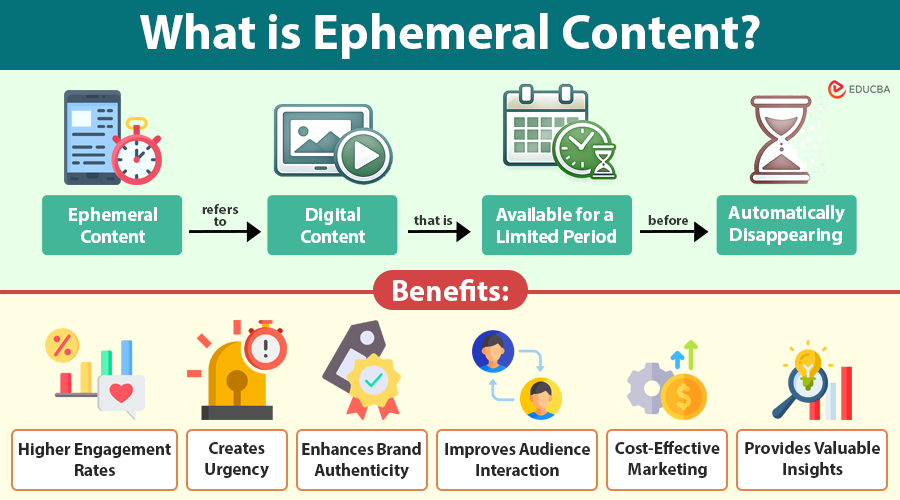
Ephemeral content refers to the digital content that is available for a limited period before automatically disappearing. Unlike traditional social media posts that remain permanently visible, ephemeral content typically vanishes after a specified timeframe, often 24 hours.
The term “ephemeral” means short-lived or temporary. In digital marketing, it describes content designed to create urgency and encourage immediate audience engagement.
Table of Contents:
- Meaning
- Importance
- Working
- Key Features
- Popular Types
- Benefits
- Examples
- Platforms
- Challenges
- Difference
Key Takeaways:
- Ephemeral content disappears after a short period, creating urgency and encouraging immediate audience engagement.
- Temporary visibility drives faster interactions, helping brands increase participation, response rates, and customer engagement.
- Authentic and unfiltered content strengthens trust, making brands appear more relatable and transparent.
- Stories, live streams, and flash promotions effectively enhance visibility, conversions, and customer relationships.
Why is Ephemeral Content Important?
Ephemeral content has become a valuable marketing tool because it aligns with modern consumer behavior.
1. Increased User Engagement
Temporary content encourages faster interactions because users know the opportunity to view and respond will disappear soon.
2. Builds Authenticity
Ephemeral content appears more genuine and less scripted, helping brands establish trust and stronger audience connections.
3. Encourages Immediate Action
Limited availability creates urgency, motivating users to purchase products, claim offers, or engage without delaying decisions.
4. Strengthens Customer Relationships
Regular temporary updates foster continuous communication, helping brands stay connected and maintain meaningful customer relationships.
5. Supports Brand Awareness
Consistent story sharing increases visibility, keeping brands prominent in audience feeds and improving overall recognition.
How Does Ephemeral Content Work?
Ephemeral content is commonly found on social media platforms where users can post photos, videos, polls, quizzes, or updates that remain visible for only a short duration.
The typical process includes:
- A user creates and publishes content.
- Followers receive notifications or see the content in story feeds.
- Viewers engage through reactions, replies, or interactions.
- The content automatically expires after the platform’s designated timeframe.
This temporary nature motivates users to view content quickly before it disappears.
Key Features of Ephemeral Content
Several features distinguish ephemeral content from traditional digital content.
1. Temporary Visibility
Content remains available for a short period, encouraging quick consumption before it automatically expires.
2. Mobile-First Format
Designed specifically for smartphones, using vertical layouts that enhance user viewing experiences.
3. Real-Time Engagement
Promotes immediate audience interaction, responses, and participation while content remains accessible online.
4. Authentic Presentation
Showcases genuine, unfiltered moments that help brands appear relatable, transparent, and trustworthy.
5. Interactive Elements
Incorporates polls, quizzes, stickers, and questions to increase engagement and audience involvement.
6. FOMO Creation
Creates urgency by limiting availability, motivating users to view content before it disappears.
Popular Types of Ephemeral Content
Businesses use various types of temporary content to engage audiences.
1. Stories
Stories are short-lived visual posts that contain images, videos, text, and interactive elements and disappear after a specified period.
Examples:
- Product launches
- Daily updates
- Behind-the-scenes footage
- Event highlights
2. Live Streams
Live streams broadcast real-time video content, enabling immediate audience interaction through comments, reactions, and questions during the broadcast.
Examples:
- Product demonstrations
- Q&A sessions
- Interviews
- Event coverage
3. Disappearing Messages
Disappearing messages automatically delete after viewing, providing private, temporary communication that enhances exclusivity and user privacy.
Examples:
- Customer support interactions
- Personal conversations
- Exclusive offers
4. Limited-Time Promotional Content
Limited-time promotional content offers temporary deals, discounts, or campaigns designed to create urgency and encourage purchases.
Examples:
- 24-hour discounts
- Countdown campaigns
- Exclusive coupons
5. Interactive Content
Interactive content encourages audience participation through polls, quizzes, surveys, and contests, increasing engagement and valuable feedback.
Examples:
- Polls
- Quizzes
- Surveys
- Voting contests
Benefits of Ephemeral Content
Ephemeral content offers several benefits that help brands increase engagement, build authenticity, and drive faster audience actions.
1. Higher Engagement Rates
Temporary content encourages immediate responses, resulting in stronger audience engagement compared to traditional posts.
2. Creates Urgency
Limited availability motivates users to act quickly, reducing delays in engagement or purchasing decisions.
3. Enhances Brand Authenticity
Authentic, unfiltered content helps brands appear trustworthy, relatable, and more connected to audiences.
4. Improves Audience Interaction
Interactive features encourage participation, conversations, feedback, and stronger engagement between brands and audiences.
5. Cost-Effective Marketing
Stories and temporary updates require fewer resources, making marketing campaigns affordable and efficient.
6. Provides Valuable Insights
Engagement metrics reveal audience preferences, helping marketers refine strategies and improve future content.
Examples of Ephemeral Content in Marketing
Here are some common examples of ephemeral content that brands use to engage audiences, create urgency, and strengthen customer connections:
1. Product Launch Teasers
Brands create excitement by revealing small details before a product launch.
2. Flash Sales
Retailers often use temporary stories to promote limited-time discounts.
3. Behind-the-Scenes Content
Showing internal operations helps build trust.
Ephemeral Content Platforms
Several platforms have popularized ephemeral content.
1. Instagram Stories
Users and brands can share transient images, videos, and interactive content on Instagram Stories that vanish on their own.
2. Facebook Stories
Facebook Stories provide short-lived visibility for content, helping individuals and businesses engage audiences with temporary updates.
3. Snapchat
Snapchat pioneered ephemeral content by offering disappearing messages, temporary stories, and real-time visual communication features.
4. WhatsApp Status
WhatsApp Status enables users and businesses to share text, photos, and videos that are visible for 24 hours.
5. LinkedIn Stories
LinkedIn Stories briefly offered professionals a way to share temporary updates, enhancing engagement and networking opportunities.
Challenges of Ephemeral Content
While highly effective, ephemeral content also presents certain challenges.
1. Limited Lifespan
Content disappears quickly, reducing opportunities for long-term exposure, discovery, and continued audience engagement.
2. Continuous Content Creation
Brands must regularly create fresh content to maintain visibility, relevance, and consistent audience attention.
3. Measurement Difficulties
Evaluating long-term impact and performance is challenging because content is only available for short periods.
4. Resource Demands
Frequent content production requires time, creativity, planning, and dedicated marketing resources for consistent execution.
5. Risk of Low Visibility
Followers who do not view content promptly may miss updates, reducing overall campaign reach.
Difference Between Ephemeral Content and Traditional Content
The following table highlights the key differences between ephemeral content and traditional content:
| Feature | Ephemeral Content | Traditional Content |
| Lifespan | Temporary | Permanent |
| Urgency | High | Moderate |
| Engagement | Often higher | Varies |
| Authenticity | More casual | Usually polished |
| Visibility Duration | Limited | Long-term |
| Content Style | Real-time | Evergreen |
| FOMO Effect | Strong | Low |
Final Thoughts
Ephemeral content has become a powerful digital marketing tool that drives engagement, authenticity, and real-time audience interaction. Through stories, live videos, flash promotions, and interactive features, brands can increase visibility, create urgency, and strengthen customer relationships. Successfully using ephemeral content helps businesses stay relevant and competitive in evolving digital environments.
Frequently Asked Questions (FAQs)
Q1. Why is ephemeral content popular?
Answer: It creates urgency, encourages immediate engagement, and provides a more authentic user experience.
Q2. Is ephemeral content effective for marketing?
Answer: Yes. Businesses use ephemeral content to increase engagement, promote limited-time offers, build customer relationships, and create urgency around campaigns.
Q3. Does ephemeral content improve conversion rates?
Answer: It can. The urgency created by limited availability often encourages faster purchasing decisions and higher conversion rates.
Q4. How can brands measure the success of ephemeral content?
Answer: Brands can track metrics such as views, reach, impressions, replies, click-through rates, poll participation, and conversions to evaluate performance.
Recommended Articles
We hope that this EDUCBA information on “Ephemeral Content” was beneficial to you. You can view EDUCBA’s recommended articles for more information.


