
What is Single-Touch Attribution?
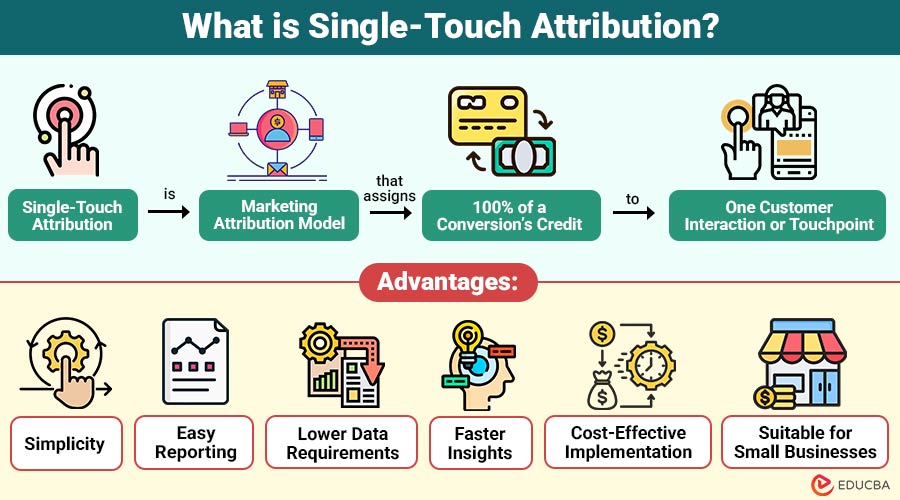
Single-Touch Attribution is marketing attribution model that assigns 100% of a conversion’s credit to one customer interaction or touchpoint. Instead of distributing credit across multiple channels, the model identifies a single touchpoint as responsible for the conversion.
Table of Contents:
- Meaning
- Importance
- Working
- Types
- Advantages
- Disadvantages
- Common Use Cases
- Best Practices
- Examples
- Is Single-Touch Attribution Still Relevant?
Key Takeaways:
- Single-touch attribution assigns full conversion credit to a single customer interaction in the journey.
- First-touch and last-touch models simplify measurement but overlook supporting marketing influences.
- Businesses use single-touch attribution for quick insights, simpler reporting, and budget decisions.
- Despite limitations, it remains valuable for short sales cycles and smaller teams.
Why is Single-Touch Attribution Important?
Single-Touch Attribution offers a simple way to measure marketing performance by assigning all conversion credit to one key customer interaction. Here are the main reasons why it is important:
1. Simplifies Measurement
Assigns conversion credit to one touchpoint, making marketing performance easier to track accurately.
2. Identifies Top Channels
Reveals which marketing channel receives credit for generating conversions and customer actions.
3. Supports Budget Allocation
Helps marketers allocate budgets toward channels credited with driving valuable conversions.
4. Provides Quick Insights
Delivers clear attribution data quickly, enabling faster marketing analysis and decision-making.
5. Easy to Implement
Requires minimal setup and data collection compared to advanced attribution methodologies.
How Does Single-Touch Attribution Work?
Single-Touch Attribution tracks customer interactions throughout the buying process but ultimately assigns all conversion credit to one touchpoint.
The selected touchpoint depends on the attribution model being used. Some businesses focus on the first interaction that introduced a customer to the brand, while others prioritize the final interaction before conversion.
Example:
Consider the following customer journey:
- Customer sees a Facebook advertisement.
- Customer visits the website.
- Customer subscribes to an email newsletter.
- Customer clicks an email campaign.
- Customer purchases a product.
Under a first-touch attribution model, the Facebook advertisement receives 100% of the conversion credit. Under a last-touch attribution model, the email campaign receives 100% of the conversion credit. Although multiple interactions influenced the decision, only one touchpoint is credited.
Types of Single-Touch Attribution Models
Below are the main types used to measure marketing performance and conversion impact.
1. First-Touch Attribution
First-touch attribution gives all conversion credit to the customer’s first interaction with a brand. This model focuses on awareness and customer acquisition by identifying which channels are most effective at introducing new prospects.
Example:
Customer Journey:
- Google Search
- Website Visit
- Email Campaign
- Purchase
2. Last-Touch Attribution
Last-touch attribution assigns all conversion credit to the final interaction before conversion. This is one of the most popular attribution models because it focuses on the action that immediately preceded the purchase.
Example:
Customer Journey:
- Facebook Advertisement
- Blog Visit
- Email Campaign
- Paid Search Ad
- Purchase
The paid search advertisement receives 100% of the conversion credit.
Advantages of Single-Touch Attribution
Below are the key advantages of using a single-touch attribution model in marketing analytics.
1. Simplicity
The model is simple to comprehend and apply. Companies do not need to perform complicated computations to rapidly determine which touchpoint is earning conversion credit.
2. Easy Reporting
Marketing reports become more straightforward because only one interaction receives credit.
3. Lower Data Requirements
Unlike advanced attribution methods, single-touch attribution requires less data collection and analysis.
4. Faster Insights
Businesses can rapidly determine which channels appear to generate conversions.
5. Cost-Effective Implementation
Organizations can implement single-touch attribution using basic analytics tools without significant investment.
6. Suitable for Small Businesses
Companies with limited marketing channels often benefit from a simpler attribution model.
Disadvantages of Single-Touch Attribution
Below are the main disadvantages of relying on a single-touch attribution model for measuring conversions and customer journeys.
1. Oversimplifies Customer Journeys
There are several ways that modern consumers engage with brands. It might not be an accurate representation of reality to give credit to just one touchpoint.
2. Ignores Influential Interactions
Several touchpoints may contribute significantly to a purchase decision but receive no recognition.
3. Can Lead to Misallocated Budgets
Marketing teams may overinvest in channels receiving attribution credit while undervaluing supporting channels.
4. Incomplete Performance Measurement
The model provides a limited view of overall marketing effectiveness.
5. Reduced Strategic Insights
Businesses may miss opportunities to optimize the full customer journey.
Common Use Cases
Below are some of the most common situations in which it can be applied effectively.
1. Lead Generation Campaigns
Organizations use first-touch attribution to identify channels that consistently generate qualified new leads.
2. E-commerce Businesses
Online retailers use last-touch attribution to measure the campaigns that directly influence customer purchase decisions.
3. Small Businesses
Small businesses prefer single-touch attribution because implementation requires fewer resources, tools, and expertise.
4. Short Sales Cycles
Single-touch models work effectively when customers make purchasing decisions after limited interactions.
5. Early Marketing Measurement
Companies often start with single-touch attribution before progressing to more advanced attribution models.
Best Practices for Using Single-Touch Attribution
Below are the key best practices for effectively implementing and using it.
1. Define Clear Goals
Establish specific objectives to ensure that attribution analysis aligns effectively with desired marketing outcomes.
2. Choose the Right Model
Select attribution models that best match campaign goals and customer journey stages.
3. Monitor Multiple Metrics
Analyze traffic, engagement, leads, conversions, and revenue alongside attribution performance data.
4. Review Customer Journeys
Examine customer interactions across channels before making strategic marketing investment decisions.
5. Compare Attribution Models
Evaluate different attribution approaches to identify biases, limitations, and performance gaps.
6. Continuously Optimize
Use attribution insights regularly to improve campaigns, increase efficiency, and maximize returns.
Examples of Single-Touch Attribution
Below are practical examples showing how first-touch and last-touch attribution models credit conversions to a single touchpoint.
1. SaaS Lead Generation
Customer Journey:
- LinkedIn Advertisement
- Landing Page Visit
- Free Trial Signup
- Product Demo
- Subscription Purchase
Attribution Result:
- First-Touch Attribution: LinkedIn Advertisement receives 100% of the conversion credit.
- Last-Touch Attribution: Product Demo receives 100% of the conversion credit.
Although several interactions contributed to the decision, only one touchpoint receives full credit.
2. Webinar Registration Campaign
Customer Journey:
- Organic Search
- Blog Article Visit
- Webinar Registration Page
- Reminder Email
- Webinar Attendance
Attribution Result:
- First-Touch Attribution: Organic Search receives 100% of the conversion credit.
- Last-Touch Attribution: Reminder Email receives 100% of the conversion credit.
3. E-commerce Purchase Journey
Customer Journey:
- Instagram Post
- Website Visit
- Product Review Blog
- Promotional Email
- Purchase
Attribution Result:
- First-Touch Model: Instagram Post receives 100% credit.
- Last-Touch Model: Promotional Email receives 100% credit.
Is Single-Touch Attribution Still Relevant?
Despite the growth of advanced analytics and multi-touch attribution models, single-touch attribution remains relevant for many organizations.
Its simplicity, accessibility, and ease of implementation make it valuable for:
1. Small Businesses
It is useful for small businesses that need simple, affordable marketing performance measurement tools quickly.
2. Startups
It helps startups track early marketing performance quickly without the complex analytics infrastructure or tools required.
3. Organizations with Limited Analytics Resources
It suits organizations with limited analytics resources by reducing data requirements and overall implementation complexity.
4. Businesses with Short Customer Journeys
It works well for businesses with short customer journeys and fewer overall decision-making touchpoints.
5. Teams Seeking Quick Marketing Insights
It provides teams seeking quick marketing insights with fast, actionable data to inform decision-making.
Final Thoughts
Single-touch attribution assigns full conversion credit to one interaction in the customer journey, usually the first or last touch. Although it excludes other impacting touchpoints, it is straightforward, simple to use, and offers rapid insights. It works best for straightforward sales cycles, though many organizations combine it with advanced attribution models for accuracy.
Frequently Asked Questions (FAQs)
Q1. Why do businesses use single-touch attribution?
Answer: Businesses use it because it is simple, easy to implement, requires minimal data, and provides quick insights into marketing performance.
Q2. Is single-touch attribution suitable for small businesses?
Answer: Yes. Small businesses often prefer single-touch attribution because it is cost-effective, easy to manage, and does not require advanced analytics tools.
Q3. Can single-touch attribution lead to inaccurate marketing decisions?
Answer: Yes. Since it credits only one interaction, businesses may overvalue certain channels and underestimate the contribution of other marketing activities.
Q4. When is single-touch attribution most effective?
Answer: It works best for businesses with short sales cycles, simple customer journeys, and limited marketing channels.
Recommended Articles
We hope that this EDUCBA information on “Single-Touch Attribution” was beneficial to you. You can view EDUCBA’s recommended articles for more information.


