


What is Holistic Marketing?
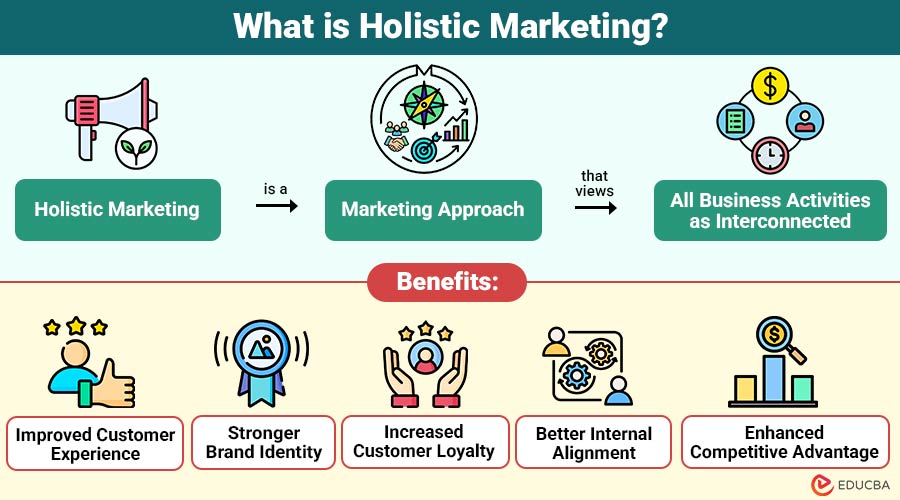
Holistic marketing is a marketing approach that views all business activities as interconnected. It focuses on creating a consistent customer experience across every touchpoint, recognizing that advertising, customer service, employee behavior, and company values all influence how customers perceive the brand.
For example, if a customer sees a company’s advertisement, visits its website, interacts with customer support, and purchases a product, all these experiences should align with the brand’s message and values. Holistic marketing ensures consistency throughout this journey.
Table of Contents:
- Meaning
- Importance
- Components
- Principles
- Benefits
- Strategy Framework
- Real-World Examples
- Challenges
- Difference
Key Takeaways:
- Holistic marketing integrates all business activities to deliver consistent customer experiences across the board.
- Strong internal alignment improves collaboration, brand consistency, and customer satisfaction levels.
- Relationship building and social responsibility support sustainable growth and customer loyalty.
- Integrated marketing channels effectively strengthen brand identity, performance, and competitive advantage.
Importance of Holistic Marketing
The following points highlight why holistic marketing is important for creating a unified brand experience, strengthening customer relationships, and driving long-term business success.
1. Create a Consistent Brand Image
Ensures unified messaging across all channels, helping customers recognize and trust the brand.
2. Improve Customer Experiences
Delivers seamless interactions across touchpoints, increasing satisfaction and creating positive customer perceptions.
3. Increase Customer Loyalty
Builds stronger emotional connections with customers, encouraging repeat purchases and long-term engagement.
4. Strengthen Internal Collaboration
Aligns departments toward common goals, improving communication, teamwork, and organizational efficiency.
5. Enhance Business Performance
Integrates marketing efforts effectively to drive revenue growth, operational efficiency, and competitive advantage.
6. Build Long-Term Customer Relationships
Focuses on sustained value creation, fostering trust, retention, and lasting customer partnerships.
Components of Holistic Marketing
Holistic marketing consists of four major components:
1. Relationship Marketing
Building enduring connections with clients, vendors, distributors, partners, and other stakeholders is the main goal of relationship marketing. Businesses strive to build enduring relationships that promote recurring business and client loyalty rather than emphasizing one-time sales.
2. Integrated Marketing
Integrated marketing ensures that all marketing communications deliver a consistent message across different channels. Whether customers encounter a brand through social media, television advertisements, email campaigns, or websites, they should receive the same core message.
3. Internal Marketing
Internal marketing recognizes that employees play a vital role in delivering customer satisfaction. Before organizations can successfully market products externally, they must ensure that employees understand and support the company’s goals, values, and customer-focused culture.
4. Socially Responsible Marketing
Socially responsible marketing focuses on ethical practices and the long-term welfare of society. Companies consider the environmental, social, and ethical impact of their marketing activities while balancing profitability and customer satisfaction.
Principles of Holistic Marketing
Several principles guide holistic marketing strategies:
1. Customer-Centric Focus
The customer remains at the center of all business activities. Organizations seek to understand customer needs, preferences, and expectations across every stage of the buying journey.
2. Consistency Across Channels
All communication channels should present a unified brand identity, message, and customer experience.
3. Cross-Department Collaboration
Marketing is not limited to the marketing department. Sales, customer support, operations, human resources, and management all contribute to customer satisfaction.
4. Long-Term Relationship Building
Holistic marketing prioritizes sustainable growth through strong customer and stakeholder relationships rather than short-term sales gains.
5. Social Responsibility
Businesses are expected to contribute positively to society while maintaining ethical standards.
Benefits of Holistic Marketing
Organizations that implement holistic marketing strategies can experience several benefits.
1. Improved Customer Experience
Customers receive consistent information and support across all channels, resulting in smoother interactions and higher satisfaction.
2. Stronger Brand Identity
A unified message strengthens brand recognition and helps customers easily identify and trust the company.
3. Increased Customer Loyalty
Positive experiences and meaningful relationships encourage repeat business and customer retention.
4. Better Internal Alignment
Employees understand organizational goals and work together to deliver consistent customer experiences.
5. Enhanced Competitive Advantage
Companies that successfully integrate marketing efforts across departments often outperform competitors with fragmented marketing strategies.
Holistic Marketing Strategy Framework
Businesses can follow a structured approach when implementing holistic marketing.
Step 1: Understand Customer Needs
Conduct market research, surveys, interviews, and data analysis to understand customer expectations and behaviors.
Step 2: Define a Clear Brand Identity
Establish brand values, mission, vision, and messaging guidelines that will guide all marketing activities.
Step 3: Align Internal Teams
Ensure employees across departments understand the company’s objectives and customer experience standards.
Step 4: Integrate Marketing Channels
Coordinate digital and traditional marketing channels to maintain consistency.
Step 5: Build Stakeholder Relationships
Develop strong relationships with customers, suppliers, distributors, investors, and community members.
Step 6: Measure Performance
Track key performance indicators (KPIs) such as customer satisfaction, retention rates, brand awareness, and campaign performance.
Real-World Examples
The following examples demonstrate how leading companies apply holistic marketing by creating consistent and interconnected customer experiences across all business functions.
1. Apple
Apple is often cited as a strong example of holistic marketing. Its products, retail stores, customer service, packaging, website design, and advertising campaigns consistently reflect the company’s focus on innovation, simplicity, and premium user experiences.
2. Starbucks
Starbucks combines relationship marketing, employee engagement, social responsibility initiatives, and integrated communications to create a consistent customer experience worldwide.
3. Nike
Nike aligns its advertising, social media presence, sponsorships, retail experiences, and sustainability efforts around a unified brand message focused on inspiration, performance, and empowerment.
Challenges of Holistic Marketing
While holistic marketing offers numerous benefits, organizations may encounter challenges during implementation.
1. Organizational Silos
Independent departments often resist collaboration, creating communication gaps and limiting unified marketing efforts.
2. Resource Requirements
Implementing holistic marketing requires investments in technology, employee training, and process enhancements.
3. Maintaining Consistency
Delivering consistent brand messaging across channels and locations requires careful coordination.
4. Data Integration Issues
Combining customer data from multiple systems can be technically challenging and time-consuming.
5. Measuring Results
Interconnected marketing activities make it difficult to identify individual campaign contributions and outcomes.
Difference Between Holistic Marketing and Traditional Marketing
The table below highlights the key differences between holistic marketing and traditional marketing:
| Basis | Holistic Marketing | Traditional Marketing |
| Focus | Entire organization | Individual campaigns |
| Customer View | Complete customer journey | Specific transactions |
| Department Involvement | Company-wide | Primarily marketing team |
| Communication | Integrated and consistent | Often fragmented |
| Goals | Long-term relationships | Short-term sales |
| Responsibility | Shared across departments | Marketing department |
| Approach | Strategic and interconnected | Functional and isolated |
Final Thoughts
Holistic marketing is a comprehensive approach that views all business activities as interconnected components of a unified system. By combining relationship marketing, integrated marketing, internal marketing, and socially responsible marketing, organizations can create consistent customer experiences, strengthen brand loyalty, and improve overall business performance. In an increasingly connected marketplace, holistic marketing helps businesses build meaningful relationships and achieve sustainable competitive advantages.
Frequently Asked Questions (FAQs)
Q1. What role does company culture play in holistic marketing?
Answer: Company culture influences employee behavior, customer interactions, and service quality. A strong customer-focused culture helps deliver a consistent brand experience.
Q2. Is holistic marketing suitable for B2B companies?
Answer: Absolutely. B2B organizations can use holistic marketing to strengthen relationships with clients, partners, suppliers, and employees while maintaining consistent brand communication.
Q3. How can technology support holistic marketing initiatives?
Answer: Technology helps integrate customer data, automate communications, track customer journeys, improve collaboration, and measure marketing performance across channels.
Q4. What metrics can organizations use to evaluate holistic marketing success?
Answer: Businesses often track customer lifetime value, customer retention rates, brand sentiment, employee engagement, referral rates, and overall revenue growth.
Recommended Articles
We hope that this EDUCBA information on “Holistic Marketing” was beneficial to you. You can view EDUCBA’s recommended articles for more information.

