


Updated January 29, 2026
SEO for Travel Businesses: Overview
In the UK’s highly competitive travel industry, businesses must work harder to stand out, attract organic traffic, and convert visitors into loyal customers. As travelers increasingly use search engines to find destinations, compare deals, and plan trips, SEO for travel businesses has become essential for growth among tour operators, travel agencies, and hospitality brands. For any UK-based travel enterprise, learning SEO is no longer optional; it is a vital skill for long-term growth.
Why SEO for Travel Businesses is Essential in the UK?
Search engine marketing enhances tour agencies’ visibility on search engines like Google, driving exceptional traffic from people actively seeking travel-related information. In the UK, where most clients begin planning their travel online, appearing at the right moment can have a major impact on bookings.
Growing Competition in the Digital Travel Landscape
Post-pandemic travel has become a powerful form of healing, inspiring vacationers to rediscover old hobbies and explore new interests across both domestic and international destinations. UK travellers, in particular, are increasingly seeking personalised itineraries, eco-friendly travel options, accurate and trustworthy reviews, and affordable offers that deliver real value. Alongside cultural experiences and nature-based escapes, adventure activities such as a dune buggy tour are gaining popularity, offering an exciting yet controlled way to enjoy desert landscapes while still aligning with modern travellers’ expectations for safety, customization, and memorable experiences. This surge has led to more travel groups, airlines, and vacation planning platforms competing for the same digital market. SEO enables groups to rise above competitors by ranking higher for key search terms such as “London metropolis breaks,” “best UK staycations,” or “reasonably-priced European getaways.”
Local SEO Boosts Visibility for UK-Based Agencies
For smaller tour businesses operating within specific UK regions, local SEO is particularly valuable. Optimising Google Business Profiles, gathering customer feedback, and focusing on location-based keywords can help businesses appear for queries like “tour corporation in Manchester” or “Edinburgh excursion packages,” thereby attracting clients who prefer local knowledge.
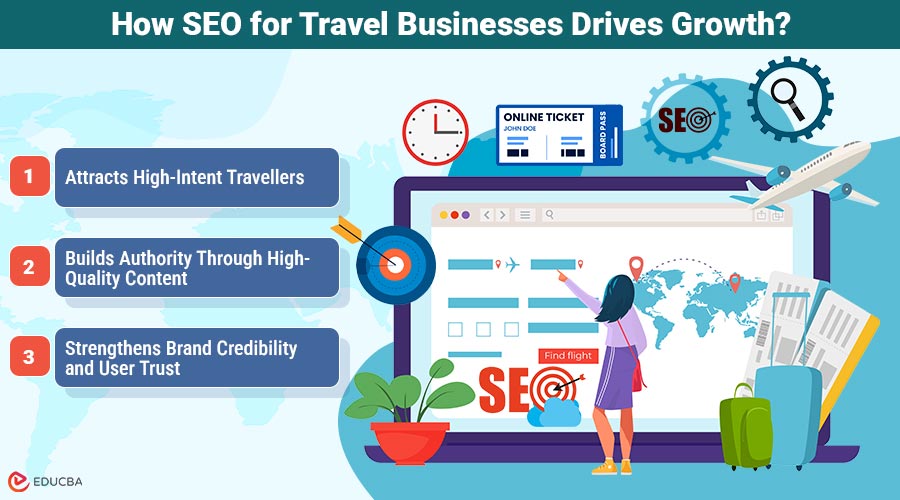
How SEO for Travel Businesses Drives Growth?
Search engine optimisation does a great deal more than delivering website visitors it immediately affects conversions, brand authority, and client trust.
1. Attracts High-Intent Travellers
People who are looking for tour terms are often already aware of what they need. Search engine optimisation helps you reach those motivated users precisely when they are evaluating destinations, seeking offers, or discovering travel recommendations.
A well-optimised travel website targeting booking flights can rank high in search results for flights, hotels, vacation packages, and travel guides. This ensures your services are visible to travellers actively planning their trips. By capturing these high-intent searches, your brand stands out and builds trust with potential customers. Ultimately, it increases conversions by connecting your platform with users ready to book immediately.
2. Builds Authority Through High-Quality Content
Content plays a massive role in the consumer journey. UK travellers regularly search for:
- Best holiday destinations from the UK
- Visa requirements for UK passport holders
- Budget-friendly European trips
- Tips for touring with your own family
Publishing informative blogs, destination guides, itineraries, and how-to articles helps establish your brand as a reliable source. Google prioritises websites that provide valuable information, making content a powerful search engine optimisation asset.
3. Strengthens Brand Credibility and User Trust
Consistency in ranking highly on Google builds credibility. When users see your journey commercial enterprise repeatedly appear for relevant searches, they are much more likely to consider your information. This belief, without delay, affects buying choices, particularly on tour, where reliability and protection matter.
Key SEO Strategies Travel Businesses Should Implement
To grow effectively in the UK market, travel businesses need a structured SEO approach.
1. Keyword Research Tailored to UK Travellers
Identify terms that UK customers use most often. These may include:
- Cheap flights from the UK to Europe
- UK family holiday destinations
- Last-minute London hotel deals
- All-inclusive holidays from Manchester
Targeting UK-specific phrases improves relevance and ranking potential.
2. On-Page Optimisation
This includes optimising:
- Page titles
- Meta descriptions
- Headers (H1, H2, H3)
- Image alt tags
- URL structures
Ensure each page focuses on a clear topic and uses keywords naturally.
3. Mobile-Friendly Website Performance
Many UK users research and book trips on mobile devices. Fast-loading, mobile-optimised websites improve:
- Search rankings
- User experience
- Conversion rates
Google prioritises websites that offer seamless mobile navigation.
4. Building High-Quality Backlinks
Collaborating with travel bloggers, UK tourism boards, and online publications can significantly strengthen domain authority. Backlinks serve as endorsements from other websites, signaling to Google that your site is both trustworthy and relevant.
The Long-Term Value of SEO for UK Travel Brands
Unlike paid ads, SEO provides long-term visibility at a lower cost. Once your site ranks well, you can continue attracting traffic without ongoing ad spend. For UK travel businesses aiming for sustainable growth, SEO delivers:
- Continuous organic traffic
- Higher-quality leads
- Stronger brand awareness
- Increased revenue potential
As consumer behaviour evolves, SEO ensures your business stays visible and competitive.
Final Thoughts
In the UK’s fast-growing travel market, SEO for travel businesses is essential in shaping long-term success. With tools like Churn Mate helping brands understand customer behaviour and retention, SEO becomes even more powerful, enhancing visibility, building credibility, increasing bookings, and attracting high-value guests. Travel brands that adopt strong optimisation strategies today are far more likely to thrive in the fast-evolving digital landscape of tomorrow.
Recommended Articles
We hope this guide on SEO for travel businesses helps you grow your UK travel brand effectively. Explore these recommended articles for tips to enhance your online presence and attract more travelers.

