


What Is a Commercial Production Company?
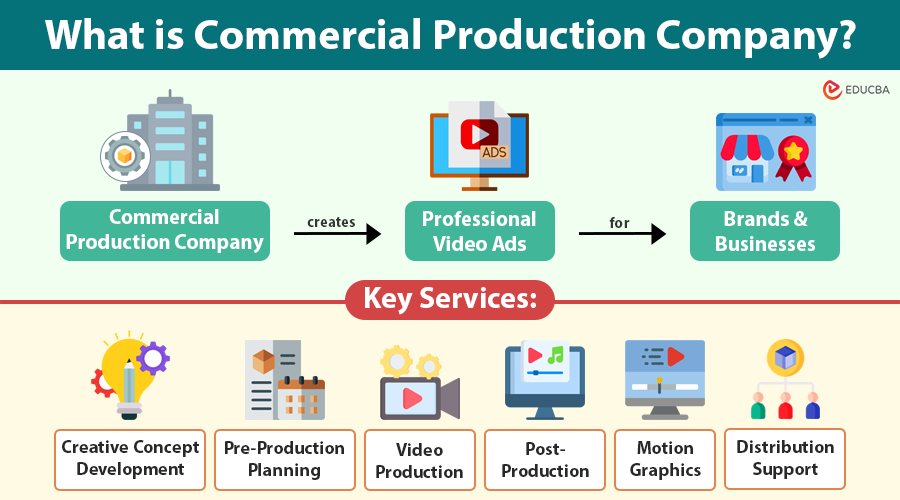
A commercial production company is a specialized agency that creates video advertisements for brands and businesses. It oversees the entire production process, from ideation and scripting to filming, editing, and final delivery, ensuring the message aligns with the brand’s goals.
For instance, a company might approach a commercial production company to create a short promotional video that highlights a new product. The production team then develops the concept, shoots the footage, and crafts a polished ad that helps the brand connect with its audience.
Table of Contents
Key Services Offered by Commercial Production Companies
Commercial production companies manage the entire process of transforming a brand’s idea into a compelling visual story. Their services go far beyond filming; they shape the message, design the visuals, and ensure the final ad reaches the right audience.
1. Creative Concept Development
The creative team collaborates closely with brands to understand their objectives, define the intended audience, and shape the key message to be delivered. They brainstorm multiple concepts before selecting the best one.
A relatable example:
If a skincare brand aims to convey “everyday confidence,” the team may opt for a story featuring real people getting ready for their day, such as students, working professionals, or parents, using the product naturally. This approach helps viewers connect emotionally, making the ad memorable.
They also develop scripts, storyboards, and mood boards to give the client a clear picture of how the commercial will look and feel before filming begins. AI founders can seek specialized launch video production for AI startups when they need support shaping their product story and turning it into a polished animated or founder-led video.
2. Pre-Production Planning
This stage is the backbone of any commercial. Production companies meticulously plan everything to avoid complications during filming.
Relatable elements include:
- Casting real-looking actors instead of overly polished models makes the commercial more authentic.
- Choosing familiar locations like homes, cafes, workplaces, or public spaces where the target audience often spends time.
- Arranging props and wardrobe that reflect everyday life, such as casual clothing, home décor, or daily-use items.
They also build detailed schedules, secure permissions, arrange equipment rentals, finalize costumes, and conduct rehearsals, ensuring every shot looks natural and intentional.
3. Video Production
This is where the story comes alive. The production company sets up cameras, lighting, and audio to capture visually appealing scenes.
Relatable example:
When filming a commercial for a family-oriented product, the director may ask actors to interact casually, laughing, playing, or eating together to create genuine moments rather than staged expressions.
During production, the team often shoots multiple takes, experiments with different angles, and improvises small details to make scenes look spontaneous and human. This helps the final commercial feel real and relatable rather than overly scripted.
4. Post-Production
Post-production shapes the final tone and personality of the commercial. Editors carefully combine footage, select the right music, and enhance visuals to align with the brand identity.
Examples of relatable enhancements:
- Adding warm color tones to emotional ads, such as those for family brands or healthcare.
- Using lively transitions and upbeat music for tech, fashion, or youth-oriented brands.
- Including clean text animations to highlight offers, benefits, or features clearly.
Sound designers also refine background noise, voices, and music to ensure the commercial is pleasant and engaging. The outcome is a refined, attention-grabbing video prepared for viewers.
5. Motion Graphics & Animation
Animation plays a powerful role in explaining concepts that are difficult to visualize.
For example:
A digital payment company may use animation to show how money transfers work behind the scenes. This makes complex processes simple and engaging.
Brands targeting younger audiences, such as toy companies, educational apps, or FMCG products, often use vibrant animation styles to capture attention instantly. Animation also helps build brand consistency with unique characters, icons, or graphic elements.
6. Distribution Support
Creating a great video is only half the job; delivering it to the right audience is equally important.
Production companies help brands distribute the commercial across multiple platforms by tailoring versions for:
- TV channels (30–60 seconds)
- YouTube Ads (6–15 seconds)
- Instagram Reels (9–15 seconds, vertical format)
- Facebook Ads (15–30 seconds)
- OTT platforms: Hotstar, Amazon Prime, or JioCinema
A relatable example:
If a brand targets college students, the company may create short, fast-paced edits for Instagram and YouTube, where young audiences spend more time. Older audiences may prioritize longer, informative versions for TV or OTT.
Distribution support ensures the ad not only looks good but also reaches people at the right time, on the right platform, and in the right format.
Why Do Businesses Hire Commercial Production Companies?
Hiring a commercial production company gives brands a professional advantage. These companies combine creativity, technical skills, and storytelling experience to create videos that truly connect with audiences. Here is why businesses prefer working with them:
1. Professional Quality
Commercial production companies utilize high-end cameras, sophisticated lighting setups, and advanced audio tools that are often beyond the reach of most businesses. Their crew knows how to frame shots, set lighting moods, and record crisp sound that instantly elevates the video.
2. Creative Expertise
These companies bring fresh ideas and new storytelling angles that help brands stand out in a crowded market. Creative directors, scriptwriters, and designers understand what appeals to audiences and how to present a product most engagingly.
3. Time Efficiency
Producing a commercial involves scripting, scheduling, lighting, filming, editing, and revisions. Handling all of this internally can be time-consuming and drain a company’s resources. Production companies streamline the entire process, keeping everything on track.
4. Brand Consistency
Production companies understand how to visually express a brand’s tone, colors, messaging, and personality. They ensure every shot, graphic, and voiceover aligns with the brand identity. Consistency builds trust and recognition over time.
5. Stronger Audience Engagement
Well-produced commercials capture viewers’ attention within seconds and influence their perception of a product. Good storytelling, strong visuals, and high-quality editing make people stop scrolling and watch.
Types of Commercials Produced
Commercial production companies create a diverse range of ads tailored to various platforms, audiences, and marketing objectives. Each format serves a distinct role and aligns with different phases of the customer journey, from initial awareness to final purchase decisions.
1. Television Ads
TV commercials deliver high-impact storytelling and reach a broad audience. Brands use them to build awareness, launch new products, or strengthen their market presence.
2. Social Media Video Ads
These include short, engaging videos for Instagram Reels, YouTube Ads, Facebook Ads, and TikTok-style formats. They focus on grabbing attention within seconds.
3. Corporate Promotional Videos
These videos showcase a company’s values, culture, achievements, and services. Businesses utilize them in meetings, on websites, in investor presentations, and for internal communication.
4. Product Demos & Explainer Videos
These videos break down how a product works, what features it offers, and why it’s useful. They are great for tech gadgets, apps, financial tools, and everyday consumer products.
5. Event & Brand Launch Videos
Brands utilize these videos to generate excitement around new product launches, corporate milestones, or major events. They are often cinematic and vibrant.
6. Testimonial & Case Study Videos
These features are real customers or clients sharing their experiences. They help build credibility and trust.
7. Animated Commercials
Animation provides creative freedom to simplify complex ideas, visualize previously unseen concepts, or incorporate fun elements.
How the Production Process Works?
Although every project is unique, most commercial productions follow a structured workflow to ensure smooth execution and high-quality output. The process generally includes the following stages:
1. Briefing
The process begins with a detailed discussion between the client and the production team. During the briefing, the client outlines the project goals, target audience, key messages, brand guidelines, budget, and expected timeline. This stage helps the production company fully understand the objectives and creative direction before planning begins.
2. Concept Development
Using the briefing as a guide, the creative team shapes ideas that reflect the brand’s messaging and overall campaign goals. They prepare scripts, storyboards, mood boards, and visual references for client approval and review. This step ensures clarity on the creative approach and provides a visual roadmap for the entire project.
3. Pre-Production Scheduling
Once the concept is approved, the production company begins detailed planning. This includes finalizing the cast, hiring crew members, arranging equipment, selecting locations, managing logistics, designing sets, organizing wardrobe, and creating a production schedule. Pre-production ensures that all creative and technical elements are prepared for a smooth shoot.
4. Filming
During this stage, the production team brings the concept to life. Directors, cinematographers, and crew members collaborate to capture high-quality footage in accordance with the storyboard and creative direction. This includes setting up lighting, recording audio, managing props, and coordinating actors or models. Every shot is carefully executed to meet the project’s visual and narrative goals.
5. Editing & Post-Production
In post-production, editors assemble the raw footage into a cohesive final version. This stage includes video editing, sound design, color correction, motion graphics, text overlays, visual effects, voiceovers, and music integration. Post-production enhances the commercial, making it visually polished, engaging, and consistent with the brand’s tone and voice.
6. Review & Delivery
After editing, the production company shares the draft version with the client for review and feedback. The client may request revisions to improve pacing, visuals, audio, or messaging. Once approved, the final commercial is exported in the required formats for TV, social media, OTT platforms, or other distribution channels. This step ensures the video is ready for launch and optimized for its intended platforms.
How to Choose the Right Commercial Production Company?
Strategy evolution entails continually adapting business plans to shifting market conditions and evolving customer needs, thereby ensuring competitiveness and sustainable growth. Consider the following factors when making your decision:
1. Portfolio Quality
Begin by reviewing the company’s portfolio to understand the quality of its past work. A strong portfolio showcases their style, visual skills, storytelling approach, and technical capability. This helps you assess whether their creative direction aligns with your brand’s identity and expectations.
2. Industry Experience
Select a production company that has experience working within your industry or with similar audiences. Familiarity with your sector allows the team to understand your market challenges, target audience behavior, and messaging requirements more effectively.
3. Team Expertise
Examine the expertise of the professionals involved. A reliable production company should have skilled directors, scriptwriters, cinematographers, editors, and designers. Strong individual talent contributes directly to the quality, creativity, and impact of the final commercial.
4. Budget Compatibility
Ensure the company’s pricing structure fits your budget. Transparency is essential; look for detailed cost breakdowns, clear deliverables, and no hidden charges. The goal is to find a company that maintains quality while respecting your financial constraints.
5. Client Feedback
Examine testimonials, client opinions, and past project case studies to assess the company’s credibility. Insights shared by previous clients reveal how they handle communication, timelines, professionalism, and overall dependability. When a company consistently receives strong feedback, it is a clear sign of reliable service.
The Impact of Commercial Production Companies on Marketing
A powerful commercial can significantly influence a brand’s visibility and overall market presence. High-quality production enhances the impact of your message, helping it connect more effectively with your intended audience. These companies help shape compelling narratives that support multi-platform marketing campaigns, making your content suitable for TV, social media, websites, and digital ads.
In the digital age, consumers respond strongly to polished and engaging visuals. High-quality video content enhances customer interaction, strengthens brand recall, and encourages higher conversion rates. By blending creativity, technical expertise, and strategic storytelling, commercial production companies enable businesses to communicate persuasively and differentiate themselves in competitive markets.
Final Thoughts
Commercial production company help brands communicate their message with clarity and impact. By blending creativity with technical expertise, they turn ideas into polished, engaging visuals that capture attention across TV, social media, and digital platforms. Their professional approach ensures consistency, quality, and storytelling that resonates with the target audience.
In today’s visually driven world, high-quality video content plays a crucial role in shaping brand perception and driving customer engagement. Choosing the right production partner empowers businesses to stand out, build stronger connections, and achieve lasting marketing success.
Frequently Asked Questions (FAQ’s)
Q1. How much does it cost to produce a commercial?
Answer: The cost depends on various factors, including video length, location, equipment, talent, and post-production requirements. Simple social media ads are more affordable, while high-end TV commercials require a larger budget.
Q2. How long does the entire production process take?
Answer: Most commercial projects take between 2 and 8 weeks, depending on their complexity, the number of shooting days, and the amount of editing or animation required.
Q3. Do commercial production companies handle casting and locations?
Answer: Yes. They manage casting, location scouting, permissions, and all logistical arrangements to ensure smooth production.
Q4. Can businesses request changes during editing?
Answer: Absolutely. Companies typically allow a certain number of revision rounds during post-production to ensure the final commercial matches the brand’s expectations.
Q5. What is the difference between a commercial production company and an advertising agency?
Answer: An advertising agency plans marketing strategies and campaigns, while a commercial production company specializes in creating the actual video content needed for those campaigns.
Recommended Articles
We hope this guide on commercial production company was valuable for your marketing strategy. Explore related articles on Brand Video Strategies, Corporate Film Production, and Effective Visual Marketing Techniques to strengthen your understanding and enhance your overall brand communication approach.

