


Importance of Catalog Management Software
Managing product information has become increasingly difficult as businesses sell across multiple websites, marketplaces, and physical stores. Incorrect details, outdated descriptions, or mismatched pricing can lead to lost sales and unhappy customers. This is where catalog management software becomes extremely valuable. It centralizes all product information, updates it automatically, and keeps every platform consistent. This simplifies inventory management, improves the client experience, and helps businesses stay organized, save time, and remain competitive.
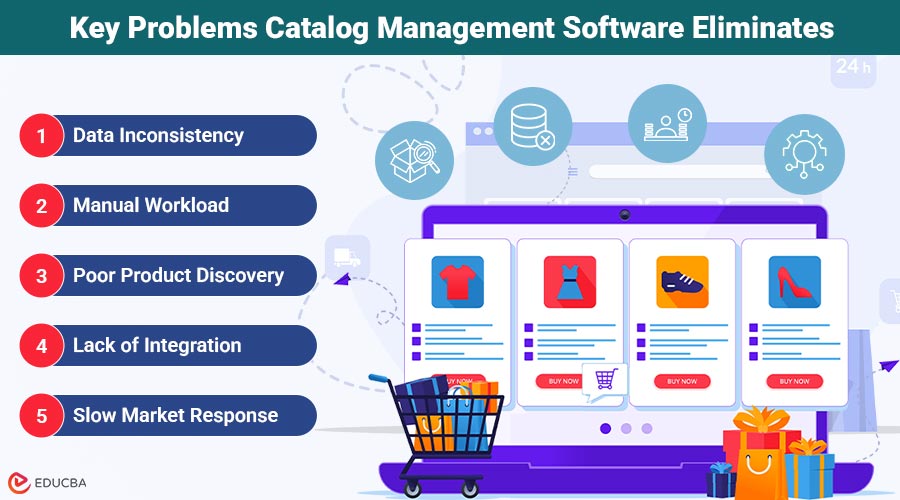
Key Problems Catalog Management Software Eliminates
These key points highlight the major challenges that catalog management software helps businesses overcome.
1. Data Inconsistency
A major challenge for product-based businesses is maintaining consistent product information across multiple platforms. When teams manually update rates, descriptions, pictures, or facts, errors can easily occur. Incorrect or outdated information can confuse clients, damage your brand, and even lead to a decrease in sales. This is where catalog management software becomes highly useful; it addresses this issue by consolidating all product information in one place.
When you update something such as a price, description, or image your website, online stores, and internal systems automatically reflect the change. This way, each customer sees the right info no matter where they shop. Having consistent data saves time, reduces mistakes, builds client trust, makes shopping easier, and lowers the chances of returns, allowing your business to run more smoothly.
2. Manual Workload
Managing a large number of products manually is challenging and time-consuming. Teams spend hours typing product facts, checking for errors, and fixing mistakes in spreadsheets or different platforms. Doing all this manually slows down work, costs more money, and leaves little time for important tasks that support business growth.
It can upload multiple products at once, automatically fill in product details, and even create product descriptions using templates. With only a few clicks, staff can update hundreds of items fast. This saves time and lets teams focus on marketing, product improvements, and client support the tasks that truly drive business growth.
3. Poor Product Discovery
Even if a business has good products, a messy catalog makes it tough for clients to find them. Incorrect categories, missing information, or mismatched keywords can confuse shoppers and obscure products from search results. It benefits by creating products that are easy to discover and improving the shopping experience.
- Keeps product facts, such as color, size, brand, and structure, clear and consistent.
- Adds helpful info and keywords so products stand out in searches.
- Improves search results across your website and Google.
- Help clients find what they need quickly, so they are more likely to make a purchase.
A well-organized catalog creates a stress-free shopping experience, attracts more visitors, and increases sales.
4. Lack of Integration
Many businesses sell their products in various locations, including online marketplaces like Shopify, Amazon, and eBay, as well as physical stores. Managing every place separately can be challenging and lead to errors. Prices, stock, or product specifics may become outdated or incorrect, which can disappoint clients and result in lost sales. It addresses this by integrating all channels into a single system.
When you add a product, change a rate, or update stock, the changes are updated automatically everywhere. It also creates reports easily, displaying sales, stock, and performance in one place. This saves time, avoids errors, and helps your business run easily.
5. Slow Market Response
In the fast-moving market, Companies that can rapidly add new products or make changes quickly tend to perform better than those that cannot. Without a reliable catalog system, updating product information or adding new items can take days or weeks. This slows down sales and marketing and can confuse clients with old information. It fixes this. It allows businesses to add new products instantly using ready-made templates and update multiple items at once in minutes.
This enables companies to stay up-to-date with trends, sales, or supplier changes quickly. Fast updates ensure that clients always receive the correct product details, rates, and offers. By keeping the catalog up to date, businesses make shopping easier, keep clients satisfied, and increase sales.
Final Thoughts
Catalog management software is not just a digital tool it is a powerful system that supports and accelerates business growth. It resolves complications such as incorrect product information, excessive manual work, hard-to-find products, disconnected sales channels, and slow updates. With it, you can update product facts quickly, manage all platforms in one place, and ensure clients always receive the correct information. For online stores, the wholesalers and retailers, this means quicker work, fewer mistakes, and happier clients.
Recommended Articles
We hope this guide on catalog management software supports your business growth. Explore these recommended articles for additional insights and more effective product management strategies.


