


Introduction
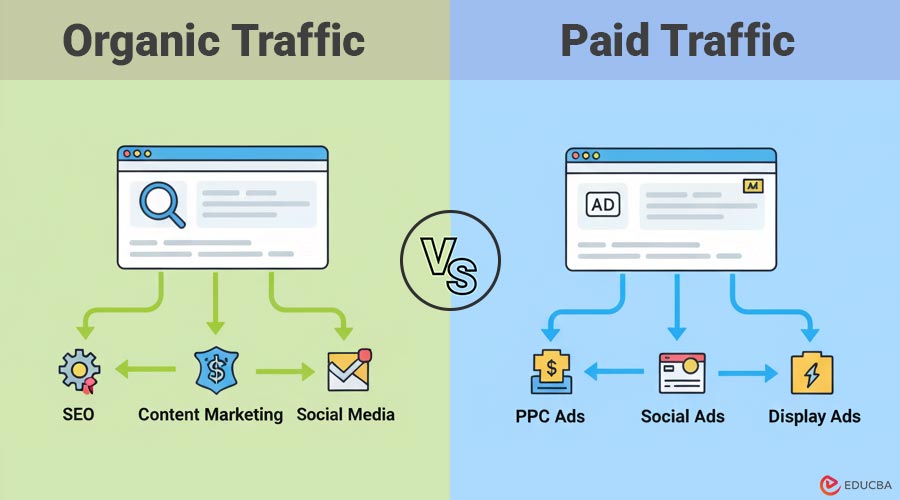
In digital marketing, understanding the distinction between Organic Traffic and Paid Traffic is crucial for establishing a sustainable online presence. Both are vital sources of website visitors, yet they function in very different ways. Organic traffic originates from unpaid search results, whereas paid traffic is generated through advertising campaigns, such as Google Ads or social media promotions. Companies often struggle to determine the most effective use of their resources: should they prioritize paid advertising for immediate awareness or focus on developing long-term SEO strategies for organic traffic?
This article provides a detailed comparison between Organic Traffic vs Paid Traffic, explaining their characteristics, advantages, disadvantages, and practical use cases.
Table of Contents:
- Introduction
- What is Organic Traffic?
- What is Paid Traffic?
- Key Differences
- Advantages and Disadvantages
- When to Use?
- Real-World Examples
What is Organic Traffic?
Organic Traffic means visitors who reach your website through non-paid listings that appear in search engines such as Google, Bing, or Yahoo. It typically comes from users who click on your content after searching for keywords related to your products, services, or information.
Key Characteristics:
- Generated naturally through search engine rankings.
- Long-term and sustainable.
- Builds brand credibility and trust.
- Requires consistent content creation and SEO optimization.
Example:
A technology blog writes an article titled “Top 10 Laptops for Programmers.” Over time, this article has ranked on Google’s first page and attracted visitors searching for laptops, contributing to organic traffic.
What is Paid Traffic?
Paid Traffic refers to website visitors gained through paid advertisements. These could include Google Ads, Facebook Ads, Instagram promotions, LinkedIn ads, or display advertising. Paid traffic provides instant visibility, especially for new businesses or time-sensitive campaigns.
Key Characteristics:
- Requires monetary investment for ad placement.
- Offers quick and measurable results.
- Provides detailed targeting options (location, interests, demographics).
- Stops immediately once the budget is exhausted.
Example:
A skincare brand launches a Google Ads campaign targeting the keyword “anti-aging cream.” Users are taken to the brand’s website when they click on the advertisement. These visitors are a component of sponsored traffic.
Key Differences: Organic Traffic vs Paid Traffic
Here are the key distinctions between Organic Traffic and Paid Traffic, highlighting how each contributes differently to your digital marketing strategy.
| Parameter | Organic Traffic | Paid Traffic |
| Definition | Visitors from unpaid search results. | Visitors from paid advertisements. |
| Source | SEO, blog posts, backlinks, and content marketing. | Google Ads, social media ads, and PPC campaigns. |
| Cost | Free but requires time and effort. | Involves monetary cost per click or impression. |
| Speed of Results | Slow and gradual. | Immediate and fast. |
| Longevity | Long-lasting results even after stopping active efforts. | Short-term results that end when ads stop. |
| Credibility | Builds audience trust and brand authority. | Viewed as promotional, less trustworthy. |
| Targeting | Limited to organic search queries. | Highly specific targeting using audience data. |
| Measurement | Measured through SEO metrics (CTR, bounce rate, ranking). | Measured through ad analytics (CPC, CTR, ROI). |
| Maintenance | Continuous SEO optimization required. | Ongoing ad spend and monitoring required. |
| Ideal For | Long-term brand growth | Short-term campaigns or product launches. |
Advantages and Disadvantages of Organic Traffic and Paid Traffic
Here are the advantages and disadvantages of both Organic Traffic and Paid Traffic, helping you choose the best strategy for your business goals.
Advantages of Organic Traffic:
- Cost-Effective: Organic traffic does not require direct payments for clicks, making it a long-term, budget-friendly option.
- High Credibility and Trust: Users tend to trust organic results more than ads, enhancing brand reputation.
- Sustainable Growth: Once your content ranks well, it continues attracting traffic even with minimal updates.
- Better Engagement: Organic visitors tend to stay longer, read more content, and convert at higher rates because of genuine interest.
Disadvantages of Organic Traffic:
- Slow Results: It may take months to rank higher in search results.
- High Competition: Competing for top positions is particularly challenging in highly saturated industries.
- Algorithm Dependency: SEO results fluctuate with changes to search engine algorithms.
- Time-Intensive: Requires consistent content creation, link building, and optimization efforts.
Advantages of Paid Traffic:
- Instant Results: Ads can start generating clicks and conversions within hours.
- Accurate Targeting: You can target people according to their demographics, geography, activity, and interests.
- Scalable: Easy to increase or decrease traffic volume based on your budget.
- Data-Driven: Detailed analytics help track conversions, ROI, and audience insights.
Disadvantages of Paid Traffic:
- Expensive: Continuous investment is required to maintain visibility.
- Short-Term Impact: Traffic stops once ad spend stops.
- Ad Fatigue: Users may become increasingly immune to advertisements over time.
- Lower Trust Levels: Users often perceive ads as promotional rather than informative.
When to Use Organic Traffic and Paid Traffic?
Here is how to decide when to use Organic Traffic and when to use Paid Traffic based on your marketing objectives and resources.
Use Organic Traffic When:
- When you aim for long-term visibility and brand authority.
- When you have a limited advertising budget, but can invest time in SEO.
- For content-driven businesses like blogs, educational sites, or B2B firms.
- When your goal is to build trust and credibility among users.
Use Paid Traffic When:
- When you need immediate traffic or conversions.
- During product launches, promotions, or time-sensitive campaigns.
- For testing new products or landing pages before committing to SEO.
- When you want precise audience targeting or remarketing.
Real-World Examples
Here are some real-world examples that demonstrate how both Organic Traffic and Paid Traffic can effectively drive results in different scenarios.
Example 1: Organic Traffic Success
A digital marketing agency publishes high-quality blogs on SEO techniques and link-building strategies. Over the course of six months, its blog has ranked on Google’s first page for competitive keywords, generating consistent leads without incurring ad spending.
Example 2: Paid Traffic Success
A new e-commerce brand runs Facebook and Instagram ads showcasing holiday discounts. Within two weeks, website visits and sales spike dramatically due to paid campaigns targeting relevant demographics.
Final Thoughts
Organic Traffic vs Paid Traffic are both essential for a strong digital marketing strategy. Organic traffic fosters long-term credibility and sustainability through SEO, whereas paid traffic provides instant visibility and quick results. By combining both, businesses achieve balanced growth—using organic methods for consistent engagement and paid campaigns for immediate reach, driving steady traffic, leads, and conversions.
Frequently Asked Questions (FAQs)
Q1. Is organic traffic better than paid traffic?
Answer: Organic traffic builds credibility and lasts longer, but paid traffic delivers faster results. A balanced mix of both is ideal.
Q2. How can I increase organic traffic?
Answer: Focus on keyword research, on-page SEO, backlinking, and consistent high-quality content publishing.
Q3. Can paid traffic improve SEO?
Answer: Indirectly, yes. Paid campaigns can increase visibility and clicks, leading to more brand searches and potential organic growth.
Q4. Which traffic type is more cost-effective?
Answer: Organic traffic is cost-effective in the long run, while paid traffic can be expensive if not managed properly.
Recommended Articles
We hope that this EDUCBA information on “Organic Traffic vs Paid Traffic” was beneficial to you. You can view EDUCBA’s recommended articles for more information.


