


Introduction
In today’s digital world, every post and comment shapes how people view your brand. Social listening means tracking what audiences say about your brand, products, or competitors on platforms like Instagram, Facebook, X (Twitter), and LinkedIn. But it’s more than monitoring mentions — it’s about understanding public opinion and using those insights to make smarter business decisions.
By analyzing customer sentiment — positive, negative, or neutral — businesses can identify what customers love, address issues, and refine strategies. Social listening bridges the gap between brands and audiences, helping build trust, manage reputation, and respond quickly to feedback. In short, it empowers brands to move from reactive to proactive communication, turning insights into stronger customer relationships and lasting brand loyalty.
What is Social Listening?
Social listening is the process of tracking, analyzing, and understanding what people are saying about your brand, industry, or competitors across social media and digital platforms. Social media listening tools like YouScan make this depth of analysis possible, turning raw conversations into clear sentiment and trend data brands can act on.
When someone comments about your product on Instagram, tags your brand on X (Twitter), or reviews your service on Google, it becomes part of a larger online conversation. Social Listening tools collect these insights in one place, helping businesses identify opportunities, manage crises, and improve communication with customers. Unlike traditional analytics, which measure likes or impressions, social listening dives deeper into customer sentiment — the tone and context behind every mention. It answers important questions like:
- What are people saying about your brand right now?
- How do customers feel about your competitors?
- Which trends or topics are influencing your audience?
For example, if a new campaign sparks discussion, Social Listening shows whether feedback is positive or negative — and why — so you can respond and improve quickly. In simple terms, Social Listening helps brands clearly hear their audience. It’s like being part of every conversation that matters, enabling stronger relationships and smarter business decisions.
Benefits of Social Listening
Social listening offers powerful advantages for brands that want to grow, stay relevant, and build trust with their audience. It helps companies go beyond posting content — it turns conversations into actionable insights. Here are some key benefits of social listening that make it a must for every business.
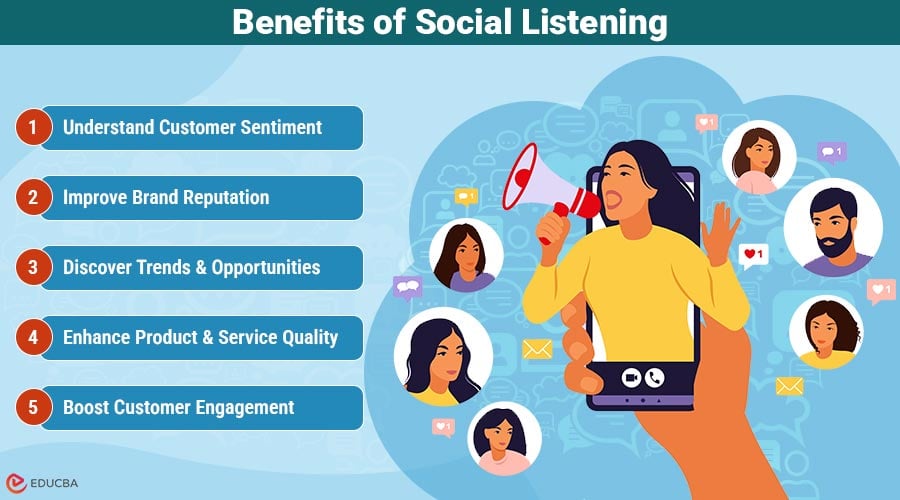
1. Understand customer sentiment
One of the biggest benefits of social listening is the ability to understand how customers feel about your brand. By analyzing positive, negative, or neutral comments, you can identify what people love and what needs improvement. This emotional understanding helps you create better campaigns and offer more satisfying experiences.
2. Improve brand reputation
Social listening helps you spot potential problems before they grow. If someone complains about your service online, you can respond quickly, solve the issue, and protect your reputation. This proactive communication builds trust and loyalty, especially when customers see your brand cares about feedback.
3. Discover trends and opportunities
Through social listening, you can identify emerging industry trends, popular hashtags, or competitor strategies. This helps you engage in relevant conversations and craft content that aligns with your audience’s current interests.
4. Enhance product and service quality
Brands can use social listening data to make smarter product decisions. For example, if many users mention a missing feature or desired improvement, your business can act on that insight directly.
5. Boost customer engagement
By replying to real-time comments or joining discussions, brands show they are listening. This human touch improves engagement and builds long-term customer relationships.
In short, the benefits of social listening go far beyond data. It is about understanding people, reacting wisely, and turning insights into business growth.
Why Is Social Listening Important?
Social Listening plays a vital role in helping brands understand and engage with their audience effectively. Here is why it matters — explained in clear, actionable points:
1. Understand Public Perception
Social Listening enables brands to grasp what people are saying about them on various online platforms such as Instagram, Facebook, X (formerly Twitter), LinkedIn, and YouTube. It reveals audience emotions, opinions, and emerging trends that shape brand perception.
2. Gain Real-Time Customer Feedback
The biggest advantage of Social Listening is real-time insights. Instead of waiting for surveys or reports, businesses can instantly see how customers respond to campaigns, products, or services and act immediately.
3. Manage Brand Reputation Effectively
By tracking mentions and sentiment, brands can identify potential issues early. Quick and empathetic responses turn negative experiences into positive ones, strengthening customer trust and loyalty.
4. Improve Digital Marketing Strategies
Insights from Social Listening help marketers refine ad messaging, create engaging content, and plan effective influencer collaborations that align with audience interests.
5. Support Data-Driven Decision-Making
Social Listening converts public conversations into actionable data, helping teams make informed marketing and business decisions.
6. Enhance Learning and Professional Skills
For example, students in a Digital Marketing Course in Ahmedabad study Social Listening to understand its role in SEO, paid ads, and brand communication — proving its importance in modern marketing.
7. Drive Growth and Customer Satisfaction
In short, Social Listening turns everyday online conversations into opportunities for brand growth, stronger connections, and long-term success.
Social Listening vs. Social Monitoring
Many people confuse social listening with social monitoring, but they differ in purpose and outcome. Knowing the difference helps you make smarter marketing decisions and respond effectively to your audience.
- Social monitoring focuses on collecting data — mentions, comments, tags, and direct messages. It is the process of tracking brand mentions or customer feedback in real time. For example, when someone tweets a complaint about your product, monitoring helps you see it quickly and respond. It’s about reacting to what’s happening right now.
- Social listening, on the other hand, goes deeper. It analyzes all those mentions and conversations to understand why people feel a certain way. It is not just about numbers — it is about discovering insights, trends, and emotions behind customer behavior. For example, through social listening, a brand might learn that customers prefer eco-friendly packaging or dislike a certain product feature.
In short, social monitoring is reactive — it tells you what people are saying, while social listening is proactive — it helps you understand why they are saying it and how to act on it. For students at ASDM – Digital Marketing Course in Surat, this distinction is vital: monitoring manages customer service and quick responses, while listening drives strategy, innovation, and brand growth. To stay competitive, brands should use both monitoring to remain alert and responsive and listening to plan smarter campaigns and long-term improvements, creating a powerful feedback loop that turns audience voices into valuable business insights.
Social Listening Tools
To make social listening effective, you need the right tools to collect and analyze online conversations. These tools track mentions, monitor sentiment, and identify trends, turning raw data into valuable insights efficiently. Some of the most popular social listening tools include:
1. Hootsuite Insights
This tool provides real-time data from multiple social networks. It helps you track mentions, hashtags, and keywords to understand what people are saying about your brand. With visual dashboards and sentiment analysis, Hootsuite makes it easier to manage brand reputation and engagement.
2. Brandwatch
Brandwatch is known for its deep data analytics and AI-powered insights. It can analyze millions of online conversations to identify customer opinions, market trends, and competitor performance. It is ideal for businesses that want a detailed understanding of consumer behavior.
3. Sprout Social
Sprout Social combines social listening with engagement tools. It helps brands not only understand customer sentiment but also respond efficiently. You can use it to measure performance and manage multiple social accounts seamlessly.
4. Talkwalker
This tool monitors conversations across news sites, blogs, forums, and social platforms. Talkwalker offers advanced image recognition and multilingual support, making it useful for global brands that need to analyze diverse audiences.
5. Mention
Mention monitors brand mentions in real time and lets you compare your performance against competitors. It is user-friendly and great for small to medium-sized businesses.
Using these social listening tools helps brands stay informed, respond quickly, and make data-driven marketing decisions. Whether you are a small business or a global enterprise, these tools empower you to listen to your audience, adapt your strategies, and strengthen your online presence.
Social Listening Examples
To understand the power of social listening, let us look at real examples of how brands turn online conversations into strategies that enhance customer experience, brand image, and marketing performance.
1. Starbucks – Understanding Customer Preferences
Starbucks uses social listening to analyze feedback about its drinks, seasonal offers, and new menu items. For example, when customers began discussing dairy-free alternatives online, Starbucks noticed the growing demand and introduced more plant-based milk options. This shows how social listening can directly influence product development and customer satisfaction.
2. Nike – Tracking Brand Sentiment
Nike constantly monitors online conversations to gauge how people feel about its campaigns and collaborations. When launching a new sportswear line, Nike analyzes reactions across platforms like Instagram and X (Twitter). If feedback is mixed, the brand adjusts its messaging in real time to maintain a positive image and connect with its audience emotionally.
3. Netflix – Engaging Through Pop Culture
Netflix uses social listening to track what audiences are saying about shows and movies. By following trending memes, quotes, and discussions, Netflix quickly joins the conversation with witty replies or creative content. This engagement builds brand loyalty and keeps viewers entertained beyond the screen.
4. Small Businesses – Building Local Connections
Even small brands benefit from social listening. For example, a local café can monitor customer reviews and nearby events to adapt its promotions. Listening helps smaller businesses stay competitive and connect with their community on a personal level.
These examples of social listening highlight one clear message: when brands listen, they grow smarter. By turning audience conversations into insights, businesses can make better decisions, improve products, and build lasting relationships.
How to Build Your Social Listening Strategy
A strong social listening strategy helps brands connect with audiences, protect their reputation, and turn conversations into data-driven actions. Here is how you can build an effective strategy step by step.
1. Define your goals clearly
Before you start listening, decide what you want to achieve. Are you tracking brand reputation, analyzing customer satisfaction, studying competitors, or identifying new trends? Clear goals help you choose the right tools and focus on meaningful data.
2. Identify the right keywords and topics
Make a list of the keywords, hashtags, brand names, product names, and industry terms you want to monitor. This should include your brand, competitors, and relevant topics customers often discuss.
3. Choose the best social listening tools
Use trusted platforms like Hootsuite, Sprout Social, or Brandwatch to track mentions and analyze sentiment. These tools organize your data and provide insights through dashboards, making it easier to understand customer emotions and trends.
4. Monitor competitors and industry trends
Social listening is not limited to your own brand. By analyzing competitor conversations, you can identify market gaps and uncover opportunities to enhance your products or campaigns.
5. Analyze and act on the data
Once you have gathered insights, take action. Adjust your marketing strategy, improve products, or respond to common customer feedback. The real value of social listening comes from how you use the insights.
6. Review and refine regularly
Trends and conversations change fast. Review your listening strategy frequently to stay updated and make sure your approach continues to align with business goals.
An effective social listening strategy helps brands stay informed, proactive, and customer-focused in a constantly changing digital world.
How to Get Started with Social Media Listening
Social media listening may seem complex, but with the right approach, any brand can track conversations, analyze sentiment, and strengthen its digital presence. Here is a simple, step-by-step guide to help you begin.
1. Set clear objectives
Before you dive in, decide what you want to learn from social listening. Are you trying to understand customer satisfaction, improve content performance, or discover new trends? Clarifying your goals helps you direct your social listening efforts more effectively.
2. Select the right platforms
Your audience may be active on Instagram, LinkedIn, Facebook, or X (Twitter). Identify where most of your conversations happen. Prioritize platforms that align with your target market and industry. For example, a B2B company might focus more on LinkedIn, while lifestyle brands thrive on Instagram.
3. Pick reliable listening tools
Use tools like Sprout Social, Hootsuite, or Mention to monitor keywords, hashtags, and brand mentions. These tools gather real-time data and present it in a simple dashboard, allowing you to analyze trends and sentiment easily.
4. Track the right keywords and topics
Add variations of your brand name, product names, industry terms, and competitor names. Also, include emotional keywords like “love,” “hate,” or “recommend” to gauge how people feel about your brand.
5. Engage and respond
Do not just listen—interact. Reply to customers, thank users for positive feedback, and handle complaints quickly. Engagement shows that your brand values its audience.
6. Evaluate and adapt
Review your insights regularly. If you notice repeating themes or trending issues, use that data to refine marketing strategies, product updates, and customer support.
When done right, social media listening becomes your secret weapon for smarter decisions, stronger engagement, and a more loyal audience. It helps transform customer voices into valuable opportunities for growth.
Conclusion
In today’s digital era, every post and comment can influence your brand’s image, making social listening essential rather than just a marketing tactic. It helps brands move from guesswork to data-driven decisions by understanding what customers truly say and feel online. Through this guide, you have learned what social listening is, its benefits, key tools, and how it differs from social monitoring.
By applying these insights, brands can spot trends early, manage reputation, and turn feedback into meaningful improvements. Ultimately, social listening is about understanding emotions and behaviors to enhance customer experience and strengthen brand loyalty. With clear goals, the right tools, and consistency, any brand—big or small—can use social listening to build smarter communication and lasting relationships.
Recommended Articles
We hope this guide on Social Listening helped you understand its impact on brand growth. For more insights, explore these related articles below:


