


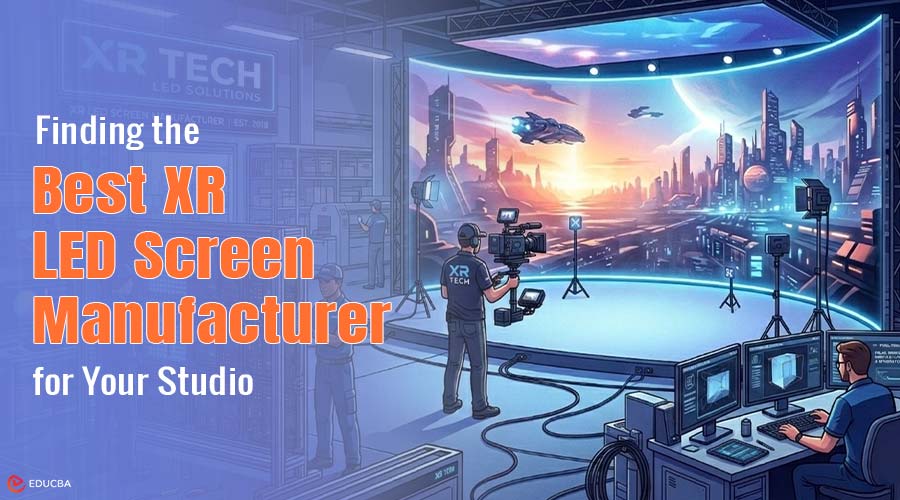
How to Choose the Right XR LED Screen Manufacturer for Virtual Production?
Movies, TV studios, and live events are now using extended reality (XR) virtual production. Large LED walls provide the digital backgrounds for visual effects. However, manufacturers do not design every LED screen to work with professional cameras. Issues like screen flicker, poor colour reproduction, and slow installation can add costs and delays. For this reason, choosing the right XR LED screen manufacturer is crucial. Professional studios, AV rental companies, and stage designers should consider the following factors before making a decision.
What is XR Virtual Production and Why LED Screens Matter?
In XR virtual production, creators integrate real-life sets with virtual sets displayed on massive LED screens. With real-time camera capture of the actors, no post-production compositing steps are required. And why is the LED screen the most important element? It has to be camera-ready, withstand the heat of studio lights, provide perfect shutter synchronization, and more. If any of these elements are missing, the shot fails. This, more than any other reason, is why the quality of your LED screen manufacturer is important.
Key Technical Requirements for XR LED Walls
To ensure flawless performance on set, consider the following essential specifications and features when evaluating an XR LED screen manufacturer.
1. 7,680Hz Refresh Rate and On-Camera Performance
The refresh rate is one of the most important specs to check. A 7,680Hz high refresh rate technology is the industry standard for XR virtual production and professional broadcasting because it eliminates flicker and moiré effects on camera. Lower refresh rates can cause banding or flickering in footage, especially when shooting at high frame rates or with fast shutter speeds. Always confirm the panel’s refresh rate before committing to a manufacturer.
2. Eliminating Flicker and Moiré Effects in Film Production
Flicker and moiré are two of the biggest adversaries in virtual product. Flicker occurs when the LED’s refresh rate does not match the camera’s shutter speed. Moiré appears as a crimped, hindrance pattern when the pixel grid clashes with the camera detector. High refresh rates reduce flicker, while fine pixel pitches and proper viewing distances help minimize moiré.
3. Scan Rate and Frame Synchronization
The speed at which the LED panel refreshes each row of pixels is known as the scan rate. A higher scan rate, essential when the camera is moving, achieves smoother, more uniform brightness across the panel. Frame synchronisation ensures that the camera and LED display operate in perfect sync. Your footage will have rolling scan lines if you do not have a rolling scan.
What Defines True Image Quality in XR Production?
The following factors determine how realistic and camera-ready your virtual production visuals will appear.
1. Pixel Pitch Selection for Close-Up Shots
Pixel pitch refers to the space between the centers of neighboring pixels. A smaller pixel pitch means higher resolution, allowing the camera to capture finer detail before individual pixels become noticeable. For close-up shots in virtual production, experts typically recommend a pixel pitch of 1.5–2.6 mm. Always test the panel at your intended shooting distance before finalizing your choice.
2. 16-Bit Grayscale and Color Accuracy
Standard LED displays use eight-bit greyscale, which can cause noticeable banding at low brightness levels. 16-bit greyscale processing is essential for virtual production. It offers significantly more black-and-white gradation, making transitions easier and producing more lifelike photos when shot with a camera. It guarantees that digital backgrounds match the actual lighting on set when combined with broad colour gamut support.
3. HDR and Contrast Performance
The High Dynamic Range HDR feature provides the ability for the LED wall to show both brights and darks with detail in both extremes. The strong contrast adds to the realism and three-dimensionality of the backgrounds. For example, it is important to have highly adjustable contrast and peak brightness HDR panels for optimal integration with your studio lighting.
Structural Durability for Rental and Touring Applications
Here are the key design and build features that ensure your LED panels withstand frequent transport and repeated setups.
1. Anti-Collision Corner Protection
LED panels take a beating during transport and repeated setups. Anti-collision corner design uses reinforced corners to protect the delicate LED pixels during frequent transport and setup, ensuring a longer lifespan for rental use. This small design feature can save thousands in repair costs over the life of a panel, especially for rental companies running the same equipment across multiple productions.
2. Panel Frame Materials and Build Quality
The choice of material for the panel frame is one factor that determines its durability and weight. The die-cast aluminum frame is highly regarded for its strong strength-to-weight ratio and resistance to warping. It is also essential that the panels remain flat with no gaps, misalignment, or shifting when assembled. Any unevenness on the panel’s surface, no matter how small, will be perceptible on video.
3. Reducing Maintenance Costs Over Time
Look for panels that allow front-end maintenance. This lets technicians replace modules from the front without dismantling the entire structure. Reliable, dust- and moisture-sealed components will lower the need for panel servicing. When searching for panels, ask the manufacturers for their MTBF (mean time between failures) and the average cost of replacement parts.
Installation Efficiency and Stage Workflow Optimization
Consider these features to speed up setup, reduce labor, and maintain smooth stage operations during XR production.
1. Magnetic Locking Systems
Time is money on a production set. Innovative magnetic locks and ergonomic frames enable safe, single-person installation, reducing labor costs. Magnetic locking systems allow panels to click together quickly and securely, reducing the risk of misalignment and significantly speeding up the build process.
2. Single-Person Installation Capabilities
Traditional LED panels typically require two or more people to lift and connect, while the latest XR panels allow a single operator to handle each panel. This reduces labor costs and gives production teams more options for constructing or rearranging the LED wall during shooting.
3. Faster Build and Breakdown Times
Every hour saved on setup adds an extra hour for production. Find out from manufacturers how long it takes to assemble each square metre of their panels and if they have undergone testing in actual production settings. Fast-paced shoots benefit greatly from panels with tool-free connections and obvious visual alignment guides.
Compatibility with XR Processing and Camera Tracking Systems
The following specifications ensure seamless integration with professional processors, camera tracking, and real-time XR workflows.
1. Brompton and Advanced LED Processors
The LED processor manages how images appear on the wall. Brompton Technology is one of the top brands in high-end LED processing for virtual production. Their processors support HDR content, work well with camera tracking systems, and offer advanced calibration tools. Check if any panel you are considering is compatible with Brompton or other similar professional-grade processors.
2. Genlock and Shutter Sync Support
Genlock allows the LED wall to sync with the camera’s timing signal. This ensures that the display and the camera run on the same clock. Shutter sync goes a step further by matching the LED’s refresh cycle to the camera’s shutter open and close timing. Together, these features remove most on-camera artifacts that can make virtual production footage appear unnatural.
3. Low-Latency Performance
Any lag between the image on the LED wall and the camera tracking data can ruin the illusion of a real environment in XR production. Low-latency processing ensures realistic and instantaneous parallax shifts, the natural change in perspective as the camera moves. Seek out processors and panels that provide end-to-end latency specifications.
Key Factors to Look for in an XR LED Screen Manufacturer
Focus on these essential criteria to ensure quality, support, and reliability from your manufacturer.
1. Experience in XR and Broadcast Projects
Request a portfolio. Manufacturers with real XR and broadcast project experience can share case studies, on-set photos, and references. A business specializing in outdoor signage or retail displays may not have the technical skills needed for a complex virtual production.
2. Customization and Scalability Options
Each stage of production is unique. The right manufacturer will provide flexible panel sizes and customization options. They should also offer scalable systems that adapt to your studio’s changing needs. It may be helpful to ask about custom curved panels, floor tiles, and ceiling tiles.
3. Technical Support and Warranty
Weigh the manufacturer’s response time, field support availability, and the firsthand warranty support process. Standard-warrantied time is 2 or 3 years, and the warranty length is equally important. Note the offered period and assess the provided warranty. Construct your order with warranty time in mind. Ensure the manufacturer’s support staff and spare parts are in your geography.
Final Checklist Before Choosing an XR LED Screen Manufacturer
Use this checklist to compare manufacturers before making your decision:
- Refresh rate of 7,680Hz or higher confirmed
- Low pixel pitch suitable for your shooting distances
- 16-bit grayscale processing supported
- HDR and high contrast ratio specs verified
- Anti-collision corner protection included
- Durable, lightweight frame materials
- Magnetic locking and single-person install capability
- Brompton or equivalent processor compatibility confirmed
- Genlock and shutter sync are supported
- Low-latency performance documented
- XR and broadcast project references available
- Warranty and regional support in place
Final Thoughts
Choosing an XR LED screen manufacturer is a critical decision. The wrong choice can disrupt shoots, damage expensive equipment, and increase your costs. The right choice gives your team a strong foundation for creating amazing work. Start with the key technical factors: High refresh rate technology, pixel pitch, and processing compatibility. Next, assess the structural quality and installation efficiency. Finally, examine the manufacturer’s history and support structure. Take your time, ask challenging questions, and always test panels in conditions similar to your production environment. The best LED wall for your studio works flawlessly on set, lasts over time, and comes with a team that understands XR production thoroughly.
Recommended Articles
We hope this guide helps you choose the right XR LED screen manufacturer for your virtual production needs. Check out these recommended articles for more insights and tips.

