


Good writing rarely comes from talent alone. Most of it comes from knowing the small rules that trip people up again and again. For instance, when a comma goes, when ‘fewer’ beats ‘less,’ or why a paraphrased sentence can still count as plagiarism. These are the gaps that WordlyCove aims to address.
However, its effectiveness in making these topics easier to understand depends on the quality and usefulness of its resources. This article explores the grammar, plagiarism, and writing resources available on WordlyCove. It examines how the platform approaches these three core areas and what readers can expect from its content.
An Introduction to WordlyCove
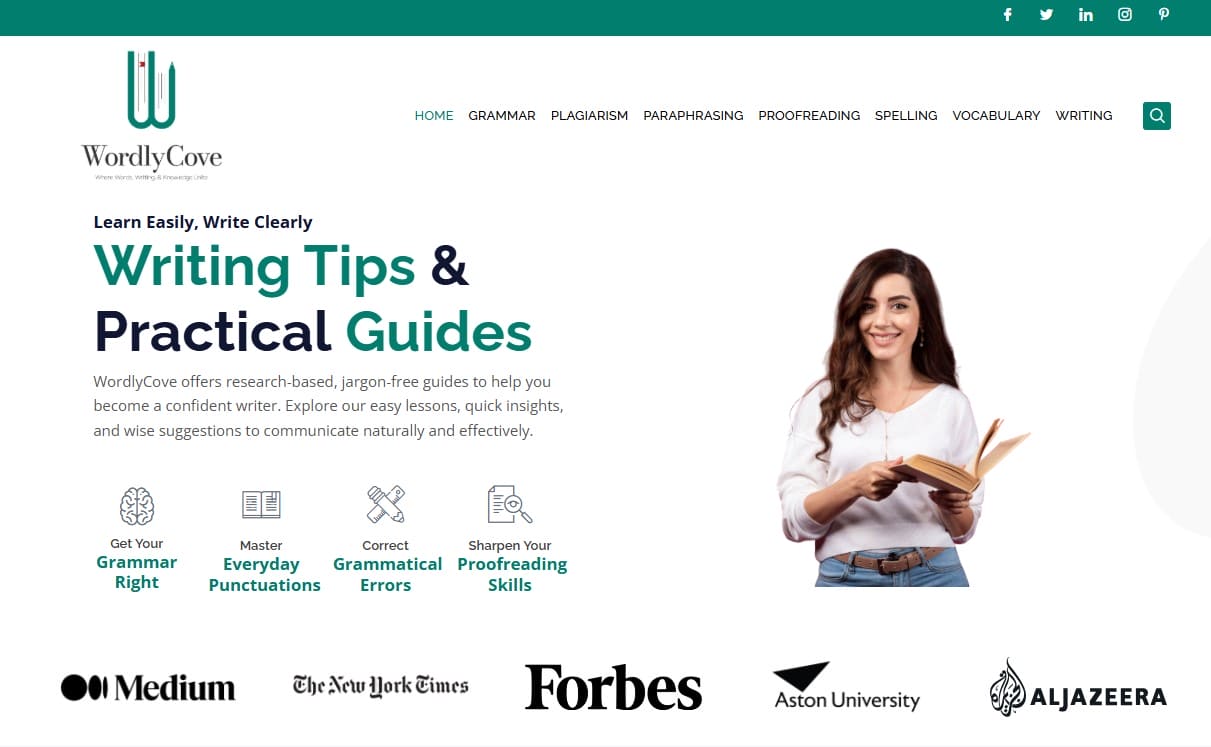
Image Source: WordlyCove
WordlyCove is a platform that aims to make grammar, plagiarism, and writing rules easier to learn without needing a background in linguistics. Its content covers grammar, plagiarism, and writing as core focus areas, alongside a few related language topics.
Many blog posts address specific questions readers commonly search for online. Instead of focusing solely on complex vocabulary or theoretical concepts, the content generally addresses practical writing and language-related problems. Bloggers, content marketers, students, and anyone looking to become more confident with written communication can find resources covering several useful areas. The following sections explore these resources in greater detail.
Grammar Resources That Focus on What People Get Wrong Most Often
The ‘Grammar’ section does not try to reteach English from scratch. It zeroes in on the specific word pairs and rules that confuse people the most because even experienced writers get them wrong under deadline pressure.
Here is an example of some topics that revolve around confusing pairs of words:
- Fewer vs. less
- Its vs. it’s
- Lay vs. lie
- Since vs. because
- Who vs. whom
Now, each guide follows a similar pattern.
For Instance,
- It opens with a plain-language explanation of the real difference.
- Then backs it up with examples that show the rule in use rather than just stating it on its own.
There is also a roundup post that covers the common grammatical errors. And to be honest, it works well as a quick reference if you would rather not read through individual comparison guides one at a time. Plus, WordlyCove has also reviewed and tested several grammar-checking tools.
These reviews compare accuracy, limitations, and pricing based on hands-on use, which is more useful than repeating marketing claims, especially when you are trying to decide which grammar checker is worth paying for.
Writing Guides Built Around Structure, Not Just Theory
The ‘Writing’ category gets the most attention, and it shows. For instance, the guides in this category skip vague advice like ‘know your audience’ or ‘write clearly’ and walk through the actual structure.
Therefore, you will find blog posts on:
- How to write an outline.
- How to build a strong conclusion.
- How to construct a PETAL paragraph for an English essay.
- How to write essays at specific word counts like 300, 400, 600, or 700 words.
The word count restriction guides are especially useful for students who are working under strict assignment limits. But besides these, a few lighter, everyday guides sit in this section too, like:
- How to introduce yourself in English without freezing up.
- How many words exist in the English language and why the number varies depending on how words are counted.
Most articles in this category provide a short answer near the beginning before moving into a more detailed explanation. This structure makes the writing resources useful for readers who either need a quick answer or want a complete walkthrough of the topic.
Plagiarism Resources for Students and Content Creators Alike
The ‘Plagiarism’ section is arguably where WordlyCove goes deepest. It moves past a basic ‘what is plagiarism’ definition and gets into nuances that cause real problems for writers like:
- The difference between paraphrasing and plagiarism.
- What counts as accidental plagiarism.
- What patchwork plagiarism means and how it differs from direct copying
A less commonly discussed issue called patchwork plagiarism, where someone blends and rewords multiple sources without copying any single one word-for-word. A separate piece on academic integrity ties plagiarism back to the bigger picture of honesty in schoolwork. So, it is a useful read for students who see the rule as arbitrary rather than something with a real purpose.
On the practical side, WordlyCove has also reviewed several plagiarism checkers, including DupliChecker, PapersOwl, PlagiarismChecker.ai, and Quetext. All these are based on hands-on testing rather than surface-level comparisons. Each review points out where a tool performs well and where it falls short. So, that tells you more than a star rating would when you are picking a checker for your own work.
Why This Combination Works?
Grammar, writing structure, and plagiarism may seem like separate skills at first. However, they all contribute to the quality, clarity, and originality of written content.
For Instance,
- A well-structured essay with a grammar mistake still looks careless.
- A grammatically clean paragraph that borrows too closely from another source still creates a plagiarism problem.
So, WordlyCove treats these as connected issues rather than isolated topics, and that connection is what makes moving between its categories feel consistent instead of scattered. After reading most of its blog posts, it feels that the content is written and reviewed by people with a background in language and editing. Each guide explains one concept well instead of padding it out, and that discipline is probably why bloggers, content professionals, and students keep coming back to it for reference.
Final Thoughts
For readers looking to improve article or essay structure, strengthen grammar, or better understand where paraphrasing ends and plagiarism begins, WordlyCove offers resources covering all three areas. The platform explains concepts in accessible language rather than overwhelming readers with technical terminology. Its combination of grammar guides, writing resources, and plagiarism-related content also allows readers to address several aspects of writing in one place. For students, bloggers, content professionals, and anyone who wants to write more clearly and originally, WordlyCove can serve as a practical resource to keep on hand.
Recommended Articles
This comprehensive guide to WordlyCove highlights its writing, grammar, and plagiarism resources. Check out these recommended articles for more insights to improve your writing skills.

