
What is Wireless Network?
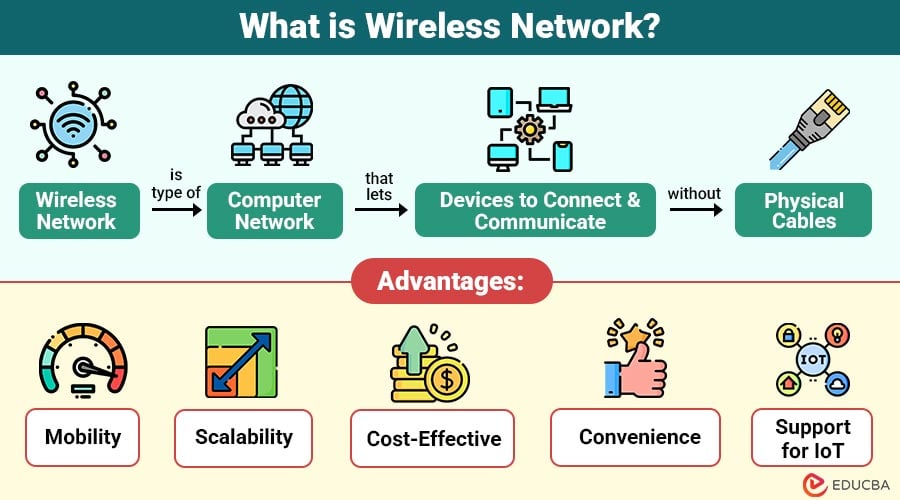
A wireless network is type of computer network that lets devices to connect and communicate without physical cables. Instead of using traditional wired connections like Ethernet, wireless networks use radio frequency (RF) signals, infrared, or satellite communication to transmit data between devices.
The most common example is Wi-Fi, which allows laptops, smartphones, and IoT devices to access the internet seamlessly. However, wireless networking also includes cellular networks (4G, 5G), Bluetooth, and satellite connections.
Table of Contents:
Key Takeaways:
- Wireless networks enable seamless mobility and flexible communication, eliminating the need for physical cabling infrastructure.
- Different types of wireless networks serve homes, enterprises, cities, and global communication, each with distinct coverage ranges.
- Security challenges like hacking and interference require robust encryption, authentication, and monitoring for safe wireless connectivity.
- Wireless networks will increasingly support smart cities, autonomous systems, and IoT-driven applications, enabling faster, more intelligent, and connected environments.
How does a Wireless Network Work?
Wireless networks function by transmitting data through radio frequency (RF) signals or other forms of electromagnetic waves. Here is a simplified breakdown:
1. Transmission Medium
Wireless networks transmit data through the air instead of cables like copper or fiber optics, using electromagnetic waves as the medium for communication between connected devices.
2. Access Points
Routers, hotspots, or cellular towers function as access points, serving as central hubs that send, receive, and manage wireless signals between devices within their coverage.
3. Frequencies
Wireless networks require specific frequency bands, such as 700 MHz to 2600 MHz for cellular communication, and 2.4 GHz and 5 GHz for Wi-Fi.
4. Protocols
Communication is standardized using protocols like IEEE 802.11 for Wi-Fi and LTE or 5G for mobile networks, ensuring compatibility, stability, and efficient wireless data transmission.
5. Authentication and Encryption
To prevent unwanted access and guarantee data security, privacy, and secure communication between devices and networks, wireless networks use robust encryption techniques like WPA3 and authentication procedures.
Types of Wireless Networks
Wireless networks come in several forms, depending on coverage area, purpose, and technology.
1. Wireless Local Area Network (WLAN)
A WLAN, commonly called Wi-Fi, connects devices within limited areas like homes, offices, or cafes using IEEE 802.11 standards for fast, convenient wireless communication.
2. Wireless Metropolitan Area Network (WMAN)
WMAN covers large metropolitan regions, offering broadband access over longer distances than WLAN. WiMAX is an example, supporting citywide internet connectivity and business-grade wireless communications.
3. Wireless Wide Area Network (WWAN)
WWAN spans vast geographic areas using cellular technologies, including 3G, 4G LTE, and 5G, enabling nationwide or global mobile connectivity, internet access, and communication.
4. Wireless Personal Area Network (WPAN)
WPAN allows devices that are close to each other to connect wirelessly. It uses technologies like Bluetooth, Zigbee, and NFC to connect things such as smartwatches, wireless earphones, smart home devices, and even for mobile payments.
5. Satellite Communication Networks
Satellite communication networks deliver global coverage via Earth-orbiting satellites, enabling connectivity in remote regions, maritime operations, aviation, and broadcasting services where terrestrial networks are unavailable.
6. Ad-Hoc Networks
Ad-hoc networks establish temporary, decentralized connections where devices communicate directly without infrastructure, making them essential for emergency communication, disaster recovery, and certain tactical military operations.
Advantages of Wireless Networks
Wireless technology offers several benefits compared to wired systems:
1. Mobility
Wireless networks provide mobility, allowing users to connect from anywhere within coverage areas, ensuring flexibility, productivity, and continuous access without physical cable limitations.
2. Scalability
Expanding a wireless network is simple, as adding new users or devices requires minimal configuration compared to extensive cabling and infrastructure in wired systems.
3. Cost-Effective
Wireless networks reduce expenses by eliminating costly cabling, physical installations, and maintenance, making them a budget-friendly solution for homes, businesses, and large organizations.
4. Convenience
Wireless connectivity offers convenience in homes, workplaces, airports, and public spaces, providing easy internet access without messy cables, fostering smooth, seamless communication everywhere.
5. Support for IoT
Wireless technology supports IoT ecosystems, seamlessly connecting smart devices, sensors, and wearables, enabling automation, real-time monitoring, and efficient data exchange across modern applications.
Disadvantages of Wireless Networks
Despite the advantages, wireless systems have limitations:
1. Security Risks
Wireless networks can be hacked or listened to, so strong encryption and authentication are needed for safe and reliable communication.
2. Signal Interference
Environmental obstacles like walls, microwaves, and competing devices interfere with wireless signals, causing degraded performance, unstable connectivity, and frequent communication disruptions.
3. Limited Bandwidth
Wireless bandwidth is shared among multiple devices, reducing overall speed and performance, especially when many users connect simultaneously within limited coverage areas.
4. Coverage Limitations
Dead zones and weak signal areas restrict wireless connectivity, negatively impacting user experience, productivity, and consistent access in homes, offices, or cities.
5. Power Consumption
Portable wireless devices require consistent battery power for stable connectivity, often leading to frequent charging needs and reduced device efficiency during mobility.
Applications of Wireless Networks
Wireless networks play a vital role in multiple industries and everyday life:
1. Home and Office Connectivity
Wireless networks connect laptops, smartphones, smart TVs, and printers, while enabling video conferencing, cloud-based collaboration, and seamless communication across homes and modern workplaces.
2. Telecommunications
Cellular networks power voice calls, SMS, and mobile internet. Advancements like 5G deliver ultra-low latency, faster speeds, and support for advanced applications, including autonomous vehicles and IoT.
3. Healthcare
Wireless medical devices transmit real-time patient data, while telemedicine and remote monitoring improve healthcare accessibility, enabling timely diagnosis, continuous care, and advanced hospital connectivity solutions.
4. Transportation
Wireless communication supports smart traffic management and connected vehicles. Aviation also leverages networks for in-flight internet access, pilot communications, and enhanced passenger experiences during global travel.
5. Retail
Retailers utilize wireless technology for contactless payments via NFC, mobile apps, and efficient inventory management, enhancing customer experiences and streamlining operations in modern shopping environments.
6. Education
Wireless networks support online learning platforms, virtual classrooms, and smart teaching tools like tablets and projectors, ensuring accessible, interactive, and efficient education delivery worldwide.
7. Military and Defense
The military uses wireless networks for communication, drones, surveillance, and radar, helping them stay aware, make quick decisions, and operate effectively.
Key Differences Between Wired vs Wireless Networks
Here are the main differences between wired and wireless networks explained in a comparative format:
| Aspect | Wired Networks | Wireless Networks |
| Mobility | Limited, fixed location | High, portable, and flexible |
| Installation | Requires cables and infrastructure | Easy, fewer physical requirements |
| Speed & Stability | Generally faster and more stable | May fluctuate due to interference |
| Security | More secure | Higher risk, requires encryption |
| Cost | Higher initial cabling costs | Lower installation costs |
Future of Wireless Networks
Wireless technology is evolving rapidly to meet growing demands. Future trends include:
1. 5G Networks
5G provides super-fast internet with very low delay, making it possible to connect IoT devices, self-driving cars, and smart cities with smooth, real-time communication across the world.
2. Wi-Fi 7 (802.11be)
Wi-Fi 7, the next version after Wi-Fi 6, promises faster speeds, less delay, more reliable connections, and support for heavy activities like gaming, streaming, and virtual reality.
3. IoT Expansion
Future networks will enable billions of IoT devices to connect and communicate wirelessly, supporting automation, real-time data exchange, and smart systems in multiple industries globally.
4. Edge Computing
Edge computing handles data near devices, making it faster and more efficient, and supports smart applications like AI IoT, self-driving cars, and responsive industrial systems.
5. Li-Fi (Light Fidelity)
Li-Fi uses visible light waves instead of radio frequencies for wireless communication, offering ultra-high-speed data transfer and improved security in specific indoor environments and industries.
6. Satellite Internet Expansion
Satellite internet projects like Starlink offer internet access worldwide, helping people in rural, remote, and ocean areas stay connected and improving global communication.
Final Thoughts
Wireless networks are central to digital connectivity, enabling everything from daily internet use to smart cities, autonomous vehicles, and telemedicine. Despite challenges like security and interference, innovations such as 5G, Wi-Fi 7, and Li-Fi are improving performance. As demand for mobility and instant access rises, wireless technology will continue transforming industries, lifestyles, and global communication.
Frequently Asked Questions (FAQs)
Q1. What is the main purpose of a wireless network?
Answer: The main goal is to provide mobility and ease by enabling data sharing and communication between devices without the need for physical cords.
Q2. How secure are wireless networks?
Answer: They can be secure if encrypted (WPA3) and protected with strong authentication methods, but they are more vulnerable than wired networks.
Q3. Will wireless completely replace wired networks?
Answer: Not entirely. While wireless dominates mobility and convenience, wired networks will remain important for ultra-high-speed and stable connections, such as in data centers.
Recommended Articles
We hope that this EDUCBA information on “Wireless Network” was beneficial to you. You can view EDUCBA’s recommended articles for more information.


