


VARC Section: Where Beginners Lose Percentile and How to Fix It?
Does this happen to you? You take a CAT or IPMAT mock test and finish it confidently. The Quant section was manageable; DILR (Data Interpretation and Logical Reasoning) was a success. But what pulls down your overall percentile is the VARC (Verbal Ability and Reading Comprehension) section. This is a common pattern faced by many beginners. The usual assumption behind this problem is either weak English or slow reading ability. However, this is not the case. For beginners, the VARC section is not a language test; it is a decision-making and process test.
You might not perform well in this section if you select the wrong passage, make rushed attempts, and are absent from a clear post-mock correction. You have to strategise the test. In this blog, we will discuss why the VARC section is frustrating for beginners and offer practical fixes to improve your score. We will also share a 7-day VARC reset plan.
Why the VARC Section is More Painful Than the Other Sections?
At first, the VARC section seems the easiest section for the CAT or IPMAT exam. You do not need to memorize formulas, perform calculations, and you have enough time to read through the passages. This thinking makes this section risky for exam givers. VARC scoring is much more unpredictable than the Quant and DILR sections.
One reason for low scores in this section is over-attempting. Many aspirants attempt more questions than required. If the passages are interesting or familiar to read, it leads to over attempts. This is more of educated guessing, which penalizes the section. Another reason is negative marking. If you choose the wrong RC with many wrong answers, it eventually cancels out the marks you gained from other right answers. As a result, the score fluctuates a lot. In short, you lose marks in the VARC section because you attempt wrong questions in the wrong order.
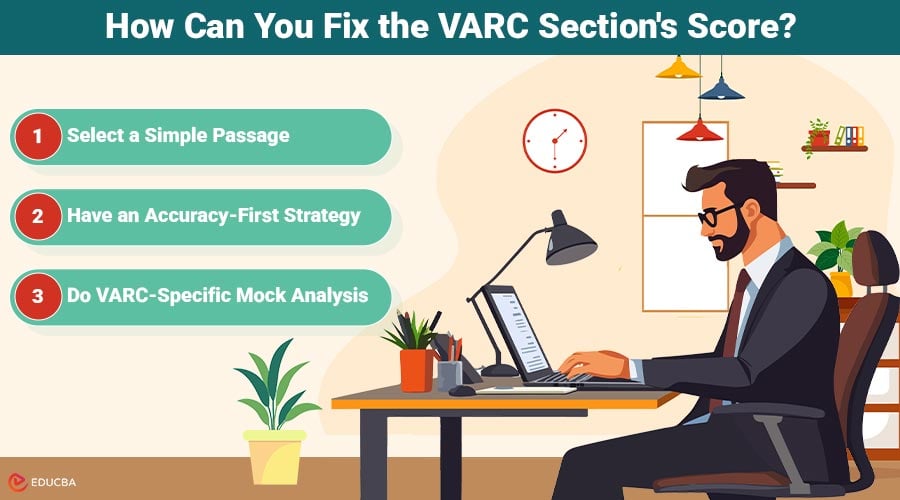
How Can You Fix the VARC Section’s Score?
VARC scores do not improve by reading faster or attempting more questions. Your scores improve when you select passages and attempt questions strategically. Below are three practical fixes to help you make better decisions during the section.
Fix 1: Select a Simple Passage
Attempting the RC passages in the order they appear is the biggest mistake. This removes the choice of selection and forces the aspirants to invest their time in passages they are not suited to attempt. Another mistake is thinking that a particular passage is familiar and hence easy to attempt. Any known topic feels much more approachable, but might have tricky questions.
The next case is if the passage is difficult to understand, you jump into the questions directly, and think you will figure it out along the way. To avoid this type of decision-making error, follow the simple passage selection rule. Spend 2-3 minutes scanning all the RCs. This will help you to select which passage is easy for you to attempt. You can prioritise passages that have simple language and direct questions. Also, you can skip the passages you think are philosophical or have many heavy questions. The outcome of this approach is powerful. You attempt only the right RCs, save your time, and get more accurate marks.
Fix 2: Have an Accuracy-First Strategy
A common mistake that aspirants make is attempting more questions than required. This approach works for the Quant and LRDI sections, but not for the VARC section. Here, attempting one to two incorrect answers can pull the percentile down even if the number of correct answers is good. Many aspirants think that skipping questions means missing out on important marks. This leads to attempts where options feel almost correct.
Incorrect answers result in negative marking and a decline in overall VARC scores. To escape this trap, you can try an accuracy-first strategy. Do not attempt a larger number of questions; focus on fewer questions that you can attempt confidently. Attempt the question in which you can easily eliminate at least two options. If you have a choice among similar options, it is wise to skip the question. With the help of this strategy, you will have fewer negative marks in the VARC section. As accuracy improves, percentiles become more consistent.
Fix 3: Do VARC-Specific Mock Analysis
Many aspirants conduct VARC mock analysis in a general way, resulting in less improvement. The usual pattern includes re-reading the entire passages or wasting time on new words. This type of analysis seems productive, but it is not. There is a correct way to do VARC analysis. Every mistake should be classified clearly as either a wrong answer or a wrong guess. Ask yourself whether you selected the wrong passage in the first place or fell for a similar-looking options trap.
Once you have classified your mistake, think about why the correct option is correct, and why your selected option feels right. Structured correction frameworks that treat the VARC section as repeatable, such as those emphasized by platforms like ExamNest, an online coaching for CAT and IPMAT, highlight this shift away from language-focused review. You can ignore abstract questions or those questions that you skipped because of a lack of clarity. Understand that real VARC improvement happens after taking the mock and not during it.
A 7-Day VARC Reset Plan (30-40 Minutes Daily)
The reset plan aims to simplify VARC preparation and boost consistency. This plan does not increase study hours.
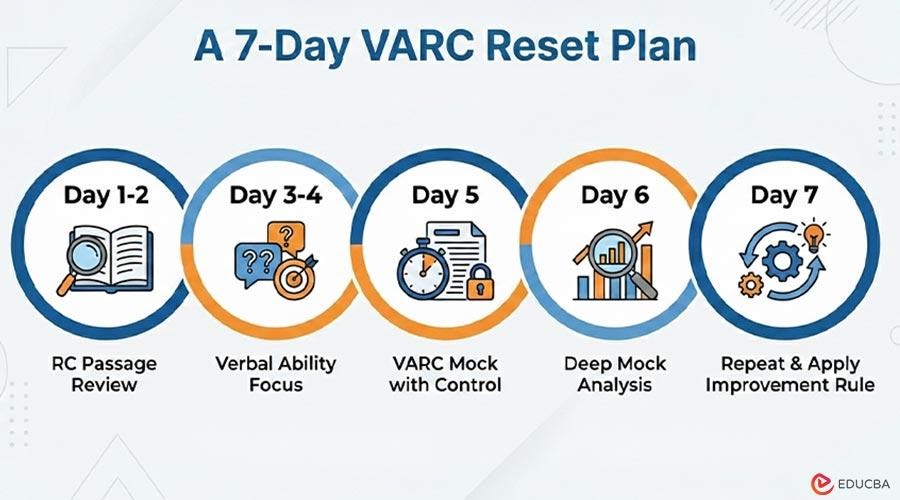
- Days 1–2: Take one RC passage each day and review in detail.
- Days 3–4: Focus on verbal ability questions for accuracy.
- Day 5: Take a VARC mock with strict attempt control.
- Day 6: Conduct a deep mock analysis.
- Day 7: Repeat the process and apply one improvement rule.
Try this approach in your next mock test and see how stable your VARC scores are.
Final Thoughts
Success in the VARC Section does not require exceptional English skills. The key is making better decisions under pressure. Common pitfalls include selecting the wrong passage, making excessive attempts, and ineffective review practices. By implementing the three strategies outlined selecting simple passages, prioritizing accuracy, and conducting structured mock analysis you can gain control over the section and achieve consistent percentile improvement. Even applying a single strategy in your next mock test can result in noticeable gains.
Recommended Articles
We hope this guide helps you improve your VARC section performance. Check out these recommended articles for more tips and strategies to boost your scores.


