
Introduction
In today’s competitive sales landscape, businesses continually seek ways to increase revenue without obtaining new customers. Two proven techniques that help achieve this are upselling and Cross-Selling. Although they are often used interchangeably, these strategies are distinct in purpose and execution. Understanding the difference between upselling vs. cross-selling helps companies design smarter sales tactics and improve customer satisfaction.
This article compares both methods in depth—exploring their meanings, core differences, benefits, and use cases—to help you determine which approach best suits your business goals.
Table of Contents:
- Introduction
- What is Upselling?
- What is Cross-Selling?
- Differences
- Benefits
- Use Cases
- Which Strategy Should You Choose?
- Limitations
What is Upselling?
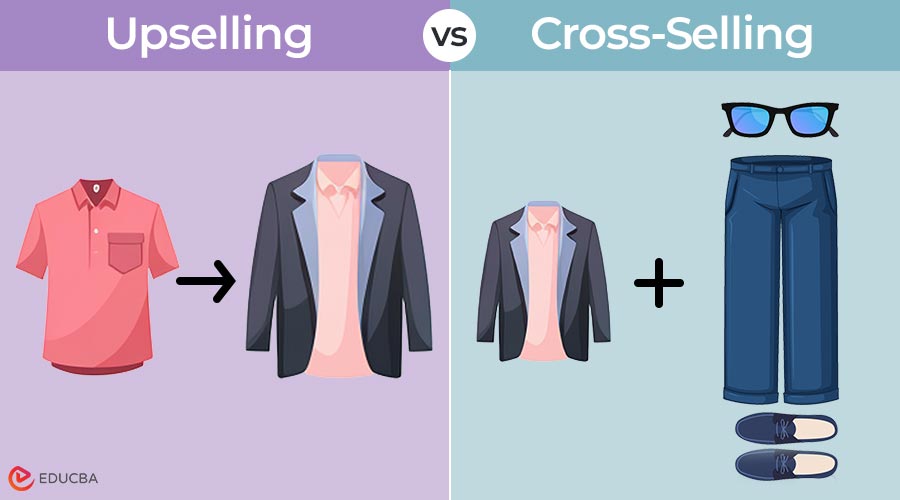
Upselling is sales technique that encourages a customer to purchase a higher-end, upgraded, or premium version of product or service they are already considering. It focuses on increasing the value of the original purchase by demonstrating additional features, performance improvements, or long-term benefits.
- Purpose: The main goal of upselling is to maximize the order value by helping customers see the added benefits of a higher-priced option.
- Example: A cafe offers a large-sized coffee instead of a medium one for a small price difference.
What is Cross-Selling?
Cross-Selling is a sales method that encourages customers to buy complementary or related products in addition to their original purchase. Instead of offering a higher version, cross-selling focuses on bundling or adding associated items to improve the overall experience.
- Purpose: The primary goal is to increase total sales volume by providing products that enhance the usability or enjoyment of the main item.
- Example: A customer booking a flight is offered travel insurance, airport lounge access, or hotel accommodations as part of the booking process.
Differences Between Upselling vs Cross-Selling
Here is a detailed comparison of both strategies based on their characteristics, objectives, and execution:
| Basis of Comparison | Upselling | Cross-Selling |
| Meaning | Persuading the customer to buy a higher-end or upgraded version of the same product. | Encouraging customers to purchase complementary or related products. |
| Objective | To increase the value of a single purchase. | To increase the total number of items purchased. |
| Sales Focus | Quality improvement (premium version). | Product expansion (related add-ons). |
| Example | Recommending a 256GB iPhone instead of a 128GB iPhone | Suggesting an iPhone case or wireless charger. |
| Timing | Usually, during the purchase process. | During or after the purchase process. |
| Customer Impact | Enhances satisfaction by providing better quality. | Adds convenience by completing the experience. |
| Approach Type | Vertical – within the same product category. | Horizontal—across related product categories. |
| Goal | Maximize profit per product. | Maximize total order value |
| Use Case | Works best for tier-based products or services. | Works best for bundled or complementary items. |
Benefits of Upselling and Cross-Selling
Both strategies deliver significant benefits when used correctly.
Upselling:
- Higher Revenue per Customer: Encourages customers to spend more on each transaction, thereby increasing overall revenue per customer.
- Improved Customer Experience: Customers receive enhanced versions of products that better meet their needs.
- Enhanced Brand Perception: Offering premium solutions positions your brand as high-quality and customer-focused.
- Increased Customer Lifetime Value: Customers who upgrade once are likely to stay loyal and repeat purchases.
Cross-Selling:
- Increased Average Order Value: Suggesting related products increases total purchase value.
- Stronger Customer Relationships: Providing complementary solutions builds trust and convenience.
- Inventory Optimization: Helps move related or slower-selling products.
- Encourages Repeat Purchases: Customers often return for additional complementary products.
Use Cases of Upselling vs Cross-Selling
Here are some real-world use cases that demonstrate how businesses across different industries effectively apply both strategies:
Upselling:
- E-Commerce: Suggesting a more advanced model of a smartphone or laptop before checkout.
- Software & SaaS: Offering premium or enterprise subscription plans with advanced features.
- Hospitality Industry: Encouraging guests to book a suite instead of a standard room.
- Automotive Industry: Persuading buyers to choose higher-end trims with additional safety or comfort features.
Cross-Selling:
- Retail Stores: Offering accessories, such as belts or handbags, when purchasing clothes.
- Online Marketplaces: Displaying “Frequently Bought Together” and “Customers Also Bought” recommendations.
- Financial Services: Suggesting insurance add-ons when purchasing a vehicle loan.
- Restaurants: Recommending side dishes, beverages, or desserts with the main meal.
Which Strategy Should You Choose?
Choosing between Upselling and Cross-Selling depends on your product type, customer journey, and sales objectives. Consider the following scenarios:
Use Upselling When:
- You sell multi-tier products or services, e.g., SaaS plans, smartphones, or software licenses.
- You want to boost revenue per customer by promoting advanced or upgraded versions of your products.
- You focus on quality-conscious or loyal customers who are open to paying more for added value.
- Your business objective is to enhance customer satisfaction by providing improved product experiences.
Use Cross-Selling When:
- You offer accessories or complementary products, e.g., phone cases, extended warranties, or matching apparel.
- You aim to increase overall cart or order value by bundling related items.
- Your customers value convenience and are open to complete solutions or add-ons that enhance their experience.
- Your business goal includes improving brand trust and engagement by offering helpful suggestions.
Limitations of Upselling and Cross-Selling
While both Upselling and Cross-Selling can significantly boost sales and enhance customer relationships, each approach has its own limitations that businesses must consider before implementation.
Upselling:
- Risk of Customer Annoyance: Overly aggressive upselling can frustrate or alienate customers, leading them to abandon the purchase altogether.
- Perception of Pressure: Customers may feel they are being forced into spending more than necessary, which can harm brand trust.
- Higher Product Knowledge Requirement: Sales representatives or online platforms must have detailed knowledge of product tiers and benefits to recommend upgrades effectively.
- Limited Applicability: Upselling is most effective for products with clear “better” versions or premium tiers; it is less effective for one-time or standardized purchases.
Cross-Selling:
- Irrelevant Recommendations: Suggesting unrelated or unnecessary add-ons can appear intrusive and reduce customer trust.
- Decision Fatigue: Too many product suggestions during checkout can overwhelm customers and lead to cart abandonment.
- Inventory Challenges: Managing stock for cross-sold products can be difficult, especially if demand spikes unpredictably.
- Increased Marketing Complexity: Effective cross-selling requires personalized recommendation engines or trained sales staff to understand customer behavior and preferences.
Final Thoughts
In the comparison of upselling vs. cross-selling, neither is inherently better; both serve distinct yet complementary purposes. Upselling helps customers choose better, premium products, while Cross-Selling ensures they get the complete set of items to use them effectively. Together, they form a powerful duo that drives profitability, boosts customer loyalty, and enhances brand value. When executed ethically, with personalization and timing, these strategies transform one-time buyers into long-term, satisfied customers—creating a win-win for both the business and the customer.
Frequently Asked Questions (FAQs)
Q1. Which strategy is more profitable?
Answer: Upselling increases per-customer revenue, whereas cross-selling increases total order value. Profitability depends on your business model.
Q2. Can both strategies be used together?
Answer: Yes. Many businesses use both—upsell first, then cross-sell complementary items post-purchase.
Q3. Is cross-selling more suitable for e-commerce?
Answer: Yes. Online stores often use cross-selling through product recommendations, “frequently bought together,” and bundled offers.
Q4. Why are these strategies important?
Answer: They boost sales, improve customer experience, and enhance long-term customer relationships without increasing acquisition costs.
Recommended Articles
We hope that this EDUCBA information on “Upselling vs Cross-Selling” was beneficial to you. You can view EDUCBA’s recommended articles for more information.


