


Trade School Management Made Simple with Technology
Trade schools have always focused on hands-on learning, fast skill development, and preparing students for real jobs. Behind the scenes, administrators juggle many tasks scheduling labs, tracking attendance, managing certifications, communicating with industry partners, and keeping programs up to date. These tasks can quickly become overwhelming. The good news is that modern digital tools are reshaping trade school management.
What used to be stacks of paperwork and scattered systems is rapidly turning into connected, automated workflows that make life easier for staff, instructors, and students. Let us explore how technology is transforming the day-to-day operations of vocational education.
The Push Toward Smarter, Connected Campuses
Tech adoption in vocational training is accelerating because schools need ways to work more efficiently while staying competitive. A lot of this centers on moving daily campus operations into integrated digital systems. In a recent study by arxiv.org, researchers described a smart education framework that uses AI, automation, and IoT tools to manage everything from attendance verification to learning analytics.
This system demonstrates how schools can streamline everyday administrative tasks by eliminating manual processes. School management tools in 2025 are trending toward cloud-based systems, facial recognition attendance, and automated communication dashboards. For trade schools, this means instructors can spend more time teaching and less time updating spreadsheets.
Why Trade Schools Benefit From Automation?
Trade schools have unique needs. Program cycles move quickly, students often juggle work and study, and instructors oversee equipment-intensive training. Modern tools support these demands by reducing repetitive admin work. Some of the biggest wins include:
- Faster attendance tracking
- Automatic student progress updates
- Better coordination between instructors and labs
These small improvements add up to major time savings across a full term.
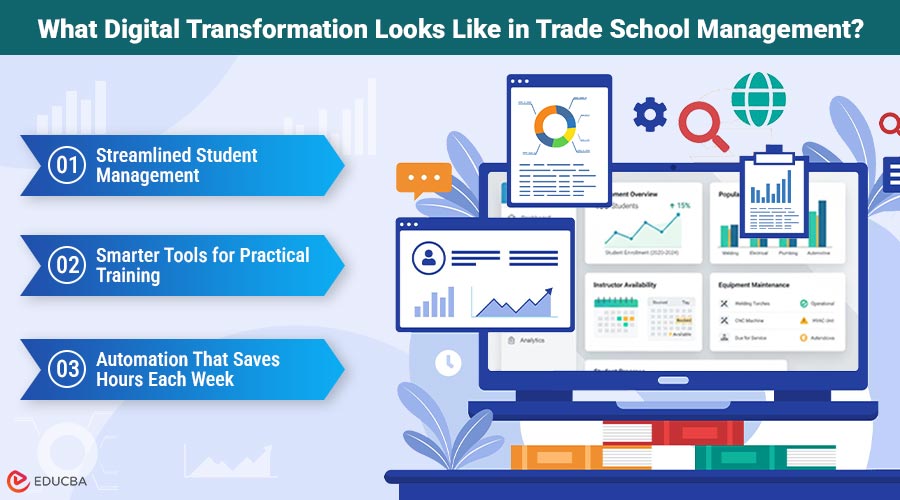
What Digital Transformation Looks Like in Trade School Management?
Digital transformation is not one big switch. It usually starts with solving small but frustrating problems. Then those solutions expand into a connected ecosystem that saves everyone on campus time.
1. Streamlined Student Management
Platforms designed for trade and vocational programs now replace administrative hubs that once relied on multiple disconnected tools. This is where modern solutions come in. When schools use dedicated platforms, tasks such as enrollment, grading, compliance documentation, and lab scheduling flow through a single unified system rather than being scattered across emails and paper files.
This creates a smoother experience for staff and students without putting pressure on instructors to learn complicated workflows. For example, using trade school automation software allows admin teams to keep program operations organized with far fewer manual steps.
2. Smarter Tools for Practical Training
Hands-on programs require more than just scheduling. They need tools that support real-world learning. That includes digital gradebooks for skill assessments, lab check-in systems, and instant access to course materials.
Virtual labs, 3D printing, and simulated environments help modernize skilled trades training. While these tools focus mainly on instruction, they also help administrators track equipment usage, student hours, and certification progress more easily.
3. Automation That Saves Hours Each Week
This is where modern tools shine. When repetitive tasks are automated, staff can shift their focus to bigger priorities, such as improving programs and supporting students. A few common examples include:
- Auto-generated attendance and participation logs
- Automatic reminders for certification deadlines
- Smart scheduling that accounts for instructor availability and lab capacity
By removing the need for manual follow-up, these tools help programs run smoothly even during the busiest seasons.
How AI Enhances Trade School Management Decision Making?
AI is becoming a behind-the-scenes partner in business, and it is also having a major impact on vocational administrators. Instead of replacing people, it helps them make better, faster decisions. AI-powered data systems can analyze student behavior, predict performance challenges, and provide early alerts. For trade schools, this can be especially helpful, since students often juggle complex schedules and real-world responsibilities.
1. Predictive Tools for Student Success
When AI can identify a student who is falling behind before the issue grows, instructors can step in sooner. This leads to better retention and stronger outcomes. It also gives staff real insights instead of just raw data.
2. Better Resource Planning
Trade schools rely heavily on equipment, tools, and lab spaces. AI-supported systems help predict when resources will be in high demand. This allows managers to optimize scheduling without constant manual adjustments.
Building Stronger Connections Between Students, Staff, and Industry
Modern tools are opening new opportunities for collaboration. Trade schools often work closely with local employers, apprenticeship programs, and industry partners. Digital platforms make it easier to share updates, track internship hours, and maintain clean, compliant documentation.
1. Communication That Fits Real Life
Students today expect communication to be fast, clear, and accessible from their phones. Modern school platforms support messaging, notifications, and alerts in one place. This helps prevent missed deadlines and last-minute confusion.
2. Industry Integrated Learning
As schools adopt virtual simulations and online learning tools, industry partners can also participate more directly in training. They can share feedback, offer digital resources, or monitor progress on collaborative projects without being physically on campus.
Final Thoughts
The shift toward digital trade school management solutions is only getting stronger. With more automated workflows, connected platforms, and AI-supported insights, the day-to-day experience at trade schools will continue improving. The biggest takeaway is that these tools do not replace the hands-on spirit of trades education. Instead, they remove the administrative clutter that gets in the way.
If you want to keep improving your program operations, stay curious, explore new tools, and always look for ways to simplify the work behind the scenes. Digital transformation is not a one-time project. It is an ongoing process that helps trade schools stay agile and effective in a changing world.
Recommended Articles
We hope this guide to trade school management helps streamline your school operations. Check out these recommended articles for more tips and strategies to enhance efficiency and student success.

