


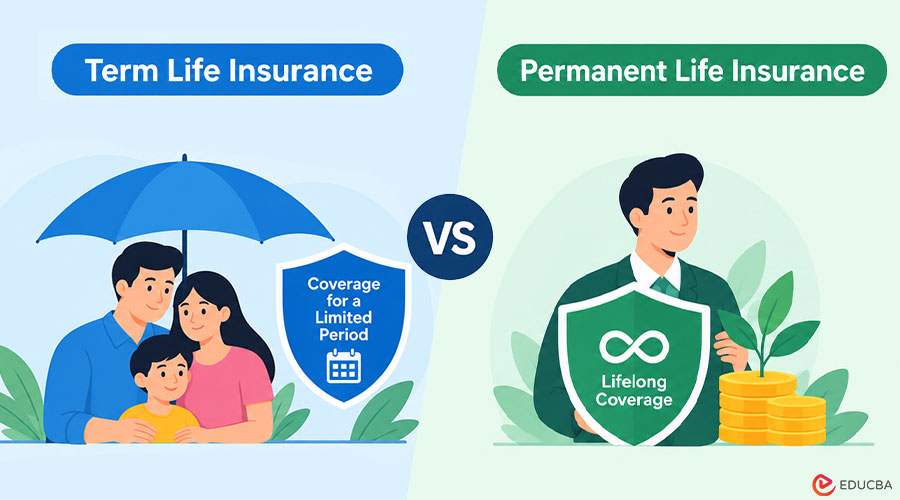
Life insurance policies offer dependent beneficiaries income support after the death of the insured person. However, life insurance policies differ significantly in how they are financed and implemented. Understanding term vs permanent life insurance clarifies these differences. Term life insurance covers a person’s dependents for a limited period, while permanent life insurance provides long-term coverage and builds cash value. Understanding the financial differences between the two policies helps you estimate costs and choose the more cost-effective option.
Term vs Permanent Life Insurance: Coverage Duration and Policy Costs
As mentioned earlier, term life insurance covers dependents for a certain, or “limited,” period. The main difference between term and permanent policies is that a person insured under a term policy receives proceeds only if death occurs within the coverage period. Another feature of term insurance is that it is usually cheaper. A person buys a policy for several years, often with a predetermined death benefit, for example, 30 years.
Permanent insurance is intended to protect the insured for life, unlike term life insurance. Another feature of permanent life insurance is that the insurance company must pay the beneficiary upon the insured’s death, regardless of when it occurs. In other words, a person buying such a policy always receives the benefit, no matter the age at death. Permanent policies with higher initial death benefits usually cost more than term policies. However, remember that while people usually buy term policies to cover funeral and medical expenses at the beginning of retirement, permanent insurance is necessary for expenses that will arise long after retirement.
Premium Calculations and Payment Patterns
People taking out term insurance should know that several factors determine the cost of their obligations under the contract. Most often, this type of coverage offers level-premium policies, where the premium stays the same throughout the contract term. Premiums are also individualized and depend on the insured amount and the policyholder’s age group.
The calculation also depends on whether the person bought the «lifetime» or «term» insurance. People choosing permanent life insurance should know that, when taking out a policy, they need to pay attention to the specified price for life coverage. Usually, whole life policies offer guaranteed costs and benefits for the entire coverage period, while universal life costs may fluctuate. Additionally, for permanent policies, insufficient premium funding or unfavorable cash value performance could jeopardize coverage.
Cash Value and Financial Accumulation
Ordinary term life policies do not have a cash value, while permanent policies do. This means that when a person buys a term policy, they are purchasing only the insurance and its associated costs. In contrast, a permanent policy’s cash value accumulates over its term. Young people often choose term insurance because they cannot afford the high annual or monthly premiums required to cover a large family.
Nevertheless, in many cases, ordinary term insurance seems a viable solution for both budget and other benefits. If someone buys an ultra-low-cost lifetime policy and survives to the end of its term, they will still receive some financial security. For those who have already considered cash value, whole life insurance is ideal because it offers guaranteed benefits and dividends. People buying this type of contract should carefully review each contract’s cash-value withdrawal features.
Financial Planning and Policy Selection for Term vs Permanent Life Insurance
Those who choose universal life insurance need to understand how their policy’s cash value accumulates, since it varies by company. If a policy’s cash value falls for certain reasons, the contract is at risk of cancellation unless new premiums cover the shortfall. People should also recognize that several tax-efficient ways exist to withdraw cash value, but surrender charges may complicate withdrawals of large sums.
Final Thoughts
When comparing term vs permanent life insurance, choose the policy that best fits your financial goals and personal circumstances. Term life insurance covers a person for a limited period and does not build cash value, while permanent policies protect you for life and build cash value. Term life insurance costs less because it lacks the cash-value feature of permanent life insurance. Carefully compare the costs and benefits of both policies and review their long-term terms.
Recommended Articles
We hope this comprehensive guide to term vs permanent life insurance helps you understand the key differences in coverage, costs, and cash value. Check out these recommended articles for more insights into life insurance and financial planning.

