


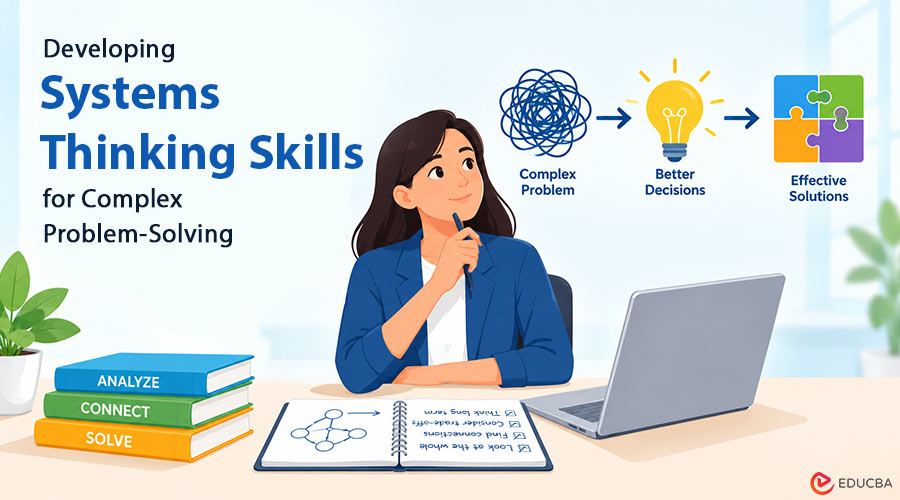
Most leaders are trained to break big problems into small ones. This method worked well when problems stayed small. It fails when problems do not.
Modern organizations face volatility, uncertainty, complexity, and ambiguity at the same time. Researchers call this a VUCA environment. In plain terms, it means the ground keeps shifting, the full picture is never visible, too many parts interact at once, and the right answer is rarely clear. These are not isolated problems. They are messes: tangled situations with no single fix and no clean edge.
Traditional management was not built for messes. It was built for machines. Break the organization into departments. Break the department into tasks. Assign each task to a specialist. Solve each piece on its own. This command-and-control model worked in stable, predictable settings. It breaks down in dynamic social and organizational settings because people, teams, and markets do not behave like machine parts. They adapt, resist, and react in ways that ripple far beyond the original problem.
This is why top employers have changed what they look for. Domain expertise is no longer enough on its own. Organizations now need people who can see how the parts connect, trace cause and effect across the whole system, and design solutions that hold up over time. They need systems thinkers with strong Systems Thinking Skills.
Why Employers Need Systems Thinkers
Systems thinking is not a buzzword. It is a practical response to a measurable problem: organizations built for simple tasks are now facing complex ones. Three forces explain why systems thinkers have become a strategic priority.
Absorbing Environmental Complexity
Ashby’s Law of Requisite Variety offers a simple but powerful rule: only variety can absorb variety. An organization’s internal flexibility must match its environment’s complexity. If the outside world changes faster and in more ways than the organization can respond to, the organization falls behind. It becomes rigid in a world that will not hold still.
Systems thinkers provide what is sometimes called variety engineering. They build the internal capacity, structures, and decision processes needed to absorb external shocks instead of being overwhelmed by them. This keeps the organization viable, not just reactive. Developing Systems Thinking Skills helps professionals understand interconnected challenges and respond more effectively to changing conditions.
Breaking Down Silos and Preventing Suboptimization
Siloed thinking solves local problems. It often creates new ones somewhere else. A department cuts costs and hits its target, but the cut slows down another team’s output. A process gets faster in one area and creates a bottleneck downstream. This is suboptimization: improving one part of the system at the expense of the whole.
Systems thinkers look for circular loops of reciprocal causality. In simple terms, they examine how a change ripples outward and loops back. They evaluate decisions against the whole enterprise, not just the department making the decision. Strong Systems Thinking Skills allow professionals to recognize these connections and assess how individual decisions affect overall organizational performance.
Identifying High-Leverage Interventions
Most organizations default to short-term fixes. These fixes often shift the burden rather than solve the problem. A team facing a heavy workload hires more contractors instead of fixing the process that generates the overload. The symptom eases, but the underlying condition remains and resurfaces later, usually worse.
Systems thinkers look for leverage points: specific places in a system’s structure where a small, well-placed change produces a large, lasting improvement. Finding these points requires understanding the structure driving the problem, not just the event where the problem shows up. This core discipline separates systems thinkers from reactive problem-solvers.
Systems Thinking Goes Mainstream
This is not a niche idea confined to academic circles. Major global institutions, including the OECD, UNDP, and WHO, have identified systems leadership as essential for addressing challenges that involve multiple stakeholders, such as public health, sustainability, and economic development. No single department or organization can solve these problems alone. They require people who can coordinate across boundaries and manage interdependent goals.
Leading global enterprises have reached the same conclusion. As operational environments grow more interconnected, navigating complexity has moved from a specialized skill to a baseline expectation for senior roles. As a result, Systems Thinking Skills are increasingly relevant for professionals who need to make informed decisions across teams, functions, and organizational boundaries.
This shift has produced formal career pathways. The Systems Thinking Alliance offers a structured certification path built around four progressive levels: Certified Systems Thinking Associate, Certified Systems Thinking Practitioner, Certified Systems Thinking Trainer, and Certified Systems Thinking Consultant. Each level builds on the last, moving from foundational concepts to practical application and, eventually, to advanced training and consulting. This structured pathway signals that systems thinking is a recognized professional discipline valued across corporate, civic, and government sectors, not an informal skill picked up on the job.
How to Develop Systems Thinking Skills?
Building this capability starts with a shift in how we frame problems. Most professional training focuses on events: what happened and how to respond. Systems thinking asks a different question: what structure produced this event, and what other events is that same structure likely to produce?
A practical starting point involves mastering four core principles.
- Interrelationships: Understanding how parts of a system affect each other, rather than evaluating how each part performs independently.
- Boundaries: Defining what falls within a problem’s scope and what remains outside it. Unclear boundaries can lead to solutions that overlook the real cause.
- Dynamics: Studying how a system behaves over time, including delays, feedback loops, and unintended consequences that emerge after an initial decision.
- Emergence: Recognizing that systems produce outcomes that cannot be predicted by examining any single part in isolation.
These principles are easier to understand than to apply. Building real skill requires repeated practice on actual workplace problems rather than relying solely on textbook case studies. One practical approach is to select a recurring organizational challenge that keeps resurfacing despite repeated attempts to resolve it.
A structured review can then examine several questions: What boundaries define the problem? Which interrelationships drive the pattern? What dynamics explain why previous solutions failed to produce lasting results? Repeating this kind of reflective problem-structuring over time helps professionals develop practical Systems Thinking Skills and build the judgment that distinguishes an experienced systems thinker from someone who has read about the concept.
Final Thoughts
Reductionist thinking is not wrong. It is incomplete. It works well for simple, stable problems with clear boundaries but often falls short when addressing the interconnected, dynamic challenges that define modern organizational life.
Employers increasingly value professionals who can move beyond event-oriented thinking and understand underlying structures rather than just symptoms. Developing Systems Thinking Skills helps professionals approach complex challenges more effectively, identify lasting solutions, and contribute to better long-term organizational decisions. Building a strong understanding of systems thinking and using its principles to solve practical workplace challenges can strengthen this skill over time.
Recommended Articles
We hope this guide helps professionals understand Systems Thinking Skills and develop the ability to navigate complex organizational challenges. Explore our recommended articles on systems thinking, critical thinking, leadership development, problem-solving strategies, and professional upskilling.

