


Supplemental Essay Meaning
The college application process is a multi-step journey, each step demanding its own level of focus and dedication. Among these steps, writing supplemental essays can often be one of the most challenging yet rewarding parts. Unlike the personal statement, which provides a broader view of who you are, supplemental essays offer a chance to dive into specific aspects of your personality, interests, and aspirations about the particular college or university. Crafting a good supplemental essay requires more than just good writing skills; it demands careful research, thoughtful reflection, and a clear understanding of what each institution seeks in its applicants. In this blog, we will explore how to write a supplemental essay that enhances your college application and leaves an impression on admissions committees.
Why Colleges Require Supplemental Essays?
Supplemental essays allow applicants to showcase their qualities that go beyond the main application. Colleges use supplemental essays to gain insight into who you are as a person. These essays allow you to highlight your passions, hobbies, and experiences that may not be evident in other parts of your application. By reading about what excites you and what you value, admissions committees can get a better sense of your character and how you might fit into the school’s community.
Let’s understand the purpose of Supplemental essays in detail:
#1. Assess Your Writing Skills and Critical Thinking
Your ability to communicate effectively is vital in a college environment, and supplemental essays provide an opportunity to demonstrate your writing skills. These essays require clear, concise, and engaging writing that can convey your thoughts and ideas effectively. Additionally, the prompts often require you to think critically about yourself and your goals, showcasing your analytical abilities and intellectual curiosity.
#2. Determine Your Fit for the College’s Culture and Programs
Each college has its own unique culture and set of programs. Supplemental essays help admissions officers determine whether you would thrive in their specific environment. They look for clues about how your interests align with the programs they offer and how you might contribute to their campus.
Common Types of Supplemental Essay Prompts
When faced with supplemental essay prompts, it’s important to take the time to understand exactly what each prompt is asking. Different colleges will have different prompts, each designed for specific information about applicants.
Some common supplemental essay prompts are:
#1. Why This College?
This prompt seeks to understand your reasons for choosing the specific college and thus asks you to articulate why you chose the institution.
What They are Looking For:
Admissions committees want to see genuine reasons for your interest in their school. They are looking for a well-researched, thoughtful response that shows you have a clear understanding of what the college offers and how it fits with your aspirations.
How to Approach It:
- Research the College: Look into the programs, faculty, campus culture, extracurricular opportunities, and any other aspects that stand out to you.
- Be Specific: Mention specific programs, courses, professors, or campus resources that attract you.
- Align with Your Goals: Explain how these elements align with your academic and career aspirations. Show how the college will help you achieve your goals.
#2. Community Contribution
This type of prompt focuses on how you will contribute to the campus community. It asks you to reflect on your past experiences in various communities and how you plan to bring those experiences and values to the college environment.
What They are Looking For:
This prompt seeks insights into your background and values. Admissions committees want to understand how your experiences in a particular community have shaped you and how you will bring those experiences to their campus.
How to Approach It:
- Highlight Your Community Involvement: Describe the community you are a part of, whether it’s a cultural group, sports team, volunteer organization, or any other community.
- Show Impact: Discuss your role within the community and the impact you have had. Highlight specific examples of your involvement and contributions.
- Reflect on Personal Growth: Explain how being part of this community has influenced your personal development, values, and perspectives. Show how these experiences have prepared you to contribute to the college community.
#3. Personal Growth
Prompts of this nature ask you to reflect on a significant experience or challenge you have faced and how it has impacted your personal growth. It helps the admissions committee gauge your resilience, introspection, and capacity for growth.
How to Craft a Strong Supplemental Essay?
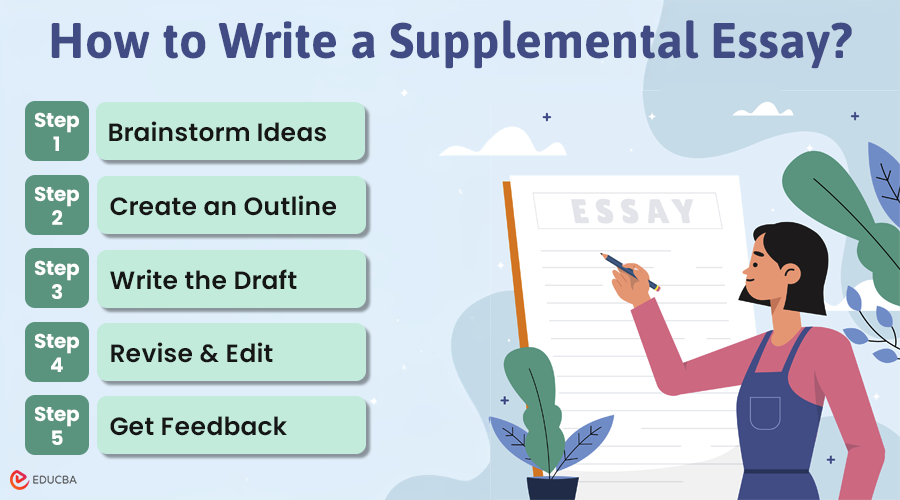
Writing a standout supplemental essay involves several key steps that guide you from initial idea generation to final polish. Here’s a structured approach to help you craft an essay that will impress admissions committees.
Step #1: Brainstorm Ideas
Start by brainstorming ideas. Think deeply about your experiences, achievements, and passions that align with the question. Jot down any memories, events, or thoughts that come to mind. Consider:
- Significant life experiences or challenges you have overcome.
- Personal achievements or accolades.
- Hobbies or passions that define who you are.
- Influential people or mentors in your life.
- Unique perspectives or insights you have gained.
Step #2: Create an Outline
Organizing your thoughts into a clear structure is crucial for a cohesive essay. Create an outline to map out your essay’s flow:
Introduction:
- Grab the reader’s attention by using an anecdote, a quote, or a compelling fact related to your topic.
- Briefly introduce the main idea or theme of your essay.
Body:
- Develop your main points, each supported by specific examples. Ensure each paragraph has a clear focus and transitions smoothly to the next.
- Provide detailed stories or experiences that illustrate your points and reveal your character, interests, and goals.
Conclusion:
- Reinforce your main idea or theme.
- Leave a lasting impression by tying back to your introduction or highlighting the significance of your essay’s content.
Step #3: Write the Draft
With your outline in hand, start writing your first draft. At this stage, focus on getting your ideas down on paper without worrying about perfection. Write freely and let your thoughts flow. The goal is to capture the essence of your ideas and experiences.
Step #4: Revise and Edit
Revision is where your essay takes shape. Review your draft for clarity, coherence, and conciseness. Here are some tips for effective revising and editing:
- Clarity: Ensure to express your ideas clearly and effectively. Avoid vague or ambiguous statements.
- Coherence: Check the logical flow of your essay. Make sure each paragraph transitions smoothly to the next.
- Conciseness: Eliminate any unnecessary words or repetitive sentences. Aim for brevity without sacrificing meaning.
- Grammar and Spelling: Proofread for grammatical errors, spelling mistakes, and punctuation issues.
Step #5: Get Feedback
Finally, seek feedback from others. Have someone else—such as a teacher, mentor, or family member—review your essay. They can catch mistakes you might have missed and offer new perspectives on your content. Consider their suggestions and make any necessary revisions to enhance your essay further.
Common Pitfalls to Avoid
Writing supplemental essays can be challenging. Avoid these common pitfalls to make a strong impression:
- Generic Responses: Avoid generalizations that could apply to any college. Tailor your response by researching the college and mentioning specific programs or activities that excite you. Personalize your essay to show a deep connection to the college.
- Overused Topics: Be wary of cliches, like winning a big game or participating in a service trip. Find a unique angle or delve deeply into your personal experiences and reflections to make your essay stand out.
- Ignoring the Prompt: Stay on topic and fully address the prompt. Carefully read and structure your essay to respond directly to every part of the question.
Extra Tips
Writing a compelling supplemental essay requires attention to detail and a personal touch. Here are some key tips to help you craft an essay that stands out:
- Be Authentic: Write in your natural voice and be true to yourself. Share your genuine passions, interests, and experiences. Authentic stories are more engaging and memorable to admissions officers.
- Be Specific: Instead of general statements, describe particular projects, events, or scenarios that bring your experiences to life and make your essay more compelling.
- Stay Focused: Stick to the prompt, maintain a clear, concise narrative, and avoid deviating to unrelated topics.
- Show, Don’t Tell: Use descriptive language and personal anecdotes to paint a vivid picture for the reader. Show your qualities and values through actions and detailed stories rather than just stating them.
Supplement Essay Guides
Navigating the college application process, particularly writing supplemental essays, can be overwhelming. Supplemental essay guides are invaluable resources, providing the support and direction needed to craft outstanding essays.
These guides offer comprehensive explanations of essay prompts from various colleges, helping you understand what each prompt is asking and the underlying objectives. They clarify the unique values and goals each college looks for in applicants, allowing you to align your essays with these expectations and demonstrate a clear fit for the institution.
Supplement essay guides also include strategies on how to approach different types of essay prompts. Whether it’s a “Why This College?” prompt or a personal reflection essay, these guides provide tailored advice on structuring your response and highlighting your strengths. Many guides feature example essays that showcase successful responses, offering inspiration and insight into what makes a compelling essay.
Using these guides can reduce the stress and anxiety associated with writing supplemental essays. Knowing you have a resource to help you understand and tackle each prompt makes the process feel more manageable. Following the tips and strategies provided can boost your confidence in your writing abilities, resulting in stronger, more persuasive essays that effectively communicate your unique qualities.
Many supplement essay guides are written by experts in college admissions, including former admissions officers and experienced counselors. Their insights and advice, based on years of experience, offer reliable and valuable guidance. Additionally, these guides are often updated to reflect changing admissions trends, ensuring you are aware of the latest expectations and can tailor your essays accordingly.
Final Thoughts
By understanding the purpose of supplemental essays, analyzing the prompts, and following a structured approach to crafting your responses, you can create compelling essays that resonate with admissions officers.
Remember to be authentic, specific, and focused in your writing. Use descriptive language and anecdotes to bring your experiences to life, and always tailor your essays to each specific college. Utilize supplement essay guides for expert insights and avoid common pitfalls like generic responses and ignoring the prompt.
Recommended Articles
We hope you use this guide as a supplemental guide and write an essay that stands out. Here are more such guides for your reference.

